
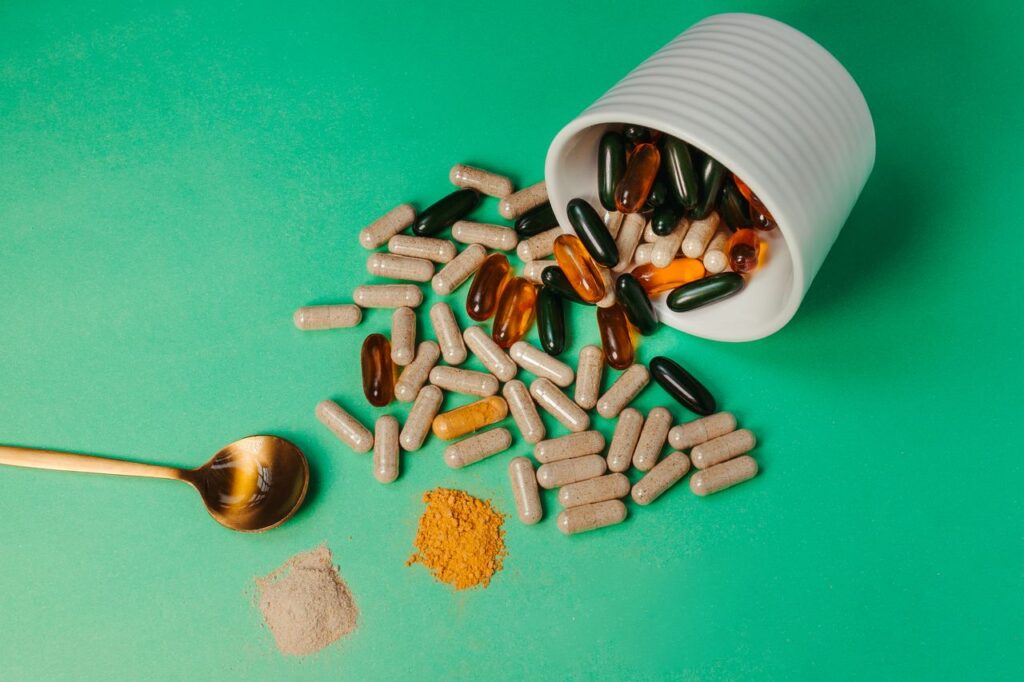
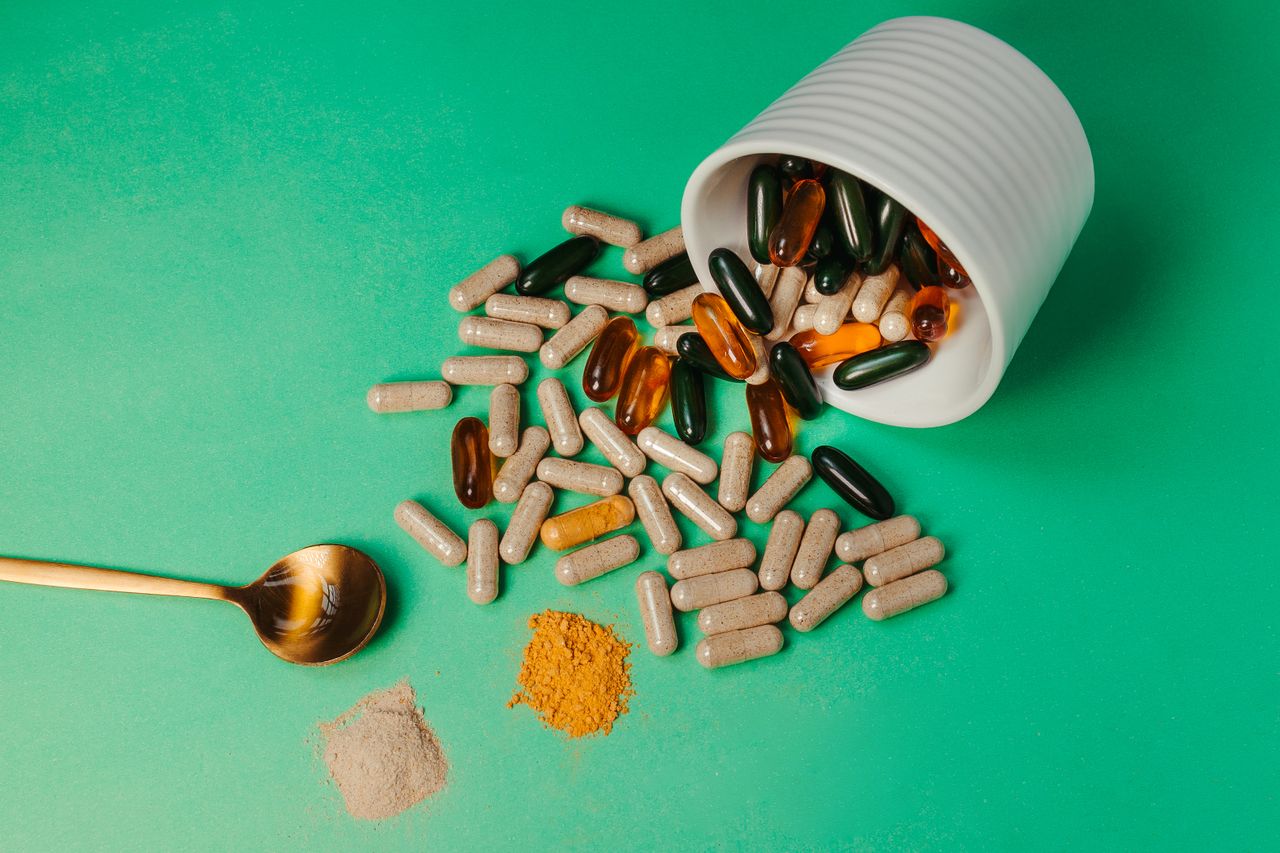
Kratom capsules are usually the same dried leaf powder sold loose, pre-measured into gelatin or plant-based shells. From the same batch, the chemistry is identical. The differences are practical: capsules mask the bitter taste and give fixed fill amounts, while powder is cheaper per gram, easier to inspect and more flexible. No study has compared the two formats head to head.
The bigger variable is not the format but what is in it. Some capsules contain extract rather than leaf, some tablets and capsules have been found to contain concentrated 7-OH, and a capsule’s shell hides whatever is inside. That makes the certificate of analysis (COA) more important for capsules, not less.
This page covers composition, what pharmacokinetic studies show, practical trade-offs, contamination, safety and the September 2026 legal picture. It does not give dosing advice.
At a glance
| Property | Capsules | Powder |
|---|---|---|
| Usual contents | Dried leaf powder in a gelatin or plant-based shell; sometimes extract | Loose dried, ground leaf |
| Chemistry from the same batch | Identical | Identical |
| Taste | Largely masked | Bitter and earthy |
| Measuring | Fixed fill per capsule, if accurately labelled | Must be weighed by the user |
| Onset | Users often report slightly slower; not formally compared | Not formally compared with capsules |
| Visibility of contents | Hidden inside shell | Can be seen and smelled |
| Cost per gram | Usually higher, reflecting manufacturing | Usually lower |
| Market availability | Offered by 24% of sellers in one European survey 1 | Offered by all 25 sellers surveyed 1 |
| Key COA extras | Fill weight, alkaloids per capsule, capsule lot | Alkaloids per gram, batch lot |
| Safety and interactions | Same as any kratom | Same as any kratom |
What is inside a kratom capsule compared with a bag of powder
Kratom powder is dried Mitragyna speciosa leaf, ground fine. A standard kratom capsule is that same powder packed into a shell, usually gelatin or a plant-based alternative such as hypromellose (HPMC). The shell adds nothing active. If a capsule and a bag of powder come from the same lot, the alkaloids, including mitragynine and trace 7-hydroxymitragynine (7-OH), are the same.
Not every capsule is plain leaf, though. Some contain extract or leaf fortified with extract, which can carry far more alkaloid per capsule. The label should say which, and our comparison of kratom extract and powder explains why the difference matters.
Powder dominates the market. A 2025 study of 25 online kratom sellers found every one offered powder, while 24% offered powder-filled capsules; the same study noted that in Western countries dried leaf powder is mainly taken as tea or in capsules.1 Capsules were also the format in the largest placebo-controlled kratom study published to date, where encapsulation allowed a double-blind comparison with placebo.2
Onset, absorption and duration: what research shows
No published study has compared kratom capsules with loose powder or tea in the same people. What exists are separate pharmacokinetic studies using different formats.
- Capsules: in a randomised, placebo-controlled study of encapsulated dried leaf powder, mitragynine reached peak blood levels at a median of about 1 to 1.3 hours after a single dose. Mitragynine’s mean half-life was as long as 43 hours after one dose and 68 hours after 15 daily doses, with steady state reached in 8 to 9 days.2 The study was paid for by the company that makes the product tested, and its authors were paid consultants.
- Tea from leaf powder: in a smaller study of six healthy adults, mitragynine and related alkaloids peaked at a median of 1 to 2 hours, while another alkaloid group including speciociliatine peaked later, at 2.5 to 4.5 hours.3
Those timings are broadly similar, but the products, amounts and participants differed, so they cannot settle whether capsules are slower. Users commonly report a slightly later onset with capsules, which is plausible because the shell has to dissolve first. That remains an untested expectation rather than a measured difference.
The long half-life matters more in practice. It means mitragynine can build up with daily use and remain detectable for days, whichever format is used.
Practical differences: taste, measurement and convenience
| Consideration | Capsules | Powder |
|---|---|---|
| Taste | Masked by the shell | Bitter; often mixed into drinks or brewed as tea |
| Measuring | Relies on the maker’s fill weight being accurate | Relies on the user weighing accurately; spoons are imprecise |
| Portability | Easy to carry, no mess | Messy; needs a scale or pre-weighed portions |
| Flexibility | Adjusts only in whole capsules | Any amount, any preparation |
| Swallowing | Several capsules may be needed per serving | No capsules, but texture puts some people off |
| Inspection | Cannot see or smell contents | Colour, texture and smell visible, though none proves quality |
Powder is also the starting point for tea, one of the traditional ways kratom has been consumed in Southeast Asia; see our guide to traditional kratom tea preparation. Some users take powder straight with a drink, a practice sometimes called “toss and wash”.1
Capsules’ fixed amounts can feel more controlled, but only if the label states the leaf weight per capsule and the maker fills accurately. A capsule count on its own tells you nothing about alkaloid content, which depends on the batch.
Contamination and adulteration: a capsule hides what is inside
Format does not protect against contamination. During a 2017 to 2018 US Salmonella outbreak linked to kratom, 199 people in 41 states fell ill, and 74% of those interviewed reported consuming kratom in pills, powders or teas.6 FDA testing of 30 kratom products found lead and nickel at levels the agency said could harm heavy, long-term users.7
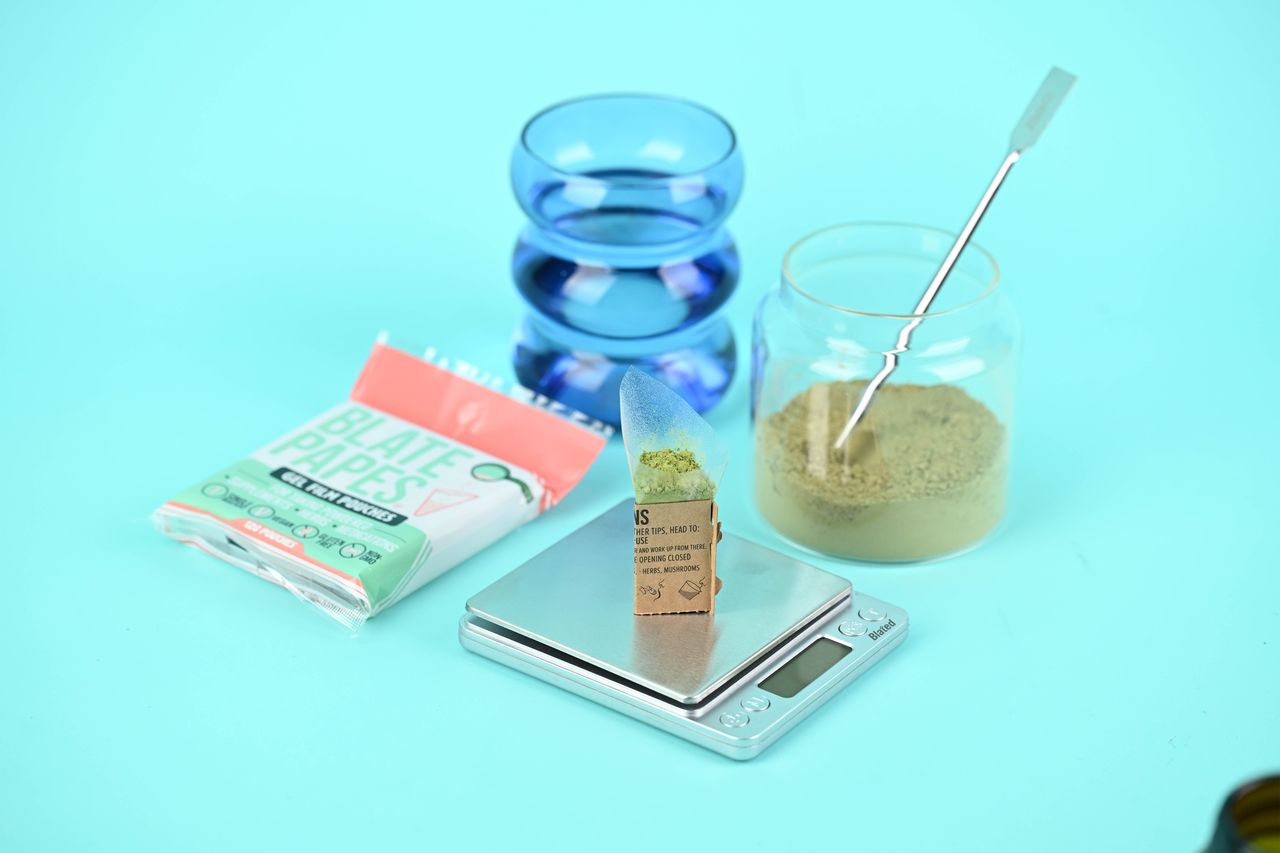
Adulteration is the more format-specific worry. Researchers found several commercial kratom products with 7-OH levels substantially higher than raw leaf, which they judged probable adulteration.5 A 2026 analysis of 38 commercial kratom products found 7-OH and mitragynine pseudoindoxyl in several tablet and capsule formulations, and showed that some common lab methods can misidentify 7-OH unless confirmatory steps are used.4 With loose leaf powder you at least see what you bought; with a capsule, the COA is your only window.
Safety, interactions and drug testing for both formats
Capsules and powder carry the same risks because they deliver the same plant. The FDA warns about liver toxicity, seizures, substance use disorder, tolerance and withdrawal, and rare deaths, often involving other substances.8 Capsules can make regular use feel routine, which is worth being aware of given kratom’s potential for dependence.
Medicine interactions apply equally. In 12 healthy adults, one serving of kratom tea raised exposure to midazolam, a drug cleared by the CYP3A enzyme, by roughly 40%.9 People on prescription medicines, especially sedatives or opioids, should speak to a pharmacist first.
Format makes no difference to drug testing. Mitragynine is not part of the standard five-drug workplace panel, but targeted tests can detect it, and its long half-life extends the detection window.2 Our guide on whether kratom shows up on a drug test has more detail.
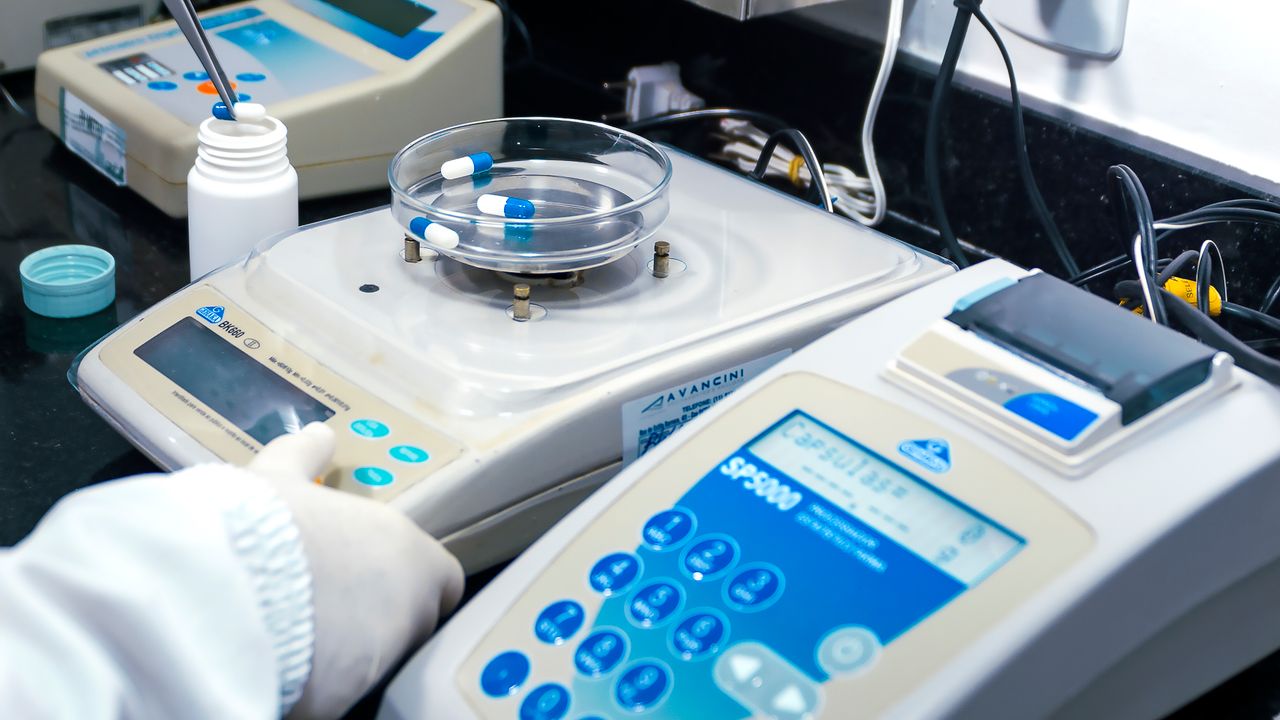
How to read a COA for kratom capsules or powder
For powder, the COA describes a batch per gram. For capsules, it should describe the finished capsule lot. Our guide to reading a kratom lab report covers layout; the key checks are:
- Lot match. The lot on the COA matches the pack. For capsules, a COA for the bulk powder alone does not cover encapsulation.
- Independent lab. Named lab, recent date, ideally ISO/IEC 17025 accreditation, and a way to verify the report.
- Mitragynine. As a percentage for powder, and ideally in milligrams per capsule for capsules. Thai field studies measured plain leaf at roughly 0.3% to 5% of dry weight;10 far higher suggests extract.
- 7-OH. A numeric result or a stated limit of quantification. The DEA’s proposed line is 0.050% by dry weight for botanical kratom, and for other products more than 0.050% or more than 1 mg per article.11 The method should confirm 7-OH rather than infer it from mass alone.4
- Heavy metals. Numeric lead, arsenic, cadmium and mercury results, and ideally nickel.7
- Microbials. Salmonella and E. coli not detected; total aerobic count and yeast and mould reported.
- For capsules: declared fill weight per capsule, shell material and any added ingredients such as flow agents.
Legal status of kratom capsules and powder in September 2026
In the US, kratom leaf in any form is not federally scheduled. The FDA does not consider kratom lawful as a dietary supplement or food ingredient, and no kratom drug is approved.8
The DEA’s 6 July 2026 notice of intent proposes temporary Schedule I control of 7-OH above a threshold. For botanical kratom the line is more than 0.050% 7-OH by dry weight; for other products it is more than 0.050% or more than 1 mg of 7-OH in the article. Botanical kratom with naturally occurring 7-OH below the line is excluded.11 The per-article limit is especially relevant to capsules and tablets containing processed material. As of 23 September 2026 the order had not been published. Mitragynine pseudoindoxyl, MGM-15 and MGM-16 have been temporarily in Schedule I since 26 August 2026.12 Our 7-OH scheduling explainer follows the process.
States vary: some ban kratom, many set age limits and labelling rules through Kratom Consumer Protection Acts, and Florida has used emergency rules against concentrated 7-OH. Check our state-by-state guide. In the UK, supplying or importing kratom is an offence under the Psychoactive Substances Act 2016, though possession is not. In Canada, kratom is not a scheduled drug, but Health Canada has not authorised the sale of any product containing it.
Frequently asked questions
Are kratom capsules weaker than kratom powder?
Not if they contain the same leaf. A capsule of plain leaf powder has the same alkaloid content per gram as loose powder from that batch. Capsules can seem weaker because each holds a small amount of powder, or stronger if they contain extract. The label and a batch COA showing mitragynine per capsule are the only reliable guide.
Do kratom capsules take longer to work than powder?
Users often say so, and it is plausible because the shell must dissolve first, but no study has compared the formats directly. In separate studies, mitragynine peaked about 1 to 1.3 hours after encapsulated powder and 1 to 2 hours after tea made from powder.23 Different products and participants mean those figures are not a head-to-head comparison.
Can you make your own kratom capsules?
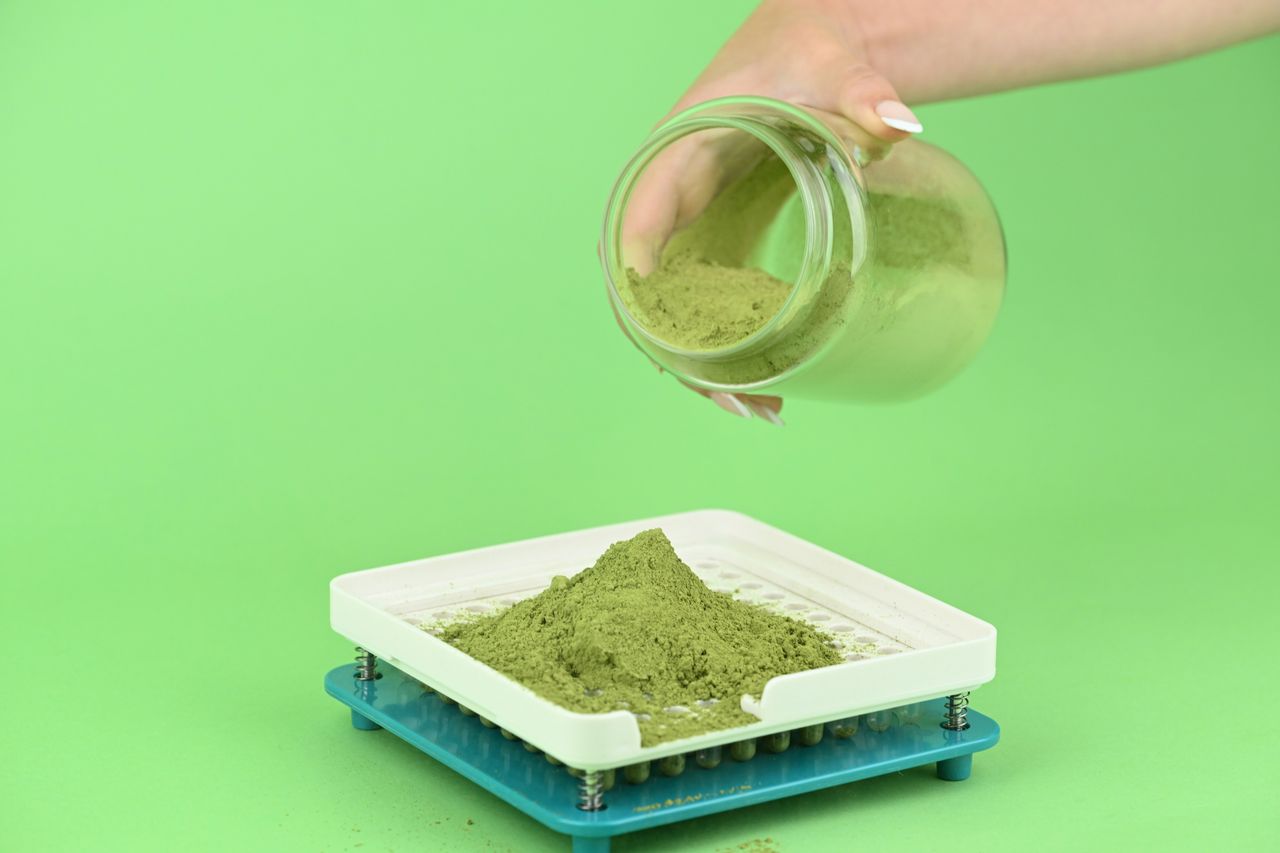
Some people fill empty capsules at home with loose powder. The practical drawback is accuracy: hand-filled capsules vary in weight, and the alkaloid content still depends on the batch. Home filling does not change the chemistry or the risks, and it adds a step where contamination and mislabelling can occur.
Are kratom capsules safer than powder?
No format is inherently safer. Both carry the same risks of dependence, withdrawal, liver injury and drug interactions.8 Capsules avoid the taste but hide their contents, and some tablet and capsule products have been found to contain concentrated 7-OH or related compounds.4 A verified, batch-specific COA matters more than the format.
Will kratom capsules show up on a drug test?
The format makes no difference. Mitragynine is not on the standard five-drug workplace panel, but targeted laboratory tests can detect it. Its half-life in one controlled study was as long as 68 hours after daily use, so it can remain detectable for days after the last capsule or serving of powder.2
Sources
- Balázs O, Kárász D, Ashraf AR, Domián BM, Fittler AT, Csabai D, Hesszenberger D, Lajtai A, Vén B, Lakatos Á, Kuzma M, Mayer M, Vida RG. Evaluation of the unregulated online kratom market in two east-central European countries: test purchase and analysis of potential toxicological consequences. Harm Reduct J. 2025;23:10. DOI: 10.1186/s12954-025-01363-0. PMID: 41382258. pubmed.ncbi.nlm.nih.gov
- Huestis MA, Brett MA, Bothmer J, Atallah R. Human Mitragynine and 7-Hydroxymitragynine Pharmacokinetics after Single and Multiple Daily Doses of Oral Encapsulated Dried Kratom Leaf Powder. Molecules. 2024;29(5):984. DOI: 10.3390/molecules29050984. PMID: 38474495. pubmed.ncbi.nlm.nih.gov
- Tanna RS, Nguyen JT, Hadi DL, Manwill PK, Flores-Bocanegra L, Layton ME, White JR, Cech NB, Oberlies NH, Rettie AE, Thummel KE, Paine MF. Clinical Pharmacokinetic Assessment of Kratom (Mitragyna speciosa), a Botanical Product with Opioid-like Effects, in Healthy Adult Participants. Pharmaceutics. 2022;14(3):620. DOI: 10.3390/pharmaceutics14030620. PMID: 35335999. pubmed.ncbi.nlm.nih.gov
- Sheehan D, Li Y, Meckler E, Upton R, Zhang M. Avoiding False Identification of 7-Hydroxymitragynine in Kratom Products Using a Multicriteria LC-MS Confirmation. J Am Soc Mass Spectrom. 2026;37(5):1303-1312. DOI: 10.1021/jasms.6c00088. PMID: 41989479. pubmed.ncbi.nlm.nih.gov
- Lydecker AG, Sharma A, McCurdy CR, Avery BA, Babu KM, Boyer EW. Suspected Adulteration of Commercial Kratom Products with 7-Hydroxymitragynine. J Med Toxicol. 2016;12(4):341-349. DOI: 10.1007/s13181-016-0588-y. PMID: 27752985. pubmed.ncbi.nlm.nih.gov
- Schwensohn C, Nsubuga J, Cronquist L, Jose G, Mastel L, McCullough L, Smith L, Powell M, Booth H, Allen K, Classon A, Gieraltowski L. A Multiple-Serotype Outbreak of Salmonella Infections Linked to Kratom, United States, 2017-2018. Foodborne Pathog Dis. 2022;19(9):648-653. DOI: 10.1089/fpd.2022.0013. PMID: 35917511. pubmed.ncbi.nlm.nih.gov
- US Food and Drug Administration. Laboratory Analysis of Kratom Products for Heavy Metals. FDA Public Health Focus (analysis of 30 kratom products for lead and nickel, 2019). fda.gov
- US Food and Drug Administration. FDA and Kratom. FDA Public Health Focus; page last updated 2 December 2025. fda.gov
- Tanna RS, Nguyen JT, Hadi DL, Layton ME, White JR, Cech NB, Oberlies NH, Rettie AE, Thummel KE, Paine MF. Clinical Assessment of the Drug Interaction Potential of the Psychotropic Natural Product Kratom. Clin Pharmacol Ther. 2023;113(6):1315-1325. DOI: 10.1002/cpt.2891. PMID: 36924284. pubmed.ncbi.nlm.nih.gov
- Sengnon N, Vonghirundecha P, Chaichan W, Juengwatanatrakul T, Onthong J, Kitprasong P, Sriwiriyajan S, Chittrakarn S, Limsuwanchote S, Wungsintaweekul J. Seasonal and Geographic Variation in Alkaloid Content of Kratom (Mitragyna speciosa (Korth.) Havil.) from Thailand. Plants (Basel). 2023;12(4):949. DOI: 10.3390/plants12040949. PMID: 36840297. pubmed.ncbi.nlm.nih.gov
- Drug Enforcement Administration. Schedules of Controlled Substance: Temporary Placement of 7-Hydroxymitragynine Above a Specified Threshold in Schedule I (notice of intent). Federal Register. 6 July 2026;91 FR 40917. Document 2026-13580. federalregister.gov
- Drug Enforcement Administration. Schedules of Controlled Substances: Temporary Placement of Mitragynine Pseudoindoxyl, MGM-15, and MGM-16 in Schedule I (temporary scheduling order, effective 26 August 2026). Federal Register. 26 August 2026;91 FR 54948. Document 2026-17429. federalregister.gov
Editorial note: This article is for general information only and is not medical or legal advice. Kratom capsules and powder have not been evaluated by the FDA to diagnose, treat, cure or prevent any disease. Laws vary by location and change often, so verify the rules that apply where you are. Always talk to a licensed healthcare provider before use, especially if you are under 21, pregnant or nursing, taking medication, or managing a health condition.
More comparisons
-
Green Malay vs Green Maeng Da Kratom: What the Labels Really Tell You
-
Borneo vs Bali Kratom: What the Labels Mean and What Lab Data Shows
-
Kratom vs Kanna: Two Botanicals With Very Different Mechanisms
-
Red vs White Kratom: Relaxing vs Energising, and What Tests Show
-
Maeng Da vs Bali Kratom: Strain Names, Lab Data and What Differs