
This article is for educational purposes only and does not constitute medical advice.
Last updated: October 15, 2026. Reviewed for current U.S. federal and state law.
Quick answer: Kratom (Mitragyna speciosa) is a Southeast Asian tree in the coffee family whose leaves contain alkaloids, mainly mitragynine, that act on opioid and other receptors in the brain. It is sold as powder, capsules, tea and extracts. It is not FDA-approved for any medical use, it is banned in nine U.S. states, and concentrated 7-OH products are being moved into federal Schedule I.
What is Kratom (Mitragyna speciosa)?
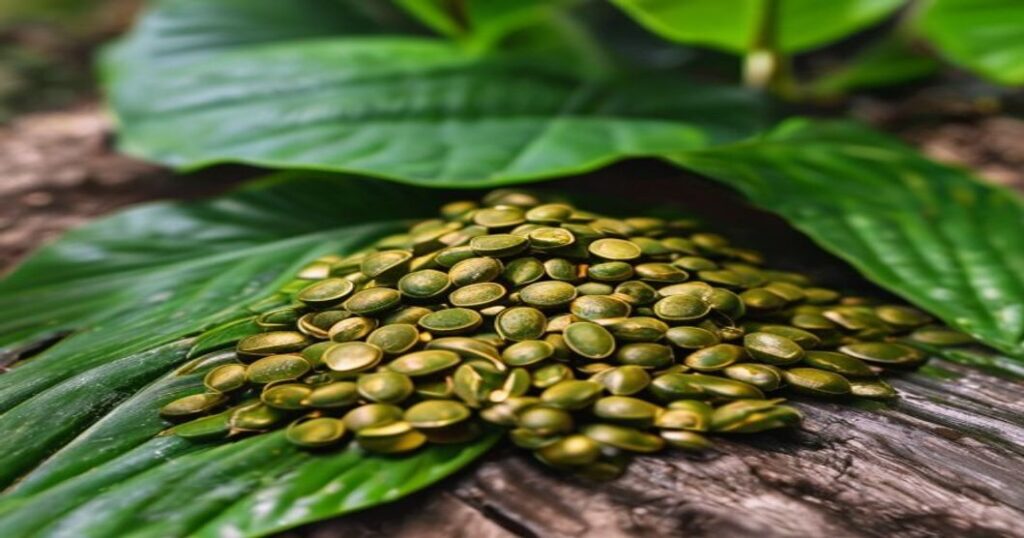
Kratom, scientifically known as Mitragyna speciosa, is a tropical evergreen tree belonging to the coffee family (Rubiaceae). Native to Southeast Asia, its leaves have been used for centuries in traditional practices. It contains natural compounds known as alkaloids that interact with various receptors in the body.
In recent years, kratom has become the center of attention as a botanical product. It is usually available in several forms, such as powders, capsules, extracts, and teas. For a deeper comparison of forms, see Kratom Extract vs Kratom Powder.
Some users have reported that kratom produces stimulating effects at lower amounts and more relaxing effects at higher amounts. However, responses can vary significantly depending on individual factors such as body chemistry, tolerance, and product quality. According to the National Institute on Drug Abuse (NIDA), kratom is a tropical tree native to Southeast Asia that contains compounds capable of affecting the brain.
Key Takeaways
Kratom (Mitragyna speciosa) is a tropical plant native to Southeast Asia.
It is available in several forms, including powder, capsules, tea, and extracts.
Vendors sell red, green and white “vein” strains with different claimed effects, but these differences are mostly anecdotal and have not been confirmed in controlled studies.
Users report energy, mood and relaxation effects, but kratom is not approved to treat any condition and carries real risks, including dependence, drug interactions and rare liver injury.
Kratom is banned in nine U.S. states, and in October 2026 the DEA moved to temporarily place concentrated 7-OH products in Schedule I. Natural leaf below the federal threshold is not covered.
Consulting a healthcare professional is essential before use.
Geographic Origin & Traditional Use in Southeast Asia
Kratom is indigenous to countries such as Thailand, Indonesia, Malaysia, Myanmar, and Papua New Guinea. In these regions, the plant has a long history of traditional use, particularly among laborers and rural communities. Fresh kratom leaves were chewed or brewed into tea to help individuals cope with physically demanding work and support endurance. Thailand banned kratom in the mid-20th century but later revised its stance, legalizing it under regulated conditions.
Key Alkaloids: Mitragynine & 7-Hydroxymitragynine
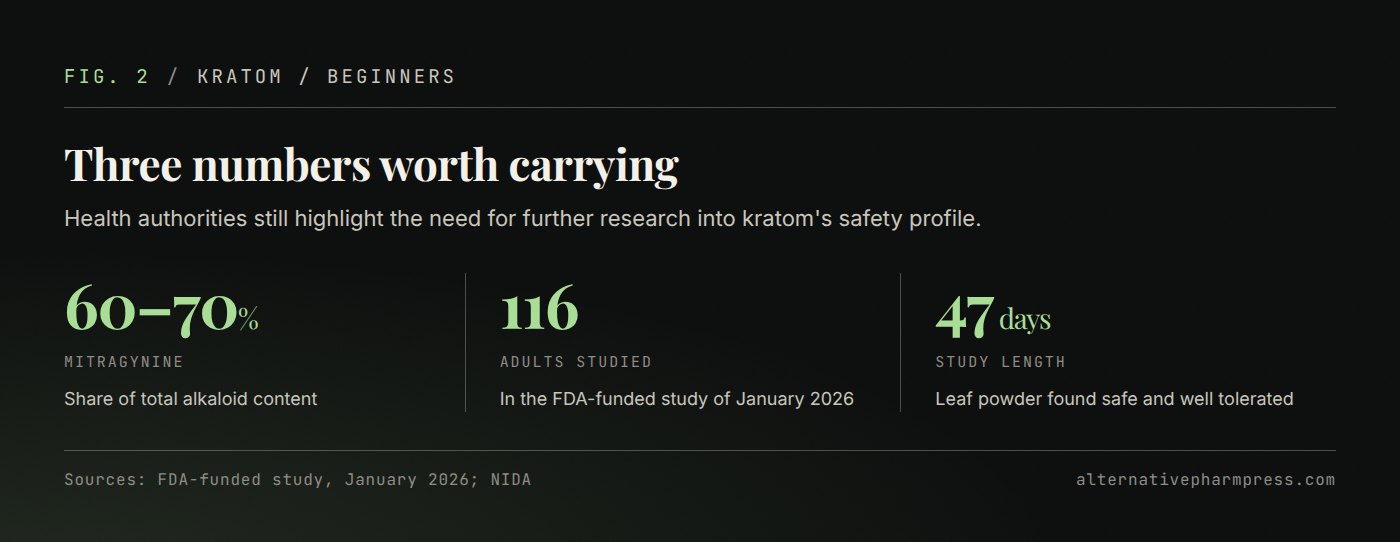
The primary active compounds in kratom are mitragynine and 7-hydroxymitragynine (7-OH). These alkaloids are responsible for many of the plant’s reported effects. Mitragynine typically comprises 60–70% of total alkaloid content. For a detailed explanation of how they differ, see our Mitragynine vs 7-OH guide.
How is Kratom Consumed?
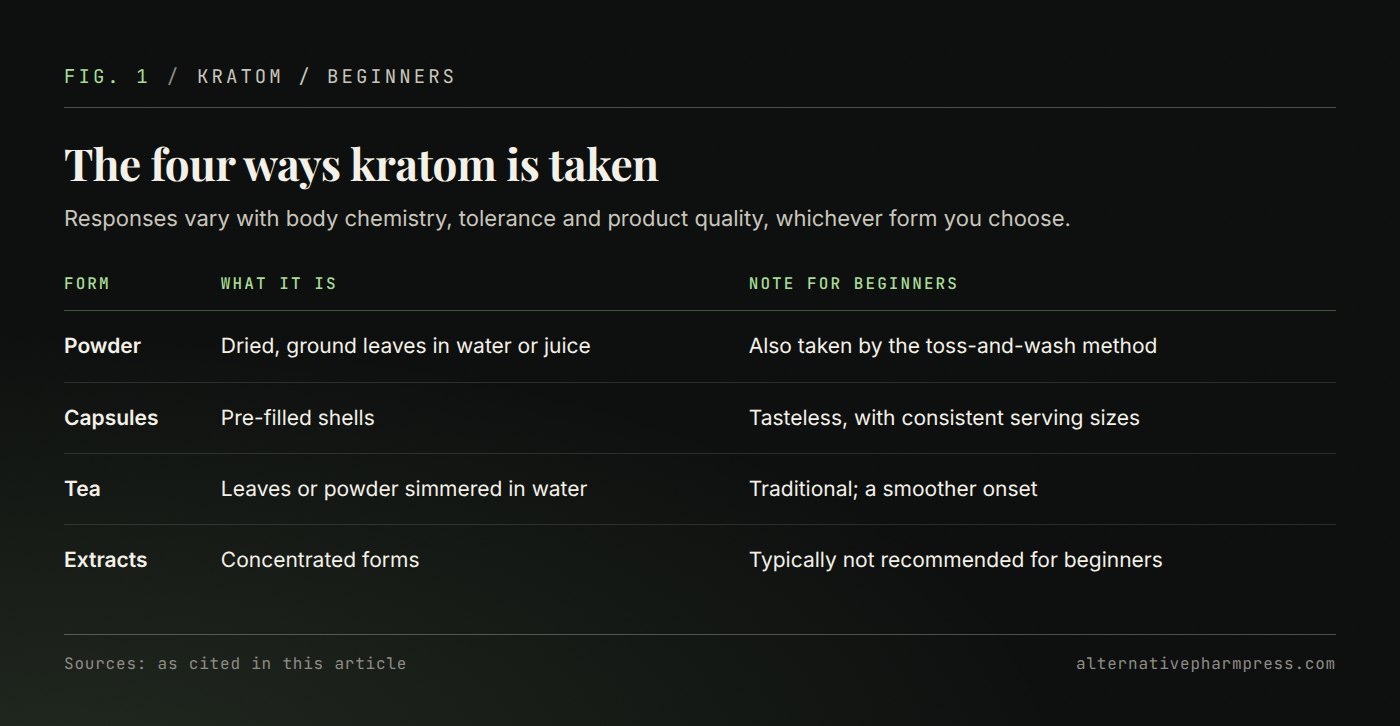
Powder: Dried and ground leaves mixed in water or juice, or consumed via the “toss and wash” method.
Capsules: Convenient and tasteless alternative that allows for consistent serving sizes.
Tea: Leaves or powder simmered in water — a traditional method associated with a smoother onset.
Extracts: Concentrated forms, typically not recommended for beginners due to potency. See our extract vs powder guide.
Legal Status Overview
Kratom is not a federally controlled substance in the United States, but the rules tightened sharply in 2025 and 2026:
- Full state bans (9 states): Alabama, Arkansas, Indiana, Vermont and Wisconsin (long-standing bans); Louisiana (effective August 1, 2025); Connecticut (2026); Tennessee (effective July 1, 2026); and Massachusetts, where an August 2026 public-health emergency order temporarily placed all forms of kratom in Schedule I for up to one year.
- A ban reversed: Rhode Island’s Kratom Act took effect April 1, 2026, making kratom legal and regulated for adults 21 and older.
- Federal 7-OH action: On October 14, 2026, the DEA published notice that it will temporarily place 7-hydroxymitragynine and mitragynine pseudoindoxyl in Schedule I when either exceeds 1 mg per gram (or per mL), or when the mitragynine-to-7-OH ratio is below 100. The order can take effect on or after November 13, 2026 and would last two years. Natural leaf products below that threshold are not covered.
Laws are changing quickly, and some cities and counties add their own restrictions. Check our list of states where kratom is banned and the state-by-state legal guide before buying. This section is general information, not legal advice.
Scientific Research and Safety Considerations
Scientific research on kratom is ongoing. Health authorities such as NIDA and the FDA highlight the need for further research to fully understand its safety profile. In January 2026, a randomized, double-blind, placebo-controlled trial published in Therapeutic Drug Monitoring gave a commercial kratom leaf powder or placebo to 116 healthy adults, including 15 consecutive daily doses. Researchers reported no serious adverse events and mostly mild, dose-related side effects. Because it tested modest doses in short-term healthy volunteers, it does not settle questions about long-term or high-dose use. Consumers are advised to purchase kratom from reputable vendors that provide third-party lab testing — our COA guide explains what to look for in lab reports.
Safety Basics Every Beginner Should Know
- Drug interactions: Kratom alkaloids are processed by liver enzymes such as CYP3A4 and CYP2D6, so kratom can change how other medicines work. Combining it with opioids, benzodiazepines, alcohol or other sedatives raises the risk of serious harm. See kratom and drug interactions.
- Liver injury: Rare cases of drug-induced liver injury have been reported. Read what the case reports show.
- Dependence: Regular daily use can lead to tolerance, dependence and withdrawal symptoms. Our kratom dosage guide explains why amount and frequency matter.
- Kratom leaf is not 7-OH: Concentrated, semi-synthetic 7-OH tablets and shots are far more potent than leaf powder. They are the main target of the FDA’s July 2025 scheduling recommendation and the DEA’s 2026 action.
- Drug testing: Standard 5-panel tests do not look for mitragynine, but specialized panels can. See does kratom show up on a drug test?
- Product quality: Buy only products with a batch-specific certificate of analysis that screens for alkaloid content, heavy metals and microbes. Our COA guide shows what to check.
Frequently Asked Questions
Q: What is kratom used for?
Kratom has traditionally been used in Southeast Asia for cultural and practical purposes. In modern contexts, some users report using it for energy, relaxation, or general well-being. However, it is not approved as a medical treatment.
Q: Is kratom safe for beginners?
Safety can vary depending on product quality, individual health conditions, and serving size. Consulting a healthcare professional before use is strongly recommended.
Q: What does kratom taste like?
Kratom has a natural bitter and earthy taste, which is why many individuals prefer capsules or tea with added sweeteners.
Q: Is kratom legal everywhere?
No. It is banned in nine U.S. states and some cities, counties and countries, while Rhode Island made it legal for adults 21 and older in April 2026. Concentrated 7-OH products also face federal Schedule I control. Check current local law before buying.
Q: Can kratom cause dependence?
Initial research indicates that regular use may lead to tolerance or dependence in some individuals. Informed decision-making and moderation are important.
Q: Is 7-OH the same as kratom?
No. 7-hydroxymitragynine occurs only in trace amounts in kratom leaf. Most 7-OH products are made by converting mitragynine in a lab, which makes them much stronger than leaf, and they are the focus of the DEA’s 2026 Schedule I action.
Q: Will kratom show up on a drug test?
Not on a standard 5-panel or 10-panel test. Employers or programs that specifically order a kratom (mitragynine) test can detect it.
Conclusion
Kratom (Mitragyna speciosa) is a tropical plant with a long history of traditional use in Southeast Asia and growing global interest. Its primary alkaloids, mitragynine and 7-hydroxymitragynine, contribute to its complex pharmacological profile. It is available in various forms for beginners to explore. However, its legal status varies across regions, and scientific research is still evolving. Approach kratom with caution, rely on credible information, and consult a healthcare professional when needed. With new state bans and federal 7-OH scheduling arriving in 2026, check the current law where you live before buying.