A certificate of analysis, or COA, is the single most useful document a kratom buyer will ever read. It is the lab’s report on what is actually in the bottle: how much mitragynine, whether there are heavy metals, and whether anything is growing in the powder that should not be. The problem is that plenty of brands have learned to wave a COA around without giving you one that means anything.
We see this constantly. Our six-month look at 84 vendors found that most labels did not match their own lab reports, and the gap almost always shows up in the same handful of places. So here are the seven red flags that tell you a kratom COA is not worth trusting, and what a clean report looks like instead. If you want the full walkthrough first, our guide to reading a kratom COA breaks down every section line by line.
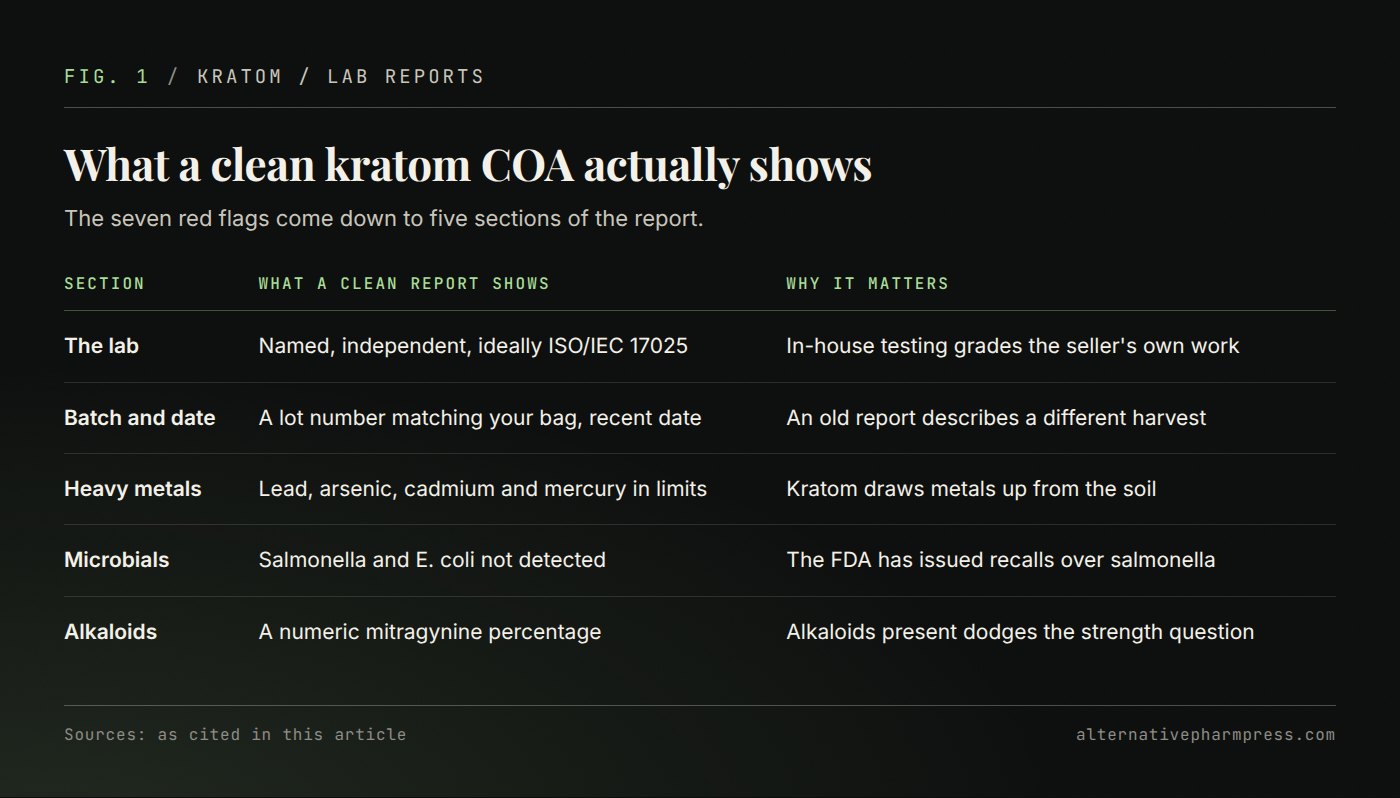
Figure 1. Five sections decide whether a kratom lab report is worth trusting.
1. There is no COA at all, just the words “lab tested”
The first red flag is the easiest to catch and the most common. A brand says “third-party lab tested” in big letters, but there is no actual document you can open, download, or match to your product. A claim is not a certificate. If you cannot find the report in a few clicks, on the product page or in a clearly linked lab library, treat the testing as marketing rather than fact.
What good looks like: a downloadable PDF or an image of the report, easy to find, with the lab’s name on it. The brands on our best kratom brands list all publish reports you can actually open.
2. The report has no batch or lot number you can match
A COA is only meaningful if it ties to the exact batch in your hands. If the report shows no lot number, or the number does not match the one printed on your package, the lab result could be from a completely different production run. Some vendors post one flattering report and reuse it across every product for years.
What good looks like: a lot or batch number on the COA that matches the code on your bag or bottle, so you know the test describes your specific powder, not a sample from 2023.
3. The date is old or missing
Kratom is a plant product, and contamination can change from harvest to harvest. A report from two or three years ago tells you little about a fresh batch. If the COA has no test date, that is worse, because you have no way to judge how current it is. Stale paperwork is one of the quietest ways a brand cuts corners.
What good looks like: a clear, recent test date. For a product you are buying today, a report within the last year is reasonable, and the more recent the better.
4. There is no heavy metals panel
Kratom draws metals up from the soil it grows in, so heavy metals testing is not optional. A trustworthy COA screens for at least the big four: lead, arsenic, cadmium, and mercury. If that panel is missing entirely, you have no idea what the leaf pulled out of the ground, and these are exactly the contaminants you do not want building up over time.
What good looks like: a heavy metals section listing lead, arsenic, cadmium, and mercury, each with a measured result that falls under the lab’s safety limit.
5. Microbial testing is nowhere to be found
The FDA has issued kratom recalls over salmonella contamination, which is not a theoretical risk. A complete COA includes a microbial panel covering salmonella, E. coli, and yeast and mold. A report that quantifies alkaloids but skips the microbial screen is only telling you half the story, and it is the less important half for your safety.
What good looks like: a microbial or pathogen section showing salmonella and E. coli as “not detected,” plus yeast and mold counts within limits.
6. The alkaloids are not actually quantified
For traditional leaf, the number that matters is the mitragynine percentage, because it tells you how strong the powder is and whether it is consistent batch to batch. For concentrated products, you also want the 7-hydroxymitragynine (7-OH) figure. A COA that says “alkaloids present” without giving you percentages is dodging the one question buyers care about most. If you are unclear on the difference between these two compounds, our explainer on mitragynine versus 7-hydroxymitragynine sorts it out.
What good looks like: a numeric mitragynine percentage, and for extracts, a clearly stated 7-OH percentage you can compare across products.
7. The lab is in-house, unnamed, or not accredited
The “third party” in third-party testing is the whole point. If the report comes from the brand’s own lab, carries no lab name, or shows no accreditation, you are taking the seller’s word for the seller’s product. The gold standard is an independent lab with ISO/IEC 17025 accreditation, which means an outside body has checked that the lab’s methods are sound.
What good looks like: a named, independent laboratory, ideally ISO/IEC 17025 accredited, with contact details on the report so you could verify it if you wanted to.
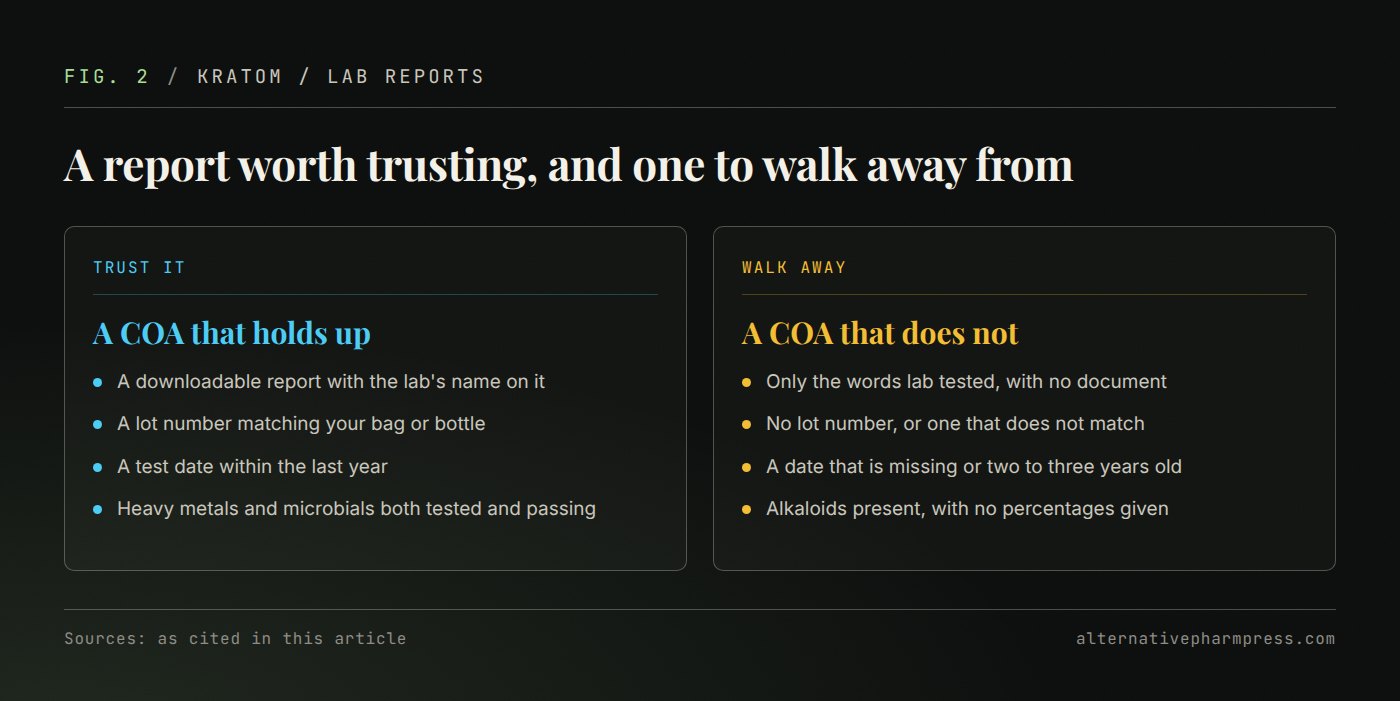
Figure 2. The two-minute check, side by side.
How to actually verify a COA in two minutes
You do not need to be a chemist. Open the report and run down a quick checklist: Is there a real document? Does the batch number match your product? Is the date recent? Are heavy metals and microbials both tested and passing? Is the mitragynine percentage listed? Is the lab independent and named? If you get a yes on all six, you are holding a COA worth trusting. A no on any of them is a reason to ask the brand a question or shop elsewhere.
If you are still building confidence, our beginner’s guide to kratom and our kratom powder buying guide walk through the rest of what to check before you buy, and the strains explainer covers how vein color fits into the picture.
Why this matters more in 2026
The flood of concentrated 7-OH products this year has raised the stakes. These are far stronger than leaf, the rules around them are tightening fast, and a sloppy COA on a high-potency product is a bigger problem than a sloppy one on plain powder. Before you buy anything, it is worth checking our kratom legal status by state page and our overview of the Kratom Consumer Protection Act, since lab-testing requirements are exactly what those laws are starting to mandate.
For context on the standards themselves, the American Kratom Association GMP program and the FDA’s kratom page are both worth a read, and our own research overview covers where the science currently stands.
Frequently asked questions
What does COA stand for?
Certificate of analysis. It is a lab document reporting what is in a product, including alkaloid content and any contaminants like heavy metals or bacteria.
How recent should a kratom COA be?
For a product you are buying now, look for a report tied to the current or a recent batch, ideally within the last year. Because contamination varies harvest to harvest, an old report does not tell you much about fresh stock.
What contaminants should a kratom COA test for?
At minimum, heavy metals (lead, arsenic, cadmium, mercury) and microbials (salmonella, E. coli, yeast and mold). A report that skips either panel is incomplete.
Is in-house lab testing good enough?
Not on its own. The value of testing comes from independence. An outside, accredited lab has no stake in the result, which is exactly why third-party reports carry more weight than a brand testing its own product.
A COA is your best protection against a market full of confident claims and thin paperwork. Insist on a real, recent, batch-matched report from a named independent lab that tests both alkaloids and contaminants. If a brand cannot hand that over, the missing document is your answer. Read the report first, every time, and the rest of the decision gets a lot easier.
Editorial note: This article is for general information only and is not medical or legal advice. Kratom has not been evaluated by the FDA to diagnose, treat, cure, or prevent any disease. Always talk to a licensed healthcare provider before use, especially if you are under 21, pregnant or nursing, taking medication, or managing a health condition.
Disclaimer: Alternative Pharm Press is an independent editorial publication and brand directory; we do not sell, manufacture, or ship any products. The statements and products referenced on this site have not been evaluated by the U.S. Food and Drug Administration and are not intended to diagnose, treat, cure, or prevent any disease. Content is provided for general informational and educational purposes only and is not medical, legal, or professional advice. Always consult a licensed healthcare provider before using kratom, cannabis, CBD, hemp, nootropic, peptide, or any related product, especially if you are under 21, pregnant or nursing, taking medication, or managing a health condition. The legal status of these products varies by country, state, and locality; you are solely responsible for verifying and complying with the laws that apply to you. Some listings, reviews, and coupons may be paid placements or affiliate relationships, which do not influence our editorial standards.