
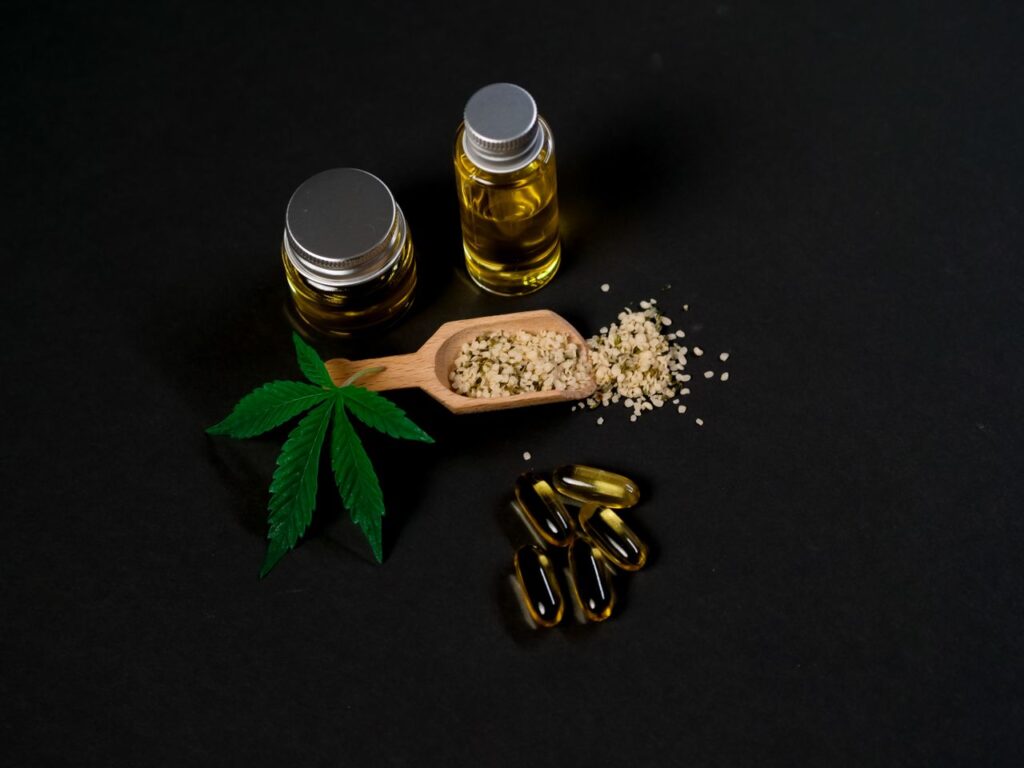
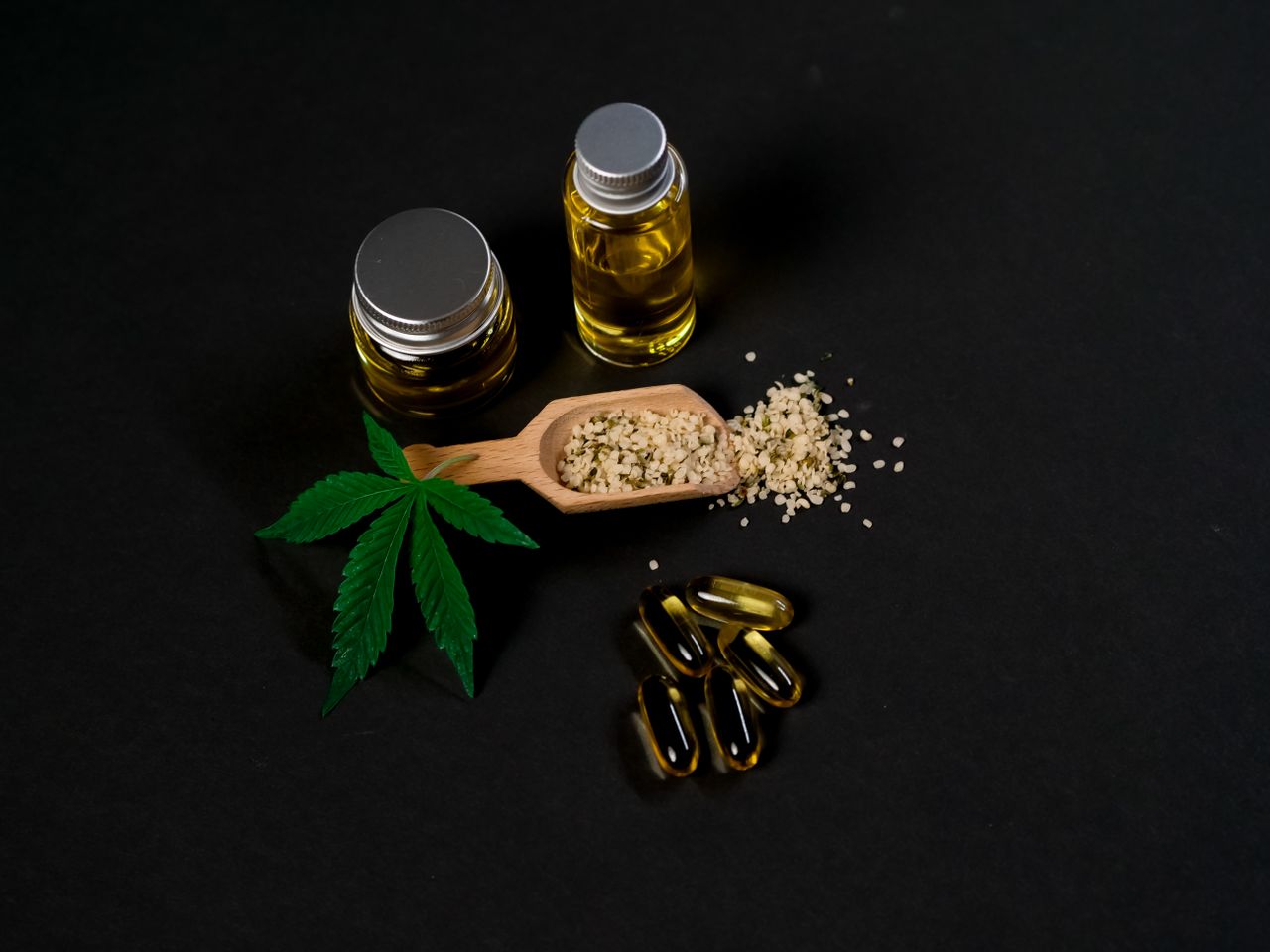
CBD oil and hemp oil come from the same plant species but from different parts of it. CBD oil is an extract of hemp flowers and leaves, diluted in a carrier oil and sold for its cannabidiol content. Hemp oil, properly called hemp seed oil, is pressed from seeds that make almost no cannabinoids. It is a food oil valued for its fats, not for CBD.
The confusion is partly the market’s doing. Bottles labelled “hemp oil” or “hemp extract” can hold either product, and some CBD oils use hemp seed oil as their carrier, so both appear on the same label. Front-of-pack wording is marketing; the ingredient list and lab report are what tell you which product you have.
This guide sets out what each oil contains, what the research does and does not support, the safety and drug-testing points that matter, and how the law treats each one in the US, UK and Canada as of September 2026.
At a glance
| Property | CBD oil | Hemp seed oil |
|---|---|---|
| Plant part | Flowers and leaves (resin glands) | Seeds, which lack resin glands1 |
| How it is made | Solvent or CO2 extraction, then diluted in a carrier oil | Mechanical pressing of seeds |
| Main active content | Cannabidiol, plus other cannabinoids if full or broad spectrum | Linoleic and alpha-linolenic acids1 |
| Cannabinoid level | Sold by milligrams of CBD per bottle | Trace only, from surface contamination1,4 |
| Intoxicating? | No, unless THC is present at meaningful levels | No |
| US food status | FDA says CBD cannot be added to food3 | Three hemp seed ingredients accepted as GRAS in 20182 |
| Drug test risk | Real, as THC is common even in ‘THC-free’ products7 | Low with modern oils, not zero |
| Main safety flag | Liver enzyme rises and drug interactions8 | Calories; oxidises if stored warm |
| Typical label wording | Cannabidiol, CBD, hemp extract | Cannabis sativa seed oil, hemp seed oil |
Where each oil comes from on the plant
Cannabinoids such as CBD and THC are made and stored in glandular trichomes, the tiny resin glands concentrated on female flowers. According to a 2020 review in Nutrients, these glands are absent from roots and seeds, so seeds do not make cannabinoids themselves.1 Any cannabinoids in seed oil come from resin rubbing off the bracts around the seed during harvest, and the amount depends on the variety and how well the seeds are cleaned.1
CBD oil starts with flowers and leaves. Makers pull cannabinoids out with supercritical CO2, ethanol or hydrocarbon solvents, refine the extract, then dilute it in a carrier such as MCT oil, olive oil or, confusingly, hemp seed oil. The result may be full spectrum (with trace THC), broad spectrum (THC removed) or isolate (CBD alone). Our guide to full-spectrum vs broad-spectrum CBD explains those labels.
What is actually in hemp seed oil
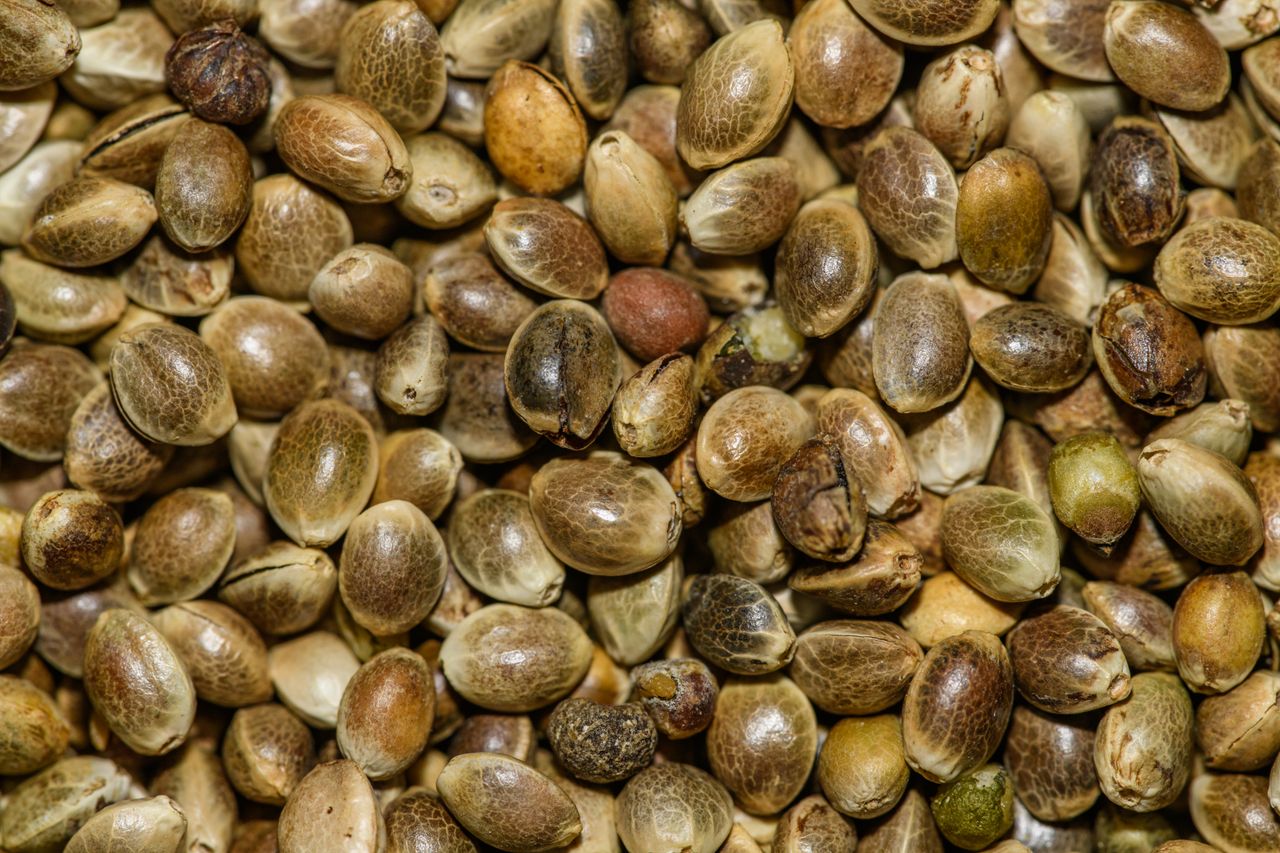
Hemp seeds are roughly 25 to 35% fat. In the studies pooled in the Nutrients review, linoleic acid (an omega-6) made up about 55 to 58% of the fat and alpha-linolenic acid (an omega-3) roughly 13 to 20%, with polyunsaturated fats forming the large majority.1 That profile is why it is sold as a salad or finishing oil; our hemp seed oil glossary entry covers the food side in more detail.
Seed oil is not cannabinoid-free, though. German federal researchers tested 30 commercial hemp seed oils and found total cannabinoids of 9 to 279 mg per kg and THC of 0.2 to 6.7 mg per kg; three samples exceeded the EU’s limit for hemp seed oil.4 Even the highest figure is around 0.03%, while UK CBD oils in one survey averaged 3.2% CBD, roughly a hundred times more.6
Effects in practice: a food oil versus an active compound
One is a food and one is a pharmacologically active compound. Hemp seed oil behaves like other polyunsaturated cooking oils: it supplies essential fatty acids and energy, and people do not report feeling anything from it. At the trace cannabinoid levels measured in seed oils, no cannabinoid effect would be expected.
CBD is different. It acts on several receptor and enzyme systems, and a purified prescription form (Epidiolex) is approved by the FDA for seizures associated with Lennox-Gastaut syndrome, Dravet syndrome and tuberous sclerosis complex.3 Those approvals rest on doses far higher than most retail oils supply, so they say little about what a few drops of a shop-bought oil will do.
Users of consumer CBD oil commonly report feeling calmer or sleeping better, but reports are not controlled evidence. Expectation, dose uncertainty and the THC found in many products all muddy the picture. Our review of what the human CBD sleep trials found shows how mixed the results are at typical doses.
How strong the evidence is for each
The evidence bases are almost incomparable because they answer different questions.
- Hemp seed oil composition is well characterised: dozens of analyses agree on its fatty acid profile, with variation by cultivar and growing conditions.1
- Hemp seed oil outcomes rest on very few human trials. One frequently cited study, a 20-week single-blind crossover in people with atopic dermatitis, compared dietary hemp seed oil with olive oil and reported changes in blood fatty acids and self-rated skin dryness and itch.9 It was single-blind and used olive oil as the comparator, and we found no larger trials building on it, so it is a hypothesis rather than a settled finding.
- Prescription CBD has randomised controlled trial evidence for specific epilepsy syndromes, which is why it was approved.3
- Retail CBD oil has weak evidence at the doses people actually take. Trials are generally short and small, use purified CBD rather than the product on the shelf, and cannot account for mislabelled bottles.
The FDA’s own position is that more information about the safety and effectiveness of cannabis constituents is needed, and in January 2023 it concluded that existing food and supplement rules are not suitable for CBD.3
Safety, drug interactions and drug testing
Hemp seed oil
The FDA raised no questions in 2018 when three hemp seed ingredients, including hemp seed oil, were notified as generally recognised as safe (GRAS), noting they contain only trace THC and CBD and cannot make consumers “high”.2 Practical issues are ordinary ones: it is calorie-dense, and its polyunsaturated fats oxidise faster than more saturated oils, so it is best kept cool, dark and sealed.
CBD oil
CBD is metabolised by liver enzymes that also handle many medicines, which is the basis for its known drug interactions. A 2025 FDA-run randomised trial in 201 healthy adults gave 5 mg/kg/day of CBD or placebo for 28 days. Eight people on CBD (5.6%) and none on placebo had liver enzyme rises above three times the upper limit of normal, and seven met withdrawal criteria for possible drug-induced liver injury.8 That dose is higher than many retail servings, but the result is a reason for caution, not reassurance.
Drug testing
Standard workplace tests look for THC metabolites, not CBD. The risk with CBD oil comes from THC that is present, labelled or not. A University of Kentucky analysis of 80 unregulated hemp-derived oils (plus Epidiolex as a control) quantified THC in 52 of the 81 samples, and 5 of 21 products labelled “THC-free” contained measurable THC.7 Modern seed oils carry much lower THC,4 though heavy daily use of an unusually contaminated batch cannot be ruled out. Our explainer on whether CBD can fail a drug test goes further.
Legal status in September 2026
United States. Hulled hemp seed, hemp seed protein and hemp seed oil can be used in ordinary foods following the FDA’s 2018 GRAS responses.2 CBD is treated differently: the FDA’s position is that it is a prohibited act to add CBD to food sold across state lines, and that CBD cannot be marketed as a dietary supplement.3
The bigger change is the federal hemp redefinition passed in November 2025. It moves hemp to a total THC measure and caps finished hemp products at 0.4 mg of total THC per container; most provisions take effect on 11 December 2026 after a one-month delay law.12 Analysts note that hemp grown for grain, fibre and other non-cannabinoid uses is kept within the definition, while CBD products whose THC exceeds the per-container cap are caught by it.12 Bills to delay or repeal the change remain in committee, and state rules vary widely. Our explainer on the federal hemp THC limit tracks the details.
United Kingdom. Hemp seed oil is sold as an ordinary food. CBD foods and supplements sit in the novel food process; the Food Standards Agency advises healthy adults to take no more than 10 mg of CBD a day, and on 3 September 2026 its board agreed recommendations on the first three applications for ministers, who have not yet decided.11
Canada. CBD is regulated under the Cannabis Act and can be sold only through authorised cannabis retailers or licensed medical sellers. Hemp seed oil is exempt if it contains no more than 10 parts per million THC and no cannabinoids have been added or concentrated.10
How to tell them apart on a label and COA
Labels are the weak point. In a 2017 study of 84 CBD products bought online, only about three in ten contained CBD within 10% of the labelled amount.5 A UK analysis of 29 CBD oils found 11 within that margin, and 55% contained measurable THC or CBN.6 Check these points before assuming what is in a bottle:
- Ingredient list. “Cannabis sativa seed oil” or “hemp seed oil” alone means seed oil. “Cannabidiol”, “CBD” or “hemp flower extract” means a cannabinoid product.
- Milligrams, not percentages or vague volumes. A real CBD oil states total CBD per bottle and per millilitre. No CBD figure usually means seed oil.
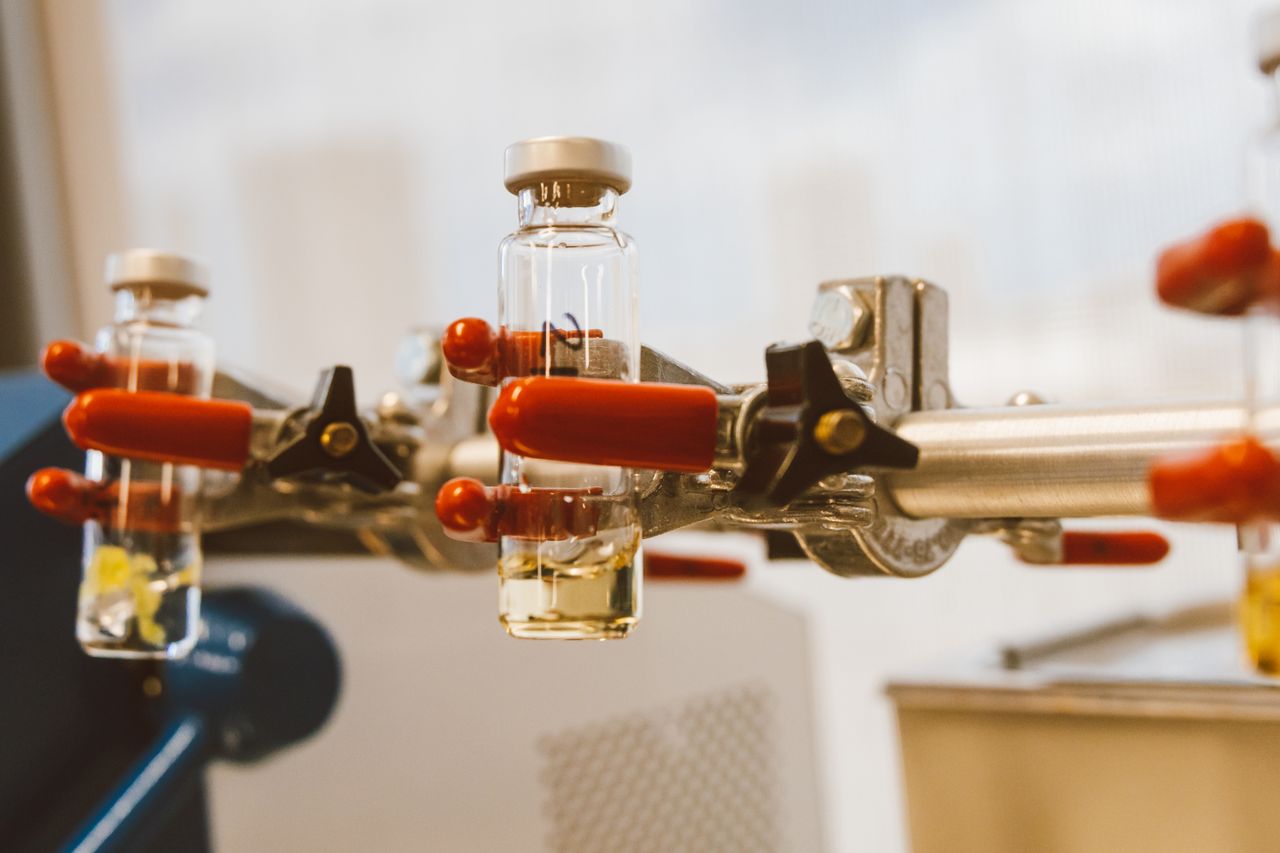
- A batch-matched certificate of analysis. The COA should come from an accredited third-party lab, match the batch number on the bottle, and list CBD, THC (including THCA) and other cannabinoids.
- Contaminant panels. For extracts, look for residual solvents, heavy metals, pesticides and microbial results. For seed oil, a THC result is useful if you are drug tested.
- Health claims. Neither product can lawfully be sold as treating a disease in the US or UK. Claims like that are a warning sign about the seller.
Frequently asked questions
Is hemp oil the same as CBD oil?
No. In most shops, hemp oil means hemp seed oil, a cold-pressed food oil rich in omega-6 and omega-3 fats with only trace cannabinoids. CBD oil is an extract of hemp flowers and leaves, diluted in a carrier and sold by its milligrams of cannabidiol. Some products blur the line by calling a CBD extract “hemp oil” or by using seed oil as the carrier, so read the ingredient list and COA rather than the front label.
Does hemp seed oil contain any CBD?
Only traces. Seeds lack the resin glands that make cannabinoids, so what is present comes from surface contamination during harvesting.1 German testing of 30 commercial seed oils found total cannabinoids of 9 to 279 mg per kg,4 which is roughly a hundred times lower than the average CBD content of UK CBD oils in one survey. Seed oil is not a meaningful source of CBD.
Can hemp seed oil make you fail a drug test?
It is unlikely with modern food-grade seed oils, which carry low THC levels, but it is not impossible, because contamination varies by batch and three of 30 German samples exceeded the EU limit.4 CBD oils are a bigger risk: in one analysis, 5 of 21 products labelled THC-free contained measurable THC.7 If you are tested, ask for a batch COA with a THC result.
Can you cook with CBD oil or hemp seed oil?
Hemp seed oil is a culinary oil, but its polyunsaturated fats make it better suited to dressings and drizzling than high-heat frying. CBD oil is not designed as a cooking oil, and heat and dilution make the dose in any serving hard to know. In the US, the FDA’s position is that CBD cannot lawfully be added to food sold across state lines.3
Is CBD oil legal in the UK?
CBD oils can be sold in the UK if they sit within the Food Standards Agency’s novel food process and contain no more than trace controlled cannabinoids. The FSA advises healthy adults to take no more than 10 mg of CBD a day and says people who are pregnant, breastfeeding or trying to conceive should not use it.11 No CBD food had been fully authorised by ministers as of September 2026.
Sources
- Farinon B, Molinari R, Costantini L, Merendino N. The seed of industrial hemp (Cannabis sativa L.): Nutritional Quality and Potential Functionality for Human Health and Nutrition. Nutrients. 2020;12(7):1935. DOI: 10.3390/nu12071935. PMID: 32610691. pubmed.ncbi.nlm.nih.gov
- US Food and Drug Administration. FDA Responds to Three GRAS Notices for Hemp Seed-Derived Ingredients for Use in Human Food. 20 December 2018. fda.gov
- US Food and Drug Administration. FDA Regulation of Cannabis and Cannabis-Derived Products, Including Cannabidiol (CBD). Updated 16 July 2024. fda.gov
- Lindekamp N, Triesch N, Rohn S, Weigel S. Quantification of sixteen cannabinoids in hemp seed edible oils and the influence of thermal processing on cannabinoid contents and profiles. Food Addit Contam Part A Chem Anal Control Expo Risk Assess. 2024;41(5):550-562. DOI: 10.1080/19440049.2024.2319270. PMID: 38588664. pubmed.ncbi.nlm.nih.gov
- Bonn-Miller MO, Loflin MJE, Thomas BF, Marcu JP, Hyke T, Vandrey R. Labeling Accuracy of Cannabidiol Extracts Sold Online. JAMA. 2017;318(17):1708-1709. DOI: 10.1001/jama.2017.11909. PMID: 29114823. pubmed.ncbi.nlm.nih.gov
- Liebling JP, Clarkson NJ, Gibbs BW, Yates AS, O’Sullivan SE. An Analysis of Over-the-Counter Cannabidiol Products in the United Kingdom. Cannabis Cannabinoid Res. 2022;7(2):207-213. DOI: 10.1089/can.2019.0078. PMID: 33998849. pubmed.ncbi.nlm.nih.gov
- Johnson E, Kilgore M, Babalonis S. Cannabidiol (CBD) product contamination: Quantitative analysis of Δ9-tetrahydrocannabinol (Δ9-THC) concentrations found in commercially available CBD products. Drug Alcohol Depend. 2022;237:109522. DOI: 10.1016/j.drugalcdep.2022.109522. PMID: 35690015. pubmed.ncbi.nlm.nih.gov
- Florian J, Salcedo P, Burkhart K, Shah A, Chekka LMS, Keshishi D, et al. Cannabidiol and Liver Enzyme Level Elevations in Healthy Adults: A Randomized Clinical Trial. JAMA Intern Med. 2025;185(9):1070-1078. DOI: 10.1001/jamainternmed.2025.2366. PMID: 40622698. pubmed.ncbi.nlm.nih.gov
- Callaway J, Schwab U, Harvima I, Halonen P, Mykkänen O, Hyvönen P, et al. Efficacy of dietary hempseed oil in patients with atopic dermatitis. J Dermatolog Treat. 2005;16(2):87-94. DOI: 10.1080/09546630510035832. PMID: 16019622. pubmed.ncbi.nlm.nih.gov
- Health Canada. Cannabidiol (CBD), and industrial hemp. canada.ca
- Food Standards Agency. CBD novel food applications: recommendations to ministers on first authorisations. FSA Board meeting, September 2026. gov.uk
- Hemp Law Group. Federal hemp ban 2026: where things stand. September 2026. hemplawgroup.com
Editorial note: This article is for general information only and is not medical or legal advice. CBD oil and hemp seed oil have not been evaluated by the FDA to diagnose, treat, cure or prevent any disease. Laws vary by location and change often, so verify the rules that apply where you are. Always talk to a licensed healthcare provider before use, especially if you are under 21, pregnant or nursing, taking medication, or managing a health condition.
More comparisons
-
CBD Gummies vs CBD Oil: Absorption, Onset and Label Accuracy
-
CBN vs Melatonin: What Sleep Trials and Regulators Actually Say
-
CBD Isolate vs Full Spectrum: Drug Tests, Entourage Claims and Law
-
CBN vs CBD: Sleep Claims, Trial Results and Key Differences
-
CBG vs CBD: How the Two Cannabinoids Differ on the Evidence