
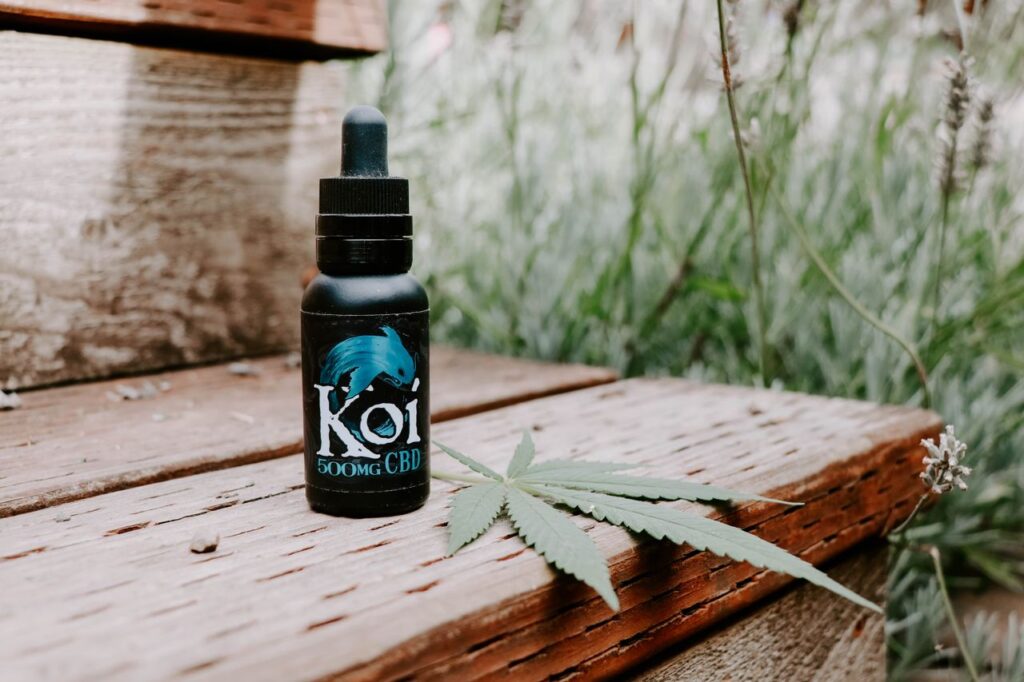
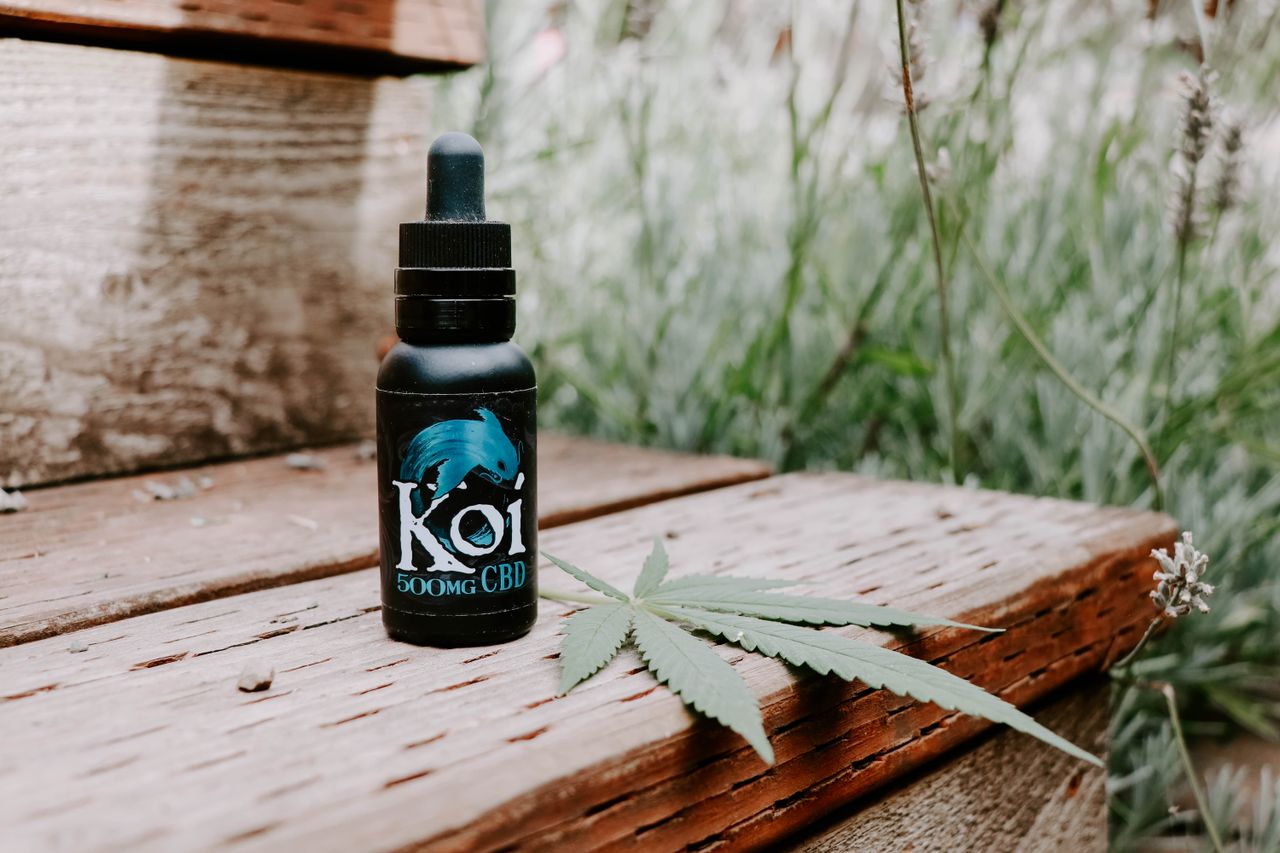
CBD isolate is purified CBD with the plant’s other compounds removed, while full-spectrum CBD is a whole-plant extract that keeps minor cannabinoids, terpenes and a small amount of THC. The practical difference is THC: full-spectrum products can cause positive drug tests, while genuinely pure isolate rarely does. Claims that full spectrum works better rest on thin evidence.
Those two points, drug testing and the entourage effect, are where most buyers get conflicting advice. This page sets out what controlled studies show on each, then covers safety, the 2026 legal changes that hit full-spectrum products hardest, and what to check on a certificate of analysis.
If you are weighing full spectrum against broad spectrum, the THC-removed middle option, our separate guide to full spectrum vs broad spectrum CBD covers that comparison.
At a glance
| Property | CBD isolate | Full-spectrum CBD |
|---|---|---|
| What it contains | CBD alone, usually sold as a crystalline powder or in oil | CBD plus minor cannabinoids, terpenes and some THC |
| Intended THC content | None, though traces are possible | Present, up to the product’s legal limit |
| Workplace drug test risk | Low for genuinely pure CBD | Real; positives recorded below 1 mg THC a day |
| Anti-doping risk | Lowest, as CBD is permitted | High; THC and other cannabinoids are prohibited |
| Entourage effect | Not applicable | Plausible in theory; little human evidence |
| Taste and smell | Largely neutral | Earthy and herbal from terpenes |
| Ease of verifying the label | One main compound to measure | Many compounds to measure and report |
| US federal status from 11 December 2026 | Fits the 0.4 mg per container THC cap if clean | Many products will exceed the cap |
| UK position | Controlled cannabinoids must stay under 1 mg per container | Same limit, which leaves little room for THC |
| Form used in pivotal CBD trials | Purified CBD | Mainly observational data |
What isolate and full spectrum actually contain
Both start with an extract of hemp. For CBD isolate, the extract is refined until CBD is separated from everything else, usually as a white crystalline powder that is then dissolved in oil or added to gummies. Full-spectrum extract keeps the broader mix: CBD, smaller amounts of cannabinoids such as CBG, CBC and CBN, terpenes, and delta-9 THC.
“Isolate” does not automatically mean “zero THC”. The UK Home Office takes the view that it is nearly impossible to extract and isolate CBD from the plant without traces of controlled cannabinoids such as THC.10 Good refining gets those traces very low, but only a certificate of analysis tells you whether a given batch achieved it.
Label accuracy is a wider problem across both types. In one study of 80 CBD products, only 54% contained a CBD amount within 10% of the label.12 Isolate is simpler to measure because there is one main compound; full spectrum involves more compounds, each of which can drift from batch to batch.
Broad spectrum sits between the two: a full-spectrum-style extract with the THC stripped out. It keeps some minor cannabinoids and terpenes, so it is not the same as isolate for anti-doping purposes, as the sport section below shows.
The entourage effect: what the evidence shows
The case for full spectrum rests on the entourage effect, the idea that cannabis compounds work better together than alone. A widely cited 2011 review set out the hypothesis that terpenes and minor cannabinoids might add to or modify cannabinoid effects, and proposed ways to test it. It described the synergy as something that, “if proven”, would matter.1
Laboratory tests have not found it at the receptors
When researchers tested six common cannabis terpenes on human CB1 and CB2 receptors, none activated the receptors or changed how THC acted on them, alone or in combination.2 The authors concluded that if an entourage effect exists, it is not happening at those receptors.
Human evidence is narrow
The clearest human result involves THC, not CBD. In a controlled study, inhaled d-limonene reduced the anxiety and paranoia caused by a 30 mg dose of vaporised THC, while leaving other THC effects unchanged.3 That supports the idea that specific terpenes can modify specific effects, but it does not show that a typical full-spectrum CBD oil works better than isolate.
The most quoted CBD comparison is a 2018 meta-analysis of observational epilepsy studies. Patients on CBD-rich extracts more often reported improvement than those on purified CBD, 71% against 46%. Yet on the standard clinical measure, at least a 50% cut in seizures, there was no difference: 37% for extracts against 42% for purified CBD.4 The studies were not randomised, and the authors called for controlled trials.
We found no randomised trial that compares isolate and full-spectrum CBD at matched doses in people. Until one exists, “full spectrum works better” is a hypothesis, not a finding.
Drug testing and anti-doping: where the difference is real
Standard workplace tests look for THC metabolites, not CBD. In a controlled study, pure CBD taken orally or by vaporiser showed no conversion to THC, and the authors concluded it is unlikely to affect drug testing. Positive samples appeared only after CBD-rich cannabis containing 3.7 mg of THC.7
Small daily THC doses are enough. In an open-label trial, 14 adults used a full-spectrum, high-CBD product delivering about 0.8 mg of THC a day. After four weeks, half of them tested positive for THC metabolite.5 In a 2026 controlled study, positive urine tests appeared in every group given any THC alongside 100 mg of CBD, from 0.5 mg upwards, over two weeks of use. One sample from the CBD-only group was also positive, a reminder that no product is entirely risk-free.6
Our explainer on whether CBD can fail a drug test covers detection windows and cut-offs.
Sport
The World Anti-Doping Agency permits CBD but prohibits other cannabinoids in competition. A 10-week study found that a broad-spectrum product with trace CBG left detectable CBG and CBDV in the urine of most participants after exercise, even with no THC detected.8 A full-spectrum product carries that risk plus THC itself.
Safety and effects in practice
CBD’s own risks, such as raised liver enzymes at high doses and interactions with medicines processed by CYP2C19 and CYP3A4, apply to both forms. Full spectrum adds exposure to THC and to minor cannabinoids whose long-term effects are poorly studied.
At the THC levels found in most full-spectrum oils, intoxication is uncommon. In the four-week trial above, no participants reported psychoactive effects at about 0.8 mg of THC a day.5 Larger servings, strong gummies or stacked products can change that, and THC exposure matters for driving, pregnancy and anyone with a history of psychosis.
User reports often describe full spectrum as having a stronger or more rounded effect. Those impressions may reflect THC, terpenes, expectation, or simply different CBD doses, and no controlled study has separated them. Isolate has a more neutral taste, which some people prefer in food and drinks. Because isolate removes the variable of THC, it is also the form researchers generally use when they want to study CBD itself.
Legal status in September 2026
United States. A federal law passed in November 2025 redefines hemp by total THC and caps finished hemp products at 0.4 mg of total THC per container. Most provisions take effect on 11 December 2026 after a one-month delay signed in September 2026.9 That limit is far below what many full-spectrum oils and gummies contain across a whole bottle or pack, so many will fall outside the federal hemp definition. As a hypothetical example, a 30 ml bottle delivering 0.1 mg of THC per 1 ml serving holds 3 mg of THC in total, more than seven times the cap. Isolate products with negligible THC are much better placed. Bills to delay or repeal the change are in committee, and state rules vary. Our explainer on the federal hemp THC limit has the detail.
United Kingdom. Pure CBD is not a controlled drug, but a CBD product must keep each controlled cannabinoid, including THC and CBN, at no more than 1 mg per container, among other conditions.10 Separately, the Food Standards Agency set a safe upper limit for THC in CBD foods of 0.07 mg a day in July 2025, and advises healthy adults to take no more than 10 mg of CBD a day.11 Both rules leave little room for classic full-spectrum products. Canada. CBD in any form is regulated under the Cannabis Act and sold only through authorised retailers.
What to check before choosing either type
Which type suits you depends mostly on your tolerance for THC exposure, not on proven differences in effect. These questions help:
- Are you drug tested, at work or in sport? If so, full spectrum carries a documented risk, and even isolate is only as clean as its batch.
- Does the COA match your batch? Look for an ISO/IEC 17025 accredited laboratory and the same lot number as your product.
- What is the THC per container? For isolate, look for delta-9 THC and THCA below the laboratory’s limit of detection. For full spectrum, multiply the per-serving THC by servings per pack.
- Is CBD per serving within 10% of the label? Studies show many products miss this.12
- Are other cannabinoids listed? For athletes, any CBG, CBN or CBDV matters.
- Are contaminants tested? Solvents, heavy metals, pesticides and microbes.
Our guide to reading a CBD certificate of analysis shows where each figure appears.
Frequently asked questions
Is full spectrum CBD better than CBD isolate?
There is no controlled evidence that it is. The entourage effect is a reasonable hypothesis, but terpenes did not alter cannabinoid receptor activity in laboratory tests, and the main epilepsy comparison found no difference on the standard 50% seizure-reduction measure.2,4 The clearest, proven difference is that full spectrum contains THC, which affects drug testing and legal status.
Will CBD isolate show up on a drug test?
Genuinely pure CBD is unlikely to cause a positive result, because drug tests look for THC metabolites and CBD does not convert to THC in the body.7 The risk comes from trace THC in a poorly refined batch. One sample from a CBD-only group tested positive in a 2026 study, so check a batch-matched COA if you are tested.6
Can full spectrum CBD make you fail a drug test?
Yes. In a four-week trial, half of 14 adults using a full-spectrum product that delivered about 0.8 mg of THC a day tested positive for THC metabolite.5 A controlled 2026 study found positive urine tests in every group given any THC with CBD, starting from 0.5 mg.6 Anyone subject to testing should treat full spectrum as a THC product.
Does full spectrum CBD get you high?
Usually not at typical doses. Participants taking about 0.8 mg of THC a day in a full-spectrum product reported no psychoactive effects.5 Higher servings or potent gummies can contain enough THC to be felt, particularly in people who rarely use cannabis. Avoid driving if you notice any effect, and remember THC can still show up on tests.
What is the entourage effect?
It is the idea that cannabinoids and terpenes in cannabis act together to produce effects greater or different than any single compound. It was set out as a hypothesis to be tested.1 One human study found a terpene, limonene, reduced THC-induced anxiety, but there are no controlled trials showing full-spectrum CBD outperforms isolate.3
Sources
- Russo EB. Taming THC: potential cannabis synergy and phytocannabinoid-terpenoid entourage effects. Br J Pharmacol. 2011;163(7):1344-1364. DOI: 10.1111/j.1476-5381.2011.01238.x. PMID: 21749363. pubmed.ncbi.nlm.nih.gov
- Santiago M, Sachdev S, Arnold JC, McGregor IS, Connor M. Absence of Entourage: Terpenoids Commonly Found in Cannabis sativa Do Not Modulate the Functional Activity of Δ9-THC at Human CB1 and CB2 Receptors. Cannabis Cannabinoid Res. 2019;4(3):165-176. DOI: 10.1089/can.2019.0016. PMID: 31559333. pubmed.ncbi.nlm.nih.gov
- Spindle TR, Zamarripa CA, Russo E, et al. Vaporized D-limonene selectively mitigates the acute anxiogenic effects of Δ9-tetrahydrocannabinol in healthy adults who intermittently use cannabis. Drug Alcohol Depend. 2024;257:111267. DOI: 10.1016/j.drugalcdep.2024.111267. PMID: 38498958. pubmed.ncbi.nlm.nih.gov
- Pamplona FA, da Silva LR, Coan AC. Potential Clinical Benefits of CBD-Rich Cannabis Extracts Over Purified CBD in Treatment-Resistant Epilepsy: Observational Data Meta-analysis. Front Neurol. 2018;9:759 (corrigendum 2019;9:1050). DOI: 10.3389/fneur.2018.00759. PMID: 30258398. pubmed.ncbi.nlm.nih.gov
- Dahlgren MK, Sagar KA, Lambros AM, Smith RT, Gruber SA. Urinary Tetrahydrocannabinol After 4 Weeks of a Full-Spectrum, High-Cannabidiol Treatment in an Open-label Clinical Trial. JAMA Psychiatry. 2021;78(3):335-337. DOI: 10.1001/jamapsychiatry.2020.3567. PMID: 33146684. pubmed.ncbi.nlm.nih.gov
- Wolinsky D, Zamarripa CA, Spindle TR, et al. The acute and chronic pharmacokinetics and pharmacodynamics of oral cannabidiol with and without low doses of delta-9-tetrahydrocannabinol. J Anal Toxicol. 2026;50(1):bkaf075. DOI: 10.1093/jat/bkaf075. PMID: 40704705. pubmed.ncbi.nlm.nih.gov
- Sholler DJ, Spindle TR, Cone EJ, et al. Urinary Pharmacokinetic Profile of Cannabidiol (CBD), Δ9-Tetrahydrocannabinol (THC) and Their Metabolites following Oral and Vaporized CBD and Vaporized CBD-Dominant Cannabis Administration. J Anal Toxicol. 2022;46(5):494-503. DOI: 10.1093/jat/bkab059. PMID: 34089060. pubmed.ncbi.nlm.nih.gov
- Gillham SH, Cole PL, Owens DJ, et al. Daily Use of a Broad-Spectrum Cannabidiol Supplement Produces Detectable Concentrations of Cannabinoids in Urine Prohibited by the World Anti-Doping Agency: An Effect Amplified by Exercise. Med Sci Sports Exerc. 2026;58(1):121-131. DOI: 10.1249/MSS.0000000000003842. PMID: 40920736. pubmed.ncbi.nlm.nih.gov
- Hemp Law Group. Federal Hemp Law in 2026: The Ban, the Deadline, and Every Bill Trying to Change It. Updated September 2026. hemplawgroup.com
- UK Home Office. Drug Licensing Factsheet: Cannabis, CBD and other cannabinoids. Revised September 2024. gov.uk
- Food Safety Magazine. UK Sets Safe Upper Limit for THC in CBD Novel Foods. July 2025. food-safety.com
- Johnson E, Kilgore M, Babalonis S. Label accuracy of unregulated cannabidiol (CBD) products: measured concentration vs. label claim. J Cannabis Res. 2022;4(1):28. DOI: 10.1186/s42238-022-00140-1. PMID: 35658956. pubmed.ncbi.nlm.nih.gov
Editorial note: This article is for general information only and is not medical or legal advice. CBD isolate and full-spectrum CBD products have not been evaluated by the FDA to diagnose, treat, cure or prevent any disease. Laws vary by location and change often, so verify the rules that apply where you are. Always talk to a licensed healthcare provider before use, especially if you are under 21, pregnant or nursing, taking medication, or managing a health condition.
More comparisons
-
CBD Gummies vs CBD Oil: Absorption, Onset and Label Accuracy
-
CBN vs Melatonin: What Sleep Trials and Regulators Actually Say
-
CBD Oil vs Hemp Oil: Seed Oil, Flower Extract and Label Traps
-
CBN vs CBD: Sleep Claims, Trial Results and Key Differences
-
CBG vs CBD: How the Two Cannabinoids Differ on the Evidence