
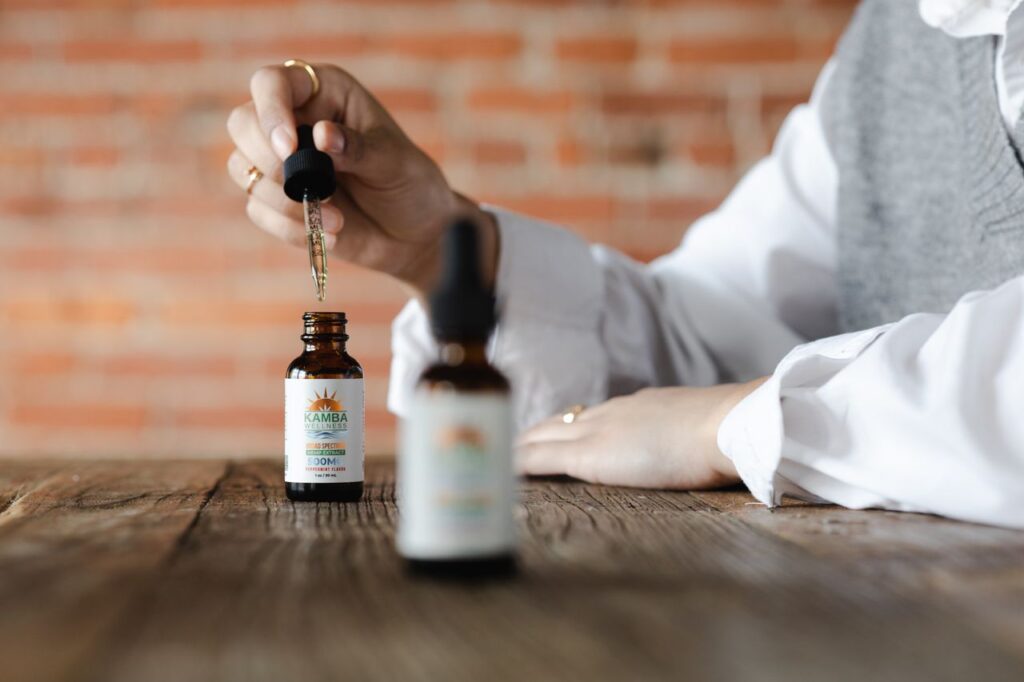
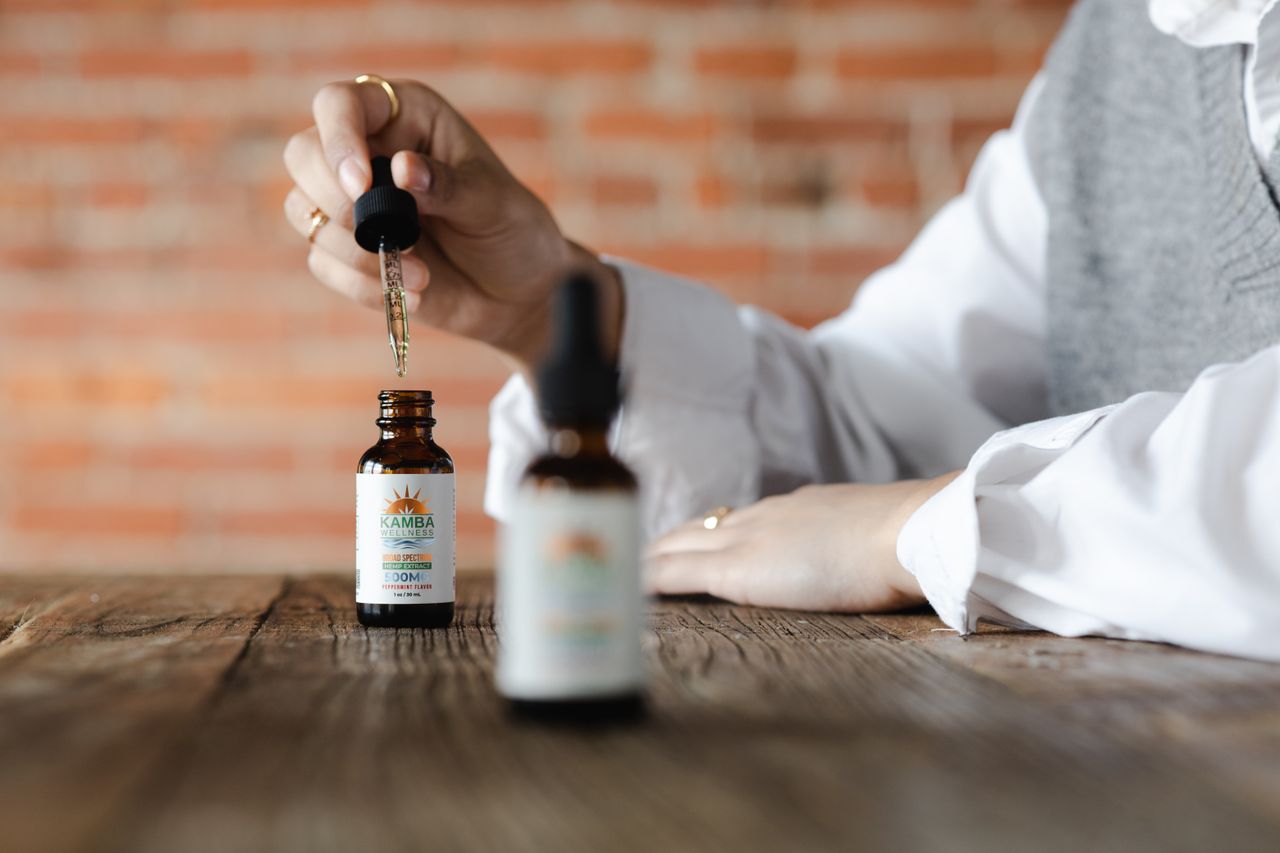
CBD gummies and CBD oil usually contain the same ingredient, cannabidiol, in different vehicles. Oil is a liquid extract in a carrier oil, measured by dropper and often held under the tongue. Gummies are pre-dosed sweets that are chewed and swallowed. Human studies suggest oil held under the tongue is mostly swallowed too, so the absorption gap is smaller than many sellers claim.
Many comparison pages quote precise bioavailability and onset figures for each format. We could not find controlled human studies behind them. What the research does show is that food, formulation and label accuracy matter more than the choice between a sweet and a dropper.
This guide covers what the pharmacokinetic studies found, how accurate labels are, safety and drug-testing risks, the legal position as of September 2026 and what to check before buying either.
At a glance
| Property | CBD gummies | CBD oil |
|---|---|---|
| Form | Chewable sweet, fixed dose per piece | Liquid in carrier oil, dosed by dropper |
| Route | Swallowed | Held under tongue, but largely swallowed3 |
| Absorption | Oral; low and variable1 | Oral; low and variable1 |
| Time to peak level | Not well studied for gummies | About 4 hours in two trials3,4 |
| Food effect | Likely, but untested for gummies | High-fat meal raised exposure about 4-fold2 |
| Dose flexibility | Whole or half pieces | Adjustable by drops |
| Label accuracy | 70% off by more than 10% in one study6 | About 3 in 10 accurate in one study7 |
| Added ingredients | Sugars, gelatine or pectin, flavours, colours | Carrier oil, sometimes flavouring |
| Child safety concern | Higher; looks like sweets | Lower, but still store securely |
What each product actually is
A CBD oil is a hemp extract dissolved in a carrier such as MCT oil, olive oil or hemp seed oil. The bottle states total CBD, and the dose depends on how many drops or millilitres are used. Oils may be full spectrum (with trace THC), broad spectrum (THC removed) or isolate.
A CBD gummy is a confectionery base, typically gelatine or pectin with sugars, acids, flavourings and colours, into which CBD is mixed before setting. Each piece is sold as a fixed dose. Gummies often use isolate or broad-spectrum extract to avoid THC taste and content, but full-spectrum gummies are common too.
So the difference is less about CBD and more about everything around it: the fat that carries it, the sugar that masks its taste, how evenly it is mixed, and how people take it.
Absorption and onset: what the pharmacokinetic studies show
Swallowed CBD is poorly absorbed. A review in CNS Drugs estimated the absolute oral bioavailability of CBD at about 6% when taken fasting, because absorption is incomplete and much of what is absorbed is broken down by the liver before reaching the bloodstream.1 The same review noted that exposure rises roughly four-fold with a high-fat meal.1
That food effect comes from a phase I trial of prescription-grade CBD oral solution, in which a high-fat meal increased peak levels about 4.85-fold and total exposure about 4.2-fold, without changing time to peak.2 The trial used doses far above consumer products, but the principle, that fat helps CBD absorption, is consistent across studies.
Does holding oil under the tongue help?
Probably not much. A 2024 Loughborough University crossover trial gave eight men the same CBD oil either as drops under the tongue or in swallowed capsules. Peak levels, time to peak (about four hours in both) and total exposure did not differ, suggesting the oil is swallowed before much is absorbed through the mouth.3 An earlier Australian trial likewise found a sublingual wafer and an oil solution gave comparable exposure, with peak levels at around four hours.4
What about gummies?
We found no published trial directly comparing a CBD gummy with a CBD oil in people. A 2021 Colorado study gave 15 adults five different oral preparations of 30 mg CBD and found clear differences in peak concentration, time to peak and total exposure, with one liquid formulation performing best.5 Formulation matters, so two gummies, or two oils, may behave quite differently. Claims that oils are 20 to 30% bioavailable and act within 15 minutes are not supported by the studies above. Our CBD bioavailability entry covers the concept.
Dose accuracy: how reliable are the labels?
Gummies are sold on precise dosing, but testing shows the number on the pack is often wrong.
- Gummies. A University of Kentucky team analysed 56 CBD gummy products bought online from national brands. The average gummy held 21.4 mg of CBD, but 70% differed from the labelled dose by more than 10%. CBD also varied between gummies from the same bottle, with coefficients of variation up to 27%.6
- Oils. In a 2017 study of 84 CBD extracts sold online, only about three in ten were within 10% of the labelled CBD.7 A Wisconsin analysis of 11 oils found four accurately labelled, four containing more CBD than stated, one containing less, and two that gave no specific CBD figure at all.8
The practical takeaway: a gummy’s fixed dose is only as good as the maker’s mixing and testing, and an oil’s flexibility is only useful if the bottle’s concentration is right. In both cases a batch-matched certificate of analysis is the only independent check.
What the research can and cannot tell you
No trial has compared gummies with oil for any health outcome, and we found no pharmacokinetic study of a commercial gummy published alongside an oil comparator. Most controlled CBD research uses purified CBD in oral solutions or capsules, often at doses much higher than a retail gummy provides.
The only CBD product approved by the FDA is Epidiolex, an oral solution for seizures linked to three rare conditions.10 The agency’s view is that more safety and effectiveness data are needed for cannabis-derived products, and it concluded in 2023 that existing food and supplement rules are not suitable for CBD.10
That leaves consumers choosing between formats on practical grounds, not proven differences in effect. Taste, sugar content, dose flexibility and label reliability are real differences; claims that one format works better for a particular condition are not backed by comparative evidence.
Safety, interactions and drug testing
CBD’s safety profile does not depend on its format. In a 2025 FDA-run trial, 201 healthy adults took 5 mg/kg/day of CBD or placebo for four weeks; 5.6% on CBD, and none on placebo, had liver enzyme rises above three times normal.9 At high doses, the most common side effects in early trials were diarrhoea, nausea, headache and sleepiness.2 CBD is metabolised by liver enzymes shared with many medicines, so drug interactions are possible with either format.
Two points are specific to gummies:
- THC content. In the Kentucky gummy study, 39% of products contained delta-9 THC, up to 0.88 mg per gummy, and nine products (16%) had more than 0.4 mg in a single gummy.6 Several a day could add up.
- Children and pets. Gummies look and taste like sweets. Store them out of reach in their original packaging.
Standard drug tests detect THC metabolites, not CBD. Unlabelled THC in either format is the main risk; our explainer on whether CBD can fail a drug test goes into detail.

Legal status in September 2026
United States. The FDA’s position is that CBD cannot lawfully be added to food sold across state lines or marketed as a dietary supplement,10 which covers gummies and ingestible oils alike, though enforcement has been limited and states take different approaches.
The larger change is the federal hemp redefinition. It moves to total THC and caps finished hemp products at 0.4 mg of total THC per container, with most provisions taking effect on 11 December 2026.11 Any product whose THC across the whole bottle exceeds 0.4 mg falls outside the definition, and in the Kentucky study some CBD gummies exceeded it in a single piece.6 Bills to delay or repeal the change are in committee. See our explainer on the 2026 federal hemp THC limit.
United Kingdom. CBD gummies and oils are regulated as novel foods. The FSA advises healthy adults to take no more than 10 mg of CBD a day, which is less than the average single gummy held in a recent US analysis,6 and its board sent recommendations on the first three applications to ministers in September 2026.12
Canada. CBD is controlled under the Cannabis Act, so CBD edibles and oils can be sold only through authorised cannabis retailers.
What to check before buying either
- CBD per serving and per pack, in milligrams. For oil, check the concentration per millilitre; for gummies, CBD per piece.
- THC per serving, not just a percentage. With a 0.4 mg per container federal cap coming in the US, a THC figure per gummy or per millilitre is the useful number.
- A batch-matched COA from an accredited third-party lab, showing CBD, THC and contaminant results. For gummies, ask whether the lab tested more than one piece.
- The other ingredients. Gummies add sugar, which adds up with daily use, and gelatine excludes vegetarians. Oils may use coconut-derived MCT, which matters for some allergies.
- Storage. Gummies can soften or stick in heat; oils keep best cool and dark.
- Claims. Products that promise to treat a condition are breaking the rules in the US and UK. That is a warning sign about the seller.
Frequently asked questions
Are CBD gummies as effective as CBD oil?
There is no direct evidence either way. No trial has compared a CBD gummy with a CBD oil in people, and both are swallowed, which gives CBD a low oral bioavailability of around 6% in the fasting state.1 Formulation, food and dose accuracy probably matter more than format. Label testing shows both frequently contain more or less CBD than stated.6,7
Which works faster, CBD oil or gummies?
Published trials do not show oil working much faster. In two controlled studies, CBD oil reached peak blood levels around four hours after dosing, whether it was held under the tongue or swallowed in a capsule.3,4 Gummies have not been studied head to head. Claims that oil works within 15 minutes are not backed by the pharmacokinetic research we reviewed.
Does holding CBD oil under the tongue make it work better?
Probably not by much. A 2024 crossover trial found no difference in peak level, time to peak or total exposure between CBD oil taken as sublingual drops and the same oil swallowed in capsules, suggesting most sublingual oil is swallowed before it is absorbed through the mouth.3 The trial was small, with eight men, so modest differences cannot be ruled out.
Do CBD gummies contain THC?
Many do. Full-spectrum gummies contain THC by design, and testing shows it also appears in products that do not declare it. A 2025 analysis of 56 CBD gummy products found delta-9 THC in 39% of them, with up to 0.88 mg per gummy.6 If you are drug tested or want to avoid THC, check a batch COA for a THC result per gummy.
Should you take CBD with food?
Food, especially fat, increases how much CBD is absorbed. In a phase I trial of prescription-grade CBD, a high-fat meal raised peak levels nearly five-fold and total exposure about four-fold.2 That also means the same dose can have different effects depending on meals, which matters for anyone taking medicines that interact with CBD. Talk to a pharmacist or doctor first if that applies.
Sources
- Perucca E, Bialer M. Critical Aspects Affecting Cannabidiol Oral Bioavailability and Metabolic Elimination, and Related Clinical Implications. CNS Drugs. 2020;34(8):795-800. DOI: 10.1007/s40263-020-00741-5. PMID: 32504461. pubmed.ncbi.nlm.nih.gov
- Taylor L, Gidal B, Blakey G, Tayo B, Morrison G. A Phase I, Randomized, Double-Blind, Placebo-Controlled, Single Ascending Dose, Multiple Dose, and Food Effect Trial of the Safety, Tolerability and Pharmacokinetics of Highly Purified Cannabidiol in Healthy Subjects. CNS Drugs. 2018;32(11):1053-1067. DOI: 10.1007/s40263-018-0578-5. PMID: 30374683. pubmed.ncbi.nlm.nih.gov
- Johnson DA, Funnell MP, Heaney LM, Cable TG, Wheeler PC, Bailey SJ, et al. Cannabidiol Oil Ingested as Sublingual Drops or Within Gelatin Capsules Shows Similar Pharmacokinetic Profiles in Healthy Males. Cannabis Cannabinoid Res. 2024;9(5):e1423-e1432. DOI: 10.1089/can.2023.0117. PMID: 37733294. pubmed.ncbi.nlm.nih.gov
- Hosseini A, McLachlan AJ, Lickliter JD. A phase I trial of the safety, tolerability and pharmacokinetics of cannabidiol administered as single-dose oil solution and single and multiple doses of a sublingual wafer in healthy volunteers. Br J Clin Pharmacol. 2021;87(4):2070-2077. DOI: 10.1111/bcp.14617. PMID: 33075170. pubmed.ncbi.nlm.nih.gov
- Williams NNB, Ewell TR, Abbotts KSS, Harms KJ, Woelfel KA, Dooley GP, et al. Comparison of Five Oral Cannabidiol Preparations in Adult Humans: Pharmacokinetics, Body Composition, and Heart Rate Variability. Pharmaceuticals (Basel). 2021;14(1):35. DOI: 10.3390/ph14010035. PMID: 33418866. pubmed.ncbi.nlm.nih.gov
- Johnson ED, Kilgore MW, Stafford M, Randolph M, Glover M, Babalonis S. Cannabidiol Gummy Products: LC-MS/MS Assessment of Cannabinoid Concentrations. Cannabis Cannabinoid Res. 2025;10(6):710-718. DOI: 10.1089/can.2024.0167. PMID: 40454463. pubmed.ncbi.nlm.nih.gov
- Bonn-Miller MO, Loflin MJE, Thomas BF, Marcu JP, Hyke T, Vandrey R. Labeling Accuracy of Cannabidiol Extracts Sold Online. JAMA. 2017;318(17):1708-1709. DOI: 10.1001/jama.2017.11909. PMID: 29114823. pubmed.ncbi.nlm.nih.gov
- Miller OS, Elder EJ Jr, Jones KJ, Gidal BE. Analysis of cannabidiol (CBD) and THC in nonprescription consumer products: Implications for patients and practitioners. Epilepsy Behav. 2022;127:108514. DOI: 10.1016/j.yebeh.2021.108514. PMID: 34998268. pubmed.ncbi.nlm.nih.gov
- Florian J, Salcedo P, Burkhart K, Shah A, Chekka LMS, Keshishi D, et al. Cannabidiol and Liver Enzyme Level Elevations in Healthy Adults: A Randomized Clinical Trial. JAMA Intern Med. 2025;185(9):1070-1078. DOI: 10.1001/jamainternmed.2025.2366. PMID: 40622698. pubmed.ncbi.nlm.nih.gov
- US Food and Drug Administration. FDA Regulation of Cannabis and Cannabis-Derived Products, Including Cannabidiol (CBD). Updated 16 July 2024. fda.gov
- Hemp Law Group. Federal hemp ban 2026: where things stand. September 2026. hemplawgroup.com
- Food Standards Agency. CBD novel food applications: recommendations to ministers on first authorisations. FSA Board meeting, September 2026. gov.uk
Editorial note: This article is for general information only and is not medical or legal advice. CBD gummies and CBD oil have not been evaluated by the FDA to diagnose, treat, cure or prevent any disease. Laws vary by location and change often, so verify the rules that apply where you are. Always talk to a licensed healthcare provider before use, especially if you are under 21, pregnant or nursing, taking medication, or managing a health condition.
More comparisons
-
CBN vs Melatonin: What Sleep Trials and Regulators Actually Say
-
CBD Isolate vs Full Spectrum: Drug Tests, Entourage Claims and Law
-
CBD Oil vs Hemp Oil: Seed Oil, Flower Extract and Label Traps
-
CBN vs CBD: Sleep Claims, Trial Results and Key Differences
-
CBG vs CBD: How the Two Cannabinoids Differ on the Evidence