
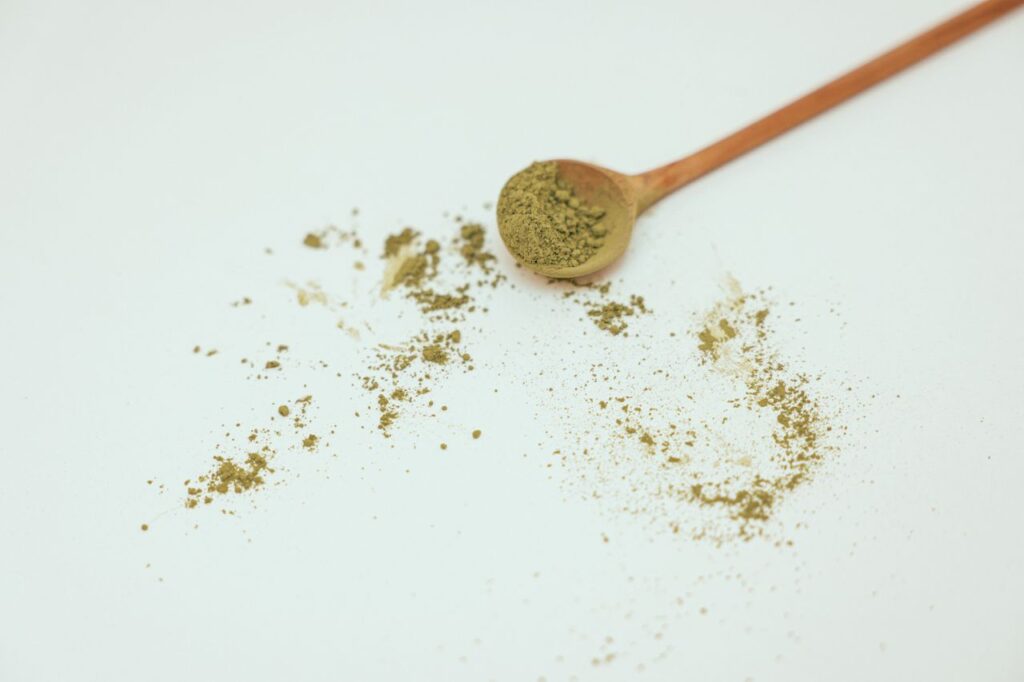
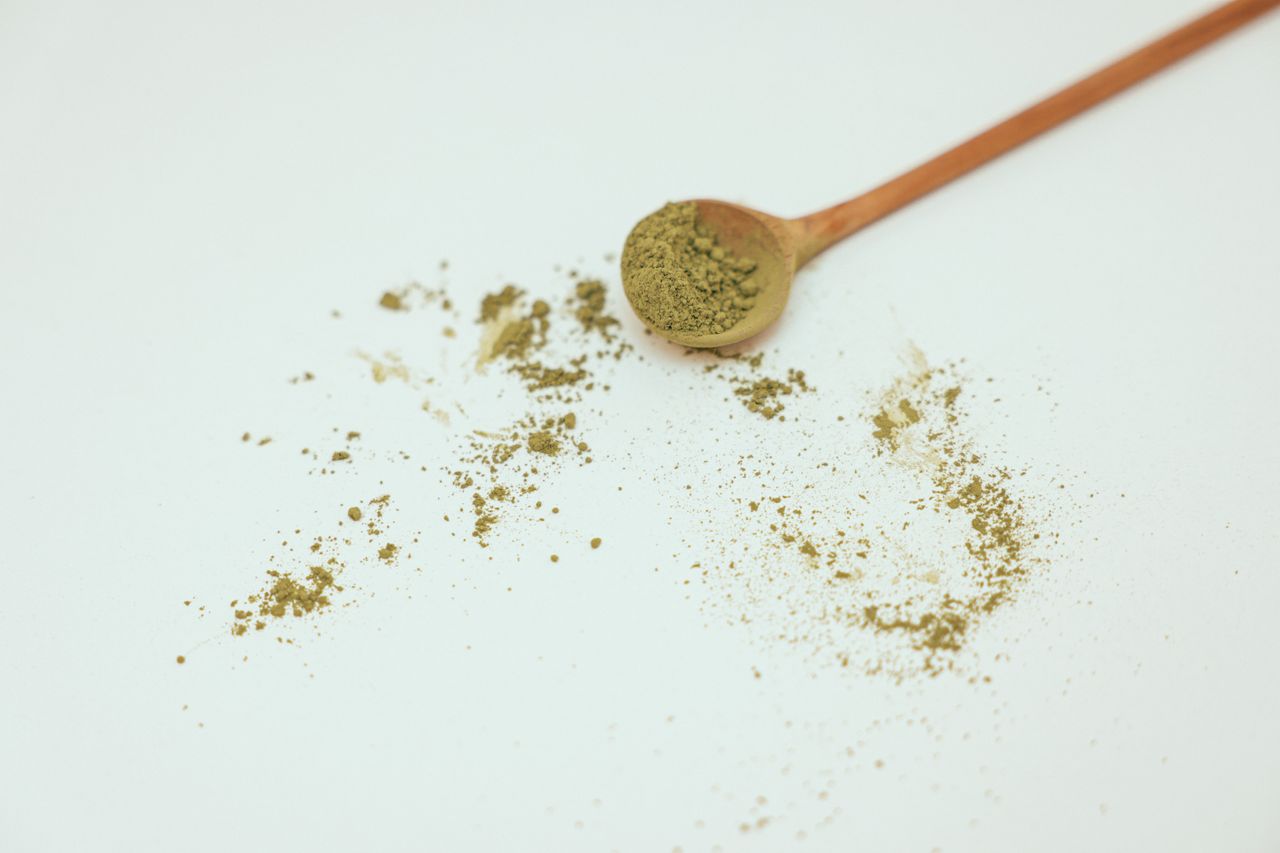
Red and white kratom are the same plant, Mitragyna speciosa, sold at opposite ends of the marketing spectrum: red as relaxing, white as energising. Users do report that split. But the only study to test the products those users bought found no significant alkaloid difference between colours, and plant research suggests colour mostly reflects drying, not chemistry.
That does not mean every user report is imagined. It means the colour on the label is a weak signal compared with things that are rarely printed on it: the batch’s mitragynine content, its 7-OH level, how it was dried and how much someone takes.
This page explains what is known and what is not. It is not dosing advice, and kratom is not an approved medicine.
At a glance
| Property | Red kratom | White kratom |
|---|---|---|
| Plant | Mitragyna speciosa leaf | Mitragyna speciosa leaf |
| Marketing position | Relaxing, evening use | Energising, daytime focus |
| Vendor processing story | Mature leaves, longer or warmer drying, sometimes sun or fermentation | Pale-veined or young leaves, dried indoors |
| Standard definition | None | None |
| User reasons ranked highest | Relaxation or sleep 1 | Concentration, work or study 1 |
| Rated for concentration (0 to 100) | About 50 1 | About 69 1 |
| Alkaloids in retail testing | No significant difference from white 1 | No significant difference from red 1 |
| Blinded human trials | None | None |
| Safety and interactions | Same as any kratom | Same as any kratom |
| Proposed federal 7-OH line | Over 0.050% by dry weight 11 | Over 0.050% by dry weight 11 |
Where red and white labels come from
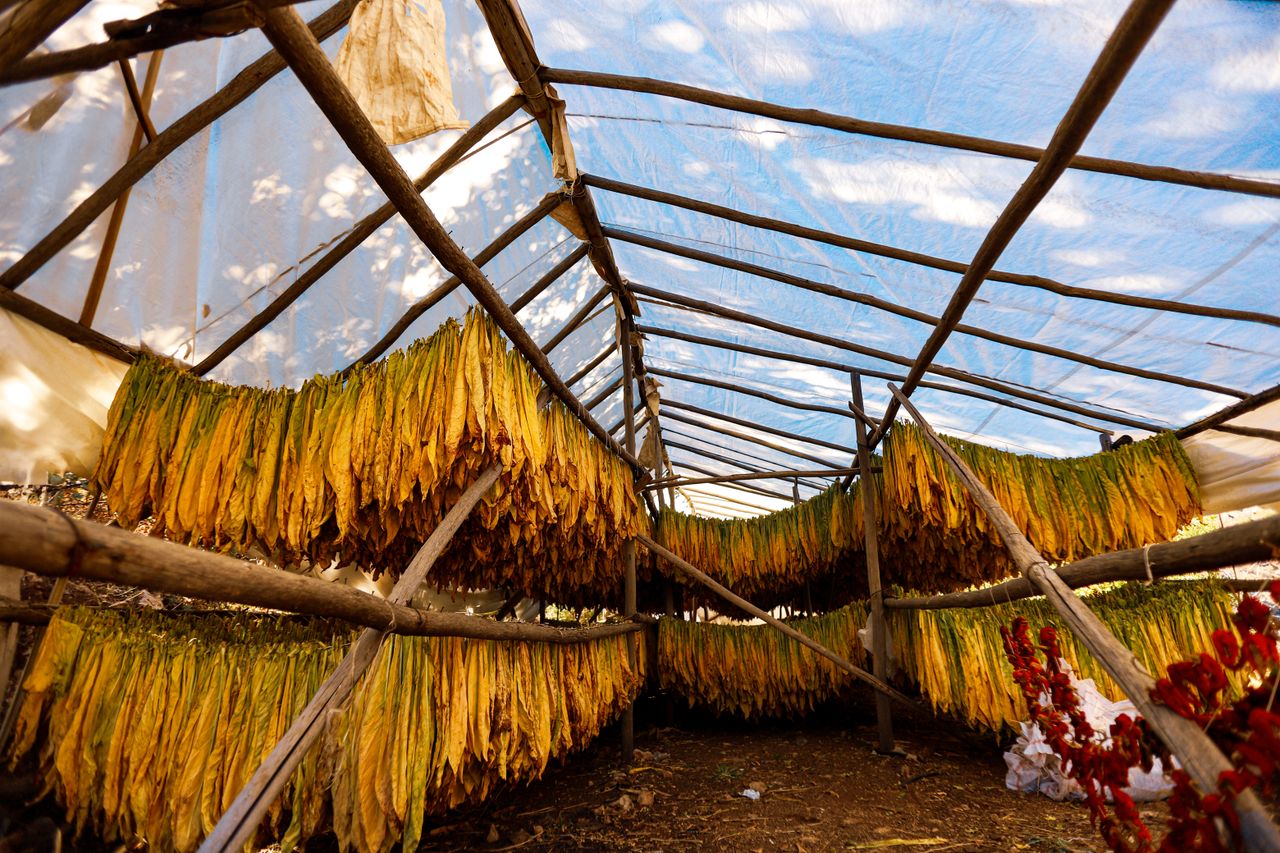
Vendors say colour names come from the leaf’s central vein, which can look red, green or pale, and from how the leaves are handled after picking. Red is usually described as mature leaf dried for longer or in warmer conditions, sometimes in the sun or with a fermentation step. White is described as pale-veined or younger leaf dried indoors. Our glossary entries on red vein and white vein kratom summarise the trade usage.
Research complicates that neat picture. In Thai trees, vein colour varied on a single tree as leaves matured, running from green to red, so vein colour is not a fixed property of a plant or a region.3 A 2025 drying experiment found that Western strain labels usually track the colour of the finished powder, and that drying the same leaves at 60°C rather than 25°C turned the powder reddish while key alkaloids stayed similar.2
In other words, a red powder may be red because of how it was dried, not because it came from red-veined leaves or has a “red” chemistry. There is no regulator, pharmacopoeia or industry body that defines what red or white kratom must be.
Relaxing versus energising: what users actually report
A 2023 survey of 644 current users, most of them customers of one US vendor, is the best available look at how people experience the colours.1 Red and white were the furthest apart of the three colours on the scales that differed:
| Effect (0 to 100 scale) | Red | White |
|---|---|---|
| Better able to concentrate | About 50 | About 69 |
| Feeling more energetic | About 53 | About 67 |
| Feeling more stimulated | About 49 | About 63 |
| Able to stay up all night | About 18 | About 41 |
All four red versus white gaps were statistically significant. When ranking reasons for use, red users put relaxation or sleep highest of the three colours and white users put it lowest; white users put concentration, work or study and sociability highest.1
The overlap is just as striking. Pain relief, calm, relaxation, happiness, anxiety and nausea ratings did not differ significantly between colours, and red and white were rated similarly for constipation. On most of what people use kratom for, the colours looked alike.
Sample sizes were also uneven: 184 people rated red and 131 rated white, and because respondents chose which colours to report on, people who expected red to relax them may have been more likely to use it in the evening. That kind of self-selection can widen apparent differences.1
Why the lab picture does not match the user picture
The survey team had the vendor’s products tested by an independent laboratory. Alkaloid content did not differ significantly between the red, green and white products.1 The authors proposed three explanations: expectation shaped by marketing and word of mouth, unmeasured minor alkaloids or terpenes, or differences in individual metabolism. None has been tested in a controlled trial.
A fair test is not hard to describe. It would take one batch of leaves, dry half in a way that yields red powder and half in a way that yields white, confirm the alkaloid profiles, and give both to participants who do not know which is which. Until something like that is published, claims that red and white reliably feel different rest on expectation-prone self-report.
Amount taken may matter more than colour
Kratom’s effects are commonly described as dose-dependent, with smaller amounts described as more stimulating and larger amounts as more sedating.5 If someone takes more of a product they expect to be relaxing, the colour gets the credit for an effect that may come from the amount. Batch potency adds to this: across 745 Thai leaf samples, mitragynine ranged from roughly 0.3% to 4.9% of dry weight, varying with season and region.6
Does red have more 7-OH?
A common claim is that longer drying or fermentation converts some mitragynine into 7-hydroxymitragynine, making red more opioid-like. Researchers in the 2025 drying study noted they found no 7-OH in their own leaf samples and suggested it may form after harvest, but 7-OH was detected only in some seasons and cultivars, at 0.02% to 0.04% of leaf alkaloid extracts.2 In one 2022 laboratory study that happened to include a Red Maeng Da and a White Borneo powder, the red sample showed more 7-OH than the white one in each extraction, but the measured amount shifted roughly tenfold depending on the solvent used.4 That is one sample of each, which says nothing general about red and white. Read more on 7-hydroxymitragynine in our glossary.
The marketing backdrop
A 2025 study of 25 online kratom sellers shipping to Hungary found that 68% promoted enhancement effects, while only 32% gave any information on adverse effects.5 Colour-coded effect promises fit that pattern: confident on benefits, quiet on variability and risk.
Safety, dependence and interactions apply equally
Choosing red for its relaxing reputation, or white for its lighter one, does not change the risk profile. The FDA warns of liver toxicity, seizures, substance use disorder, tolerance and withdrawal, and rare deaths, often with other substances involved.7 Regular use of any colour can lead to tolerance.
Red’s sedating reputation raises a specific concern: combining it with alcohol, opioids, benzodiazepines or sleep medicines. Pharmacokinetic interactions are documented, too. In 12 healthy adults, one serving of kratom tea raised exposure to midazolam, a sedative cleared by the CYP3A enzyme, by roughly 40%.8 Anyone taking prescription medicines should ask a pharmacist before using kratom.
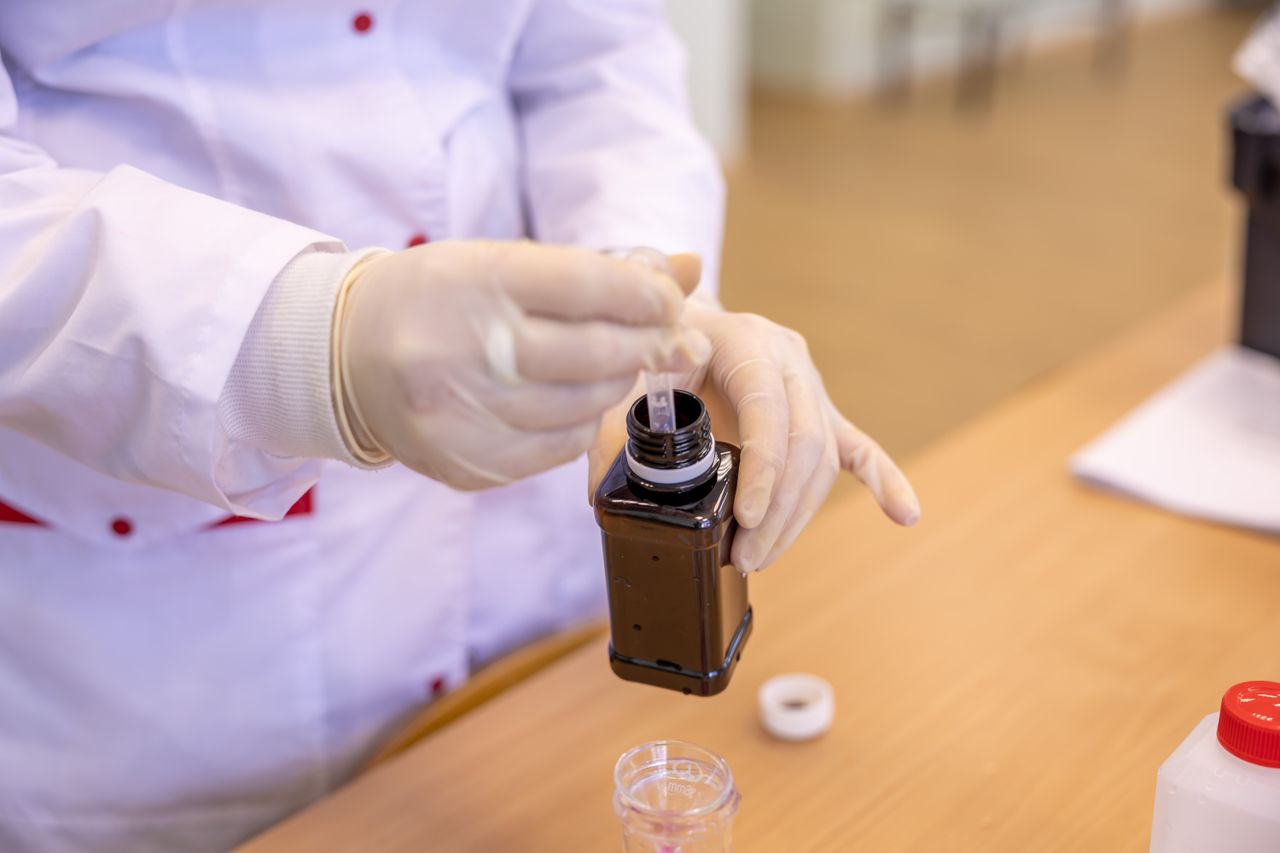
On drug testing, mitragynine is not part of the standard five-drug workplace panel, but targeted tests can detect it regardless of colour. Contaminants are colour-blind as well: FDA analysis of 30 kratom products found lead and nickel at levels it said could harm heavy, long-term users.9
What to check on a red or white kratom COA
Since colour tells you little, a batch-specific certificate of analysis is the most useful thing a seller can provide. See our guide to reading a kratom lab report for a line-by-line walkthrough.
- Batch and lab. Lot number matching your pack, a recent test date and a named independent lab, ideally ISO/IEC 17025 accredited, that you can contact to verify the report.
- Mitragynine %. Plain leaf in Thai field studies measured roughly 0.3% to 5% of dry weight.6 Much higher figures on a “leaf” product point to extract or fortification.
- 7-OH. Especially relevant for red, given the oxidation claims. The DEA’s proposed line for botanical kratom is 0.050% 7-OH by dry weight.11 Look for a numeric result or a stated limit of quantification, and a method with confirmatory steps, since some mass spectrometry approaches can falsely identify 7-OH.10
- Heavy metals. Numeric results for lead, arsenic, cadmium and mercury, with nickel a useful extra.9
- Microbials. Salmonella and E. coli not detected, plus total aerobic count and yeast and mould.
A COA that is identical for a seller’s red and white products, lacks numbers, or cannot be matched to your batch should lower your confidence in both the product and the colour claim.

Red and white kratom and the law in September 2026
No law distinguishes red from white. In the US, kratom leaf is not federally scheduled, though the FDA does not treat it as a lawful dietary supplement or food ingredient.7
The DEA’s 6 July 2026 notice of intent proposes temporarily placing 7-OH in Schedule I above a threshold: more than 0.050% by dry weight in botanical kratom, or for other products more than 0.050% or 1 mg per article. Natural leaf below the line is excluded.11 As of 23 September 2026, the order had not been published. Mitragynine pseudoindoxyl, MGM-15 and MGM-16 were temporarily placed in Schedule I from 26 August 2026.12 Our roundup of kratom law changes in September 2026 covers state emergency orders, including Florida’s rules on concentrated 7-OH.
Several states and localities ban kratom; many others regulate it under Kratom Consumer Protection Acts with age limits and labelling requirements. In the UK, supply and import are prohibited under the Psychoactive Substances Act 2016, but possession is not an offence. In Canada, kratom is not a scheduled drug, yet Health Canada has not authorised the sale of any product containing it.
Frequently asked questions
What is the difference between red and white kratom?
Both are dried leaf of the same tree. Red is marketed as relaxing and white as energising, and users in a 2023 survey rated them that way.1 But lab testing in that study found no significant alkaloid difference between the colours, and drying experiments show powder colour can change without the main alkaloids changing.2 Batch potency and amount taken vary more than colour does.
Is red kratom better for sleep than white?
Users more often choose red for relaxation or sleep, and rate white as better for staying awake.1 No controlled study has tested either for sleep, and kratom is not approved for any sleep condition. Combining kratom with alcohol, sleep medicines or other sedatives adds risk. Anyone with ongoing sleep problems should speak to a clinician.
Is white kratom stronger than red?
“Stronger” usually means more stimulating in vendor language, not more potent. White was rated more energising and better for concentration than red in user surveys, but measured alkaloid content did not differ between colours in the products tested.1 Potency depends on the batch’s mitragynine and other alkaloids, which only a COA can tell you.
Does red kratom contain more 7-OH than white?
Evidence does not show a consistent difference. Some researchers think 7-OH may form after harvest, and drying conditions affect alkaloid levels.2 In one lab study, a red sample showed more 7-OH than a white one, but results varied several-fold with extraction method and covered only one product each.4 Check the batch COA against the proposed 0.050% federal line.11
Can red and white kratom be taken together?
Some vendors sell red and white blends, but no research has examined whether combining colours changes effects. A blend simply combines the alkaloid content of both powders. The better-documented risks come from mixing kratom with alcohol, opioids, sedatives or medicines cleared by the CYP3A enzyme, which can raise blood levels of those drugs.8
Sources
- Huisman G, Menke M, Grundmann O, Schreiber R, Mason N. Examining the Psychoactive Differences between Kratom Strains. Int J Environ Res Public Health. 2023;20(14):6425. DOI: 10.3390/ijerph20146425. PMID: 37510657. pubmed.ncbi.nlm.nih.gov
- Zhang M, Lyndon A, Kanumuri SRR, Sharma A, Pearson BJ, McCurdy CR, Chen J. Alkaloid biosynthesis in medicinal crop kratom (Mitragyna speciosa) varies with postharvest, genetic, and seasonal factors. Front Plant Sci. 2025;16:1653916. DOI: 10.3389/fpls.2025.1653916. PMID: 41090093. pubmed.ncbi.nlm.nih.gov
- Ransden KE, Ramachandria P, Laforest LC, Kanumuri SRR, Sharma A, McCurdy CR, Nadakuduti SS. Comparative analysis of monoterpene indole alkaloid composition and genotypic variation in Thai Mitragyna speciosa. Front Plant Sci. 2026;17:1821609. DOI: 10.3389/fpls.2026.1821609. PMID: 42158609. pubmed.ncbi.nlm.nih.gov
- Hughes S, van de Klashorst D, Veltri CA, Grundmann O. Acute, Sublethal, and Developmental Toxicity of Kratom (Mitragyna speciosa Korth.) Leaf Preparations on Caenorhabditis elegans as an Invertebrate Model for Human Exposure. Int J Environ Res Public Health. 2022;19(10):6294. DOI: 10.3390/ijerph19106294. PMID: 35627831. pubmed.ncbi.nlm.nih.gov
- Balázs O, Kárász D, Ashraf AR, Domián BM, Fittler AT, Csabai D, Hesszenberger D, Lajtai A, Vén B, Lakatos Á, Kuzma M, Mayer M, Vida RG. Evaluation of the unregulated online kratom market in two east-central European countries: test purchase and analysis of potential toxicological consequences. Harm Reduct J. 2025;23:10. DOI: 10.1186/s12954-025-01363-0. PMID: 41382258. pubmed.ncbi.nlm.nih.gov
- Sengnon N, Vonghirundecha P, Chaichan W, Juengwatanatrakul T, Onthong J, Kitprasong P, Sriwiriyajan S, Chittrakarn S, Limsuwanchote S, Wungsintaweekul J. Seasonal and Geographic Variation in Alkaloid Content of Kratom (Mitragyna speciosa (Korth.) Havil.) from Thailand. Plants (Basel). 2023;12(4):949. DOI: 10.3390/plants12040949. PMID: 36840297. pubmed.ncbi.nlm.nih.gov
- US Food and Drug Administration. FDA and Kratom. FDA Public Health Focus; page last updated 2 December 2025. fda.gov
- Tanna RS, Nguyen JT, Hadi DL, Layton ME, White JR, Cech NB, Oberlies NH, Rettie AE, Thummel KE, Paine MF. Clinical Assessment of the Drug Interaction Potential of the Psychotropic Natural Product Kratom. Clin Pharmacol Ther. 2023;113(6):1315-1325. DOI: 10.1002/cpt.2891. PMID: 36924284. pubmed.ncbi.nlm.nih.gov
- US Food and Drug Administration. Laboratory Analysis of Kratom Products for Heavy Metals. FDA Public Health Focus (analysis of 30 kratom products for lead and nickel, 2019). fda.gov
- Sheehan D, Li Y, Meckler E, Upton R, Zhang M. Avoiding False Identification of 7-Hydroxymitragynine in Kratom Products Using a Multicriteria LC-MS Confirmation. J Am Soc Mass Spectrom. 2026;37(5):1303-1312. DOI: 10.1021/jasms.6c00088. PMID: 41989479. pubmed.ncbi.nlm.nih.gov
- Drug Enforcement Administration. Schedules of Controlled Substance: Temporary Placement of 7-Hydroxymitragynine Above a Specified Threshold in Schedule I (notice of intent). Federal Register. 6 July 2026;91 FR 40917. Document 2026-13580. federalregister.gov
- Drug Enforcement Administration. Schedules of Controlled Substances: Temporary Placement of Mitragynine Pseudoindoxyl, MGM-15, and MGM-16 in Schedule I (temporary scheduling order, effective 26 August 2026). Federal Register. 26 August 2026;91 FR 54948. Document 2026-17429. federalregister.gov
Editorial note: This article is for general information only and is not medical or legal advice. Red and white kratom have not been evaluated by the FDA to diagnose, treat, cure or prevent any disease. Laws vary by location and change often, so verify the rules that apply where you are. Always talk to a licensed healthcare provider before use, especially if you are under 21, pregnant or nursing, taking medication, or managing a health condition.
More comparisons
-
Green Malay vs Green Maeng Da Kratom: What the Labels Really Tell You
-
Borneo vs Bali Kratom: What the Labels Mean and What Lab Data Shows
-
Kratom vs Kanna: Two Botanicals With Very Different Mechanisms
-
Kratom Capsules vs Powder: Same Leaf, Different Trade-offs
-
Maeng Da vs Bali Kratom: Strain Names, Lab Data and What Differs