
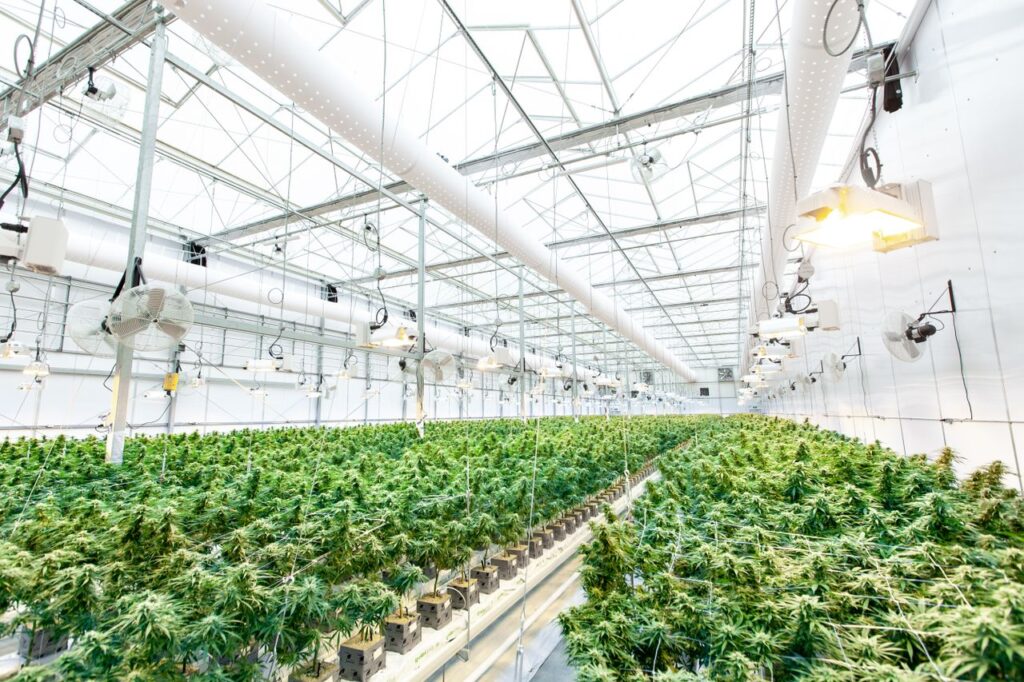
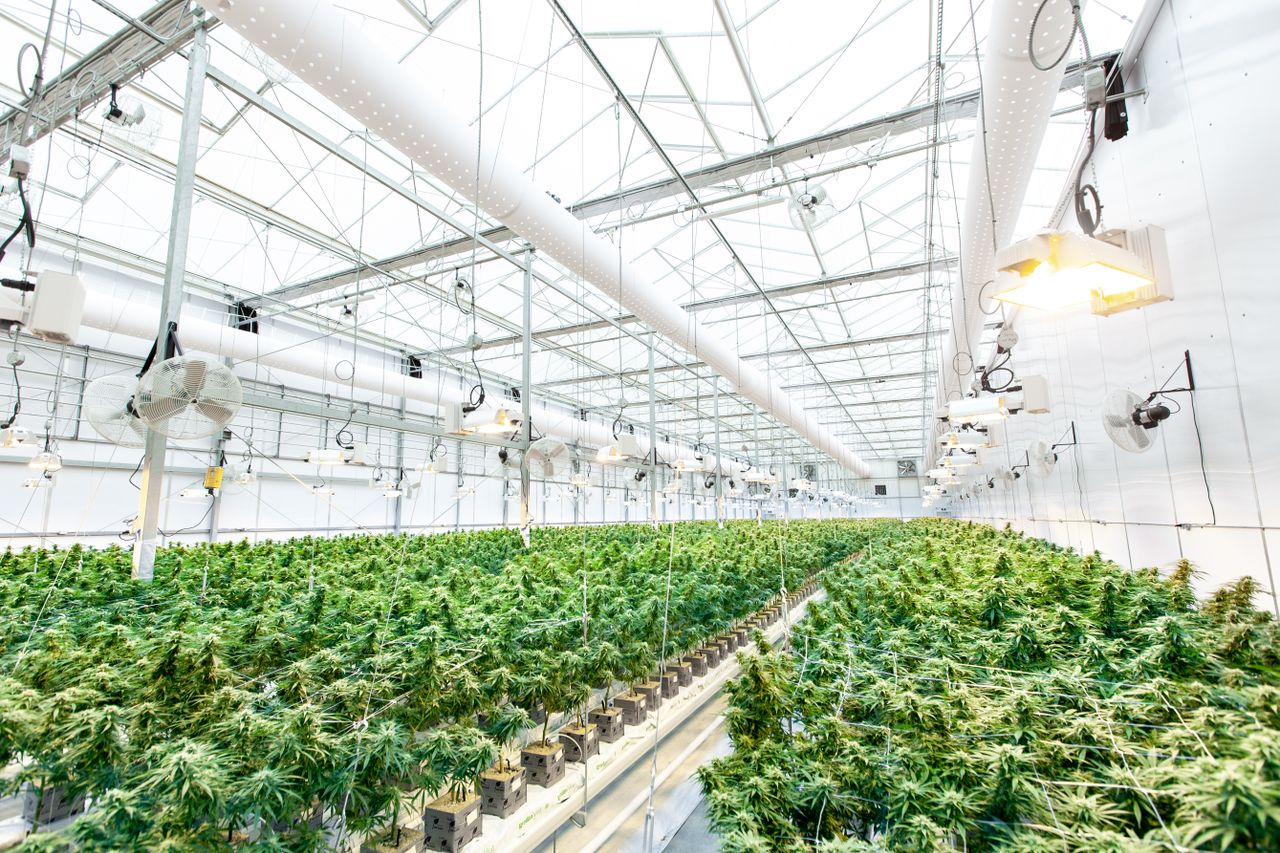
Indica and sativa are the two labels dispensaries use to sort cannabis, with indica sold as relaxing and sativa as energising. The names began as botanical descriptions of plant shape and origin. Genetic and chemical studies now show the labels only loosely track what is in the flower, so THC, CBD and terpene content tell you more than the word on the jar.
That is not a fringe view. Asked whether the two have distinct effects, the neurologist and cannabinoid researcher Ethan Russo called the distinction as commonly applied “total nonsense and an exercise in futility”.1 His point was that decades of cross-breeding have left plant shape a poor guide to chemistry.
This guide covers where the labels came from, what the genetic and chemovar research found, what the limited effect studies show, and how to read a label or lab report instead.
At a glance
| Property | Indica (as marketed) | Sativa (as marketed) |
|---|---|---|
| Original meaning | Short, broad-leaved plants from South and Central Asia | Tall, narrow-leaved plants |
| Marketing claim | Relaxing, body-focused | Energising, head-focused |
| Genome-wide distinct? | No, in a 297-sample study5 | No, in the same study5 |
| Terpenes linked to label | Myrcene, guaiol, eudesmols5 | Bergamotene, farnesene5 |
| Typical THC:CBD type | Mostly THC-dominant6 | Mostly THC-dominant6 |
| Predicts effects? | Weakly at best; unproven in controlled trials | Weakly at best; unproven in controlled trials |
| Main evidence for effects | User surveys and anecdote8 | User surveys and anecdote8 |
| Drug test difference | None; tests detect THC metabolites | None; tests detect THC metabolites |
| Better guide to buy by | Total THC, CBD and terpene panel | Total THC, CBD and terpene panel |
Where the indica and sativa labels came from
The names are 18th-century botany. Linnaeus described Cannabis sativa in 1753, and Lamarck named Cannabis indica in 1785 for plants from India. Over the following centuries, as a 2018 review of cannabis systematics documents, field botanists applied the two names to their collections inconsistently.2
The same review argues that today’s everyday use of “Sativa” and “Indica” totally misaligns with the formal taxa. In formal terms, C. sativa subsp. sativa is the European, CBD-leaning hemp type, while C. sativa subsp. indica is the THC-rich Asian type that covers almost all drug cannabis, including plants shops call “sativa”.2 Widespread interbreeding, the author concludes, has made the vernacular distinction almost meaningless.2
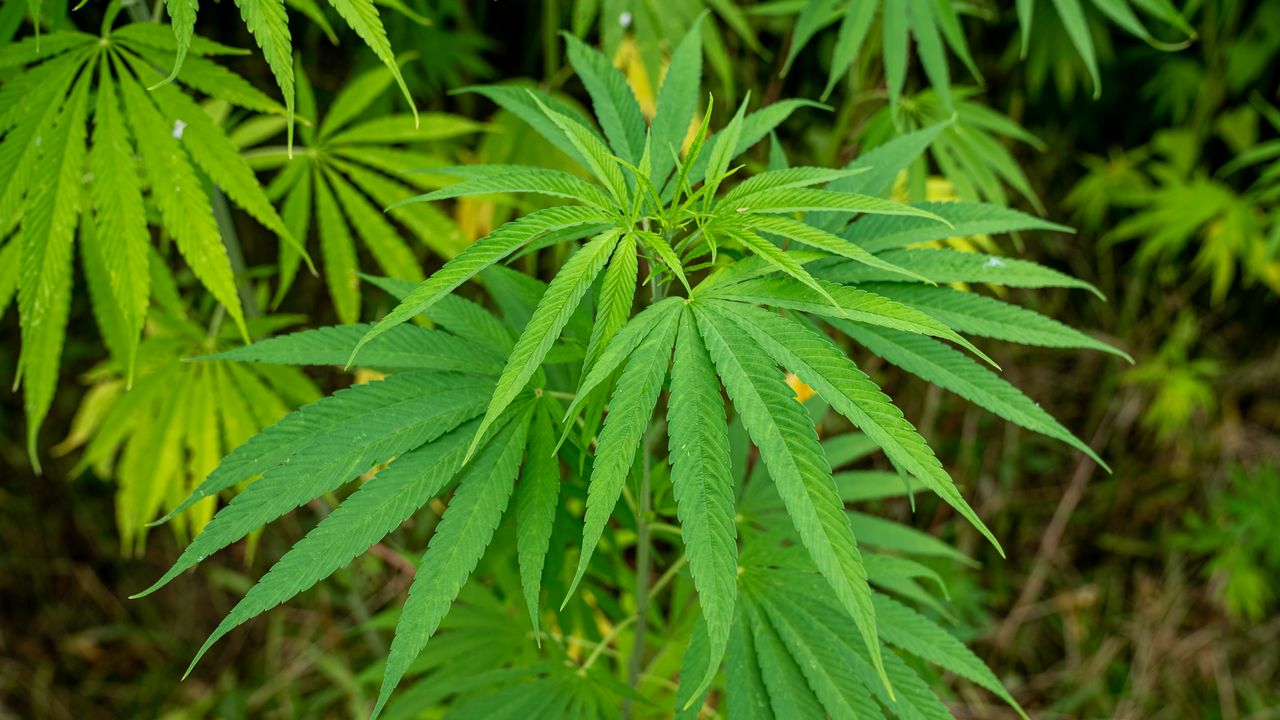
In shops, the words now describe growth habit and a promised mood: short, bushy, broad-leaved plants as indica, tall narrow-leaved plants as sativa, and everything in between as a hybrid. Our glossary entry on strain names explains why those names carry so little quality control.
What the genetic studies found
Three studies tested whether the labels match the DNA.
- Sawler and colleagues (2015) genotyped 81 drug-type and 43 hemp samples at 14,031 genetic markers. They found only a moderate correlation between genetic structure and reported indica or sativa ancestry, and concluded that strain names often do not reflect a meaningful genetic identity. Hemp turned out to be closer to indica-type marijuana than to sativa strains.3
- Schwabe and McGlaughlin (2019) examined 30 named strains from dispensaries in three US states. The samples split into two genetic groups, but those groups did not correspond to the sativa, hybrid and indica labels, and most strains included at least one genetic outlier.4
- Watts and colleagues (2021) analysed 297 Dutch samples with more than 100,000 markers. Indica- and sativa-labelled samples were genetically indistinct across the genome. The labels did track a handful of terpenes controlled by terpene synthase genes.5
Funding matters here. The Watts study was funded by Bedrocan, a medical cannabis producer, and the Sawler study involved a cannabis testing company; neither conflict changes the direction of the findings, which all point the same way.3,5
Chemovars: sorting cannabis by THC, CBD and terpenes
A chemovar (chemical variety) groups plants by what they contain rather than what they look like. Researchers at Bedrocan, the Dutch medical cannabis producer, proposed this approach in 2012, using cannabinoids and terpenes measured together to separate cultivars into distinct chemical groups.7
The largest test of commercial labels so far analysed 89,923 flower samples from testing labs in six US states. About 96.5% were THC-dominant, so the THC:CBD ratio barely varies across the legal market.6 Terpenes fell into three main clusters: high caryophyllene and limonene, high myrcene and pinene, and high terpinolene and myrcene.6 Labels did not line up with those clusters: a sample marked indica was likely to have a terpene profile indistinguishable from one marked sativa or hybrid, although some labels showed a biased association.6
The Watts study adds detail. Myrcene was the strongest single marker, explaining about 21% of the variation in labelling, with guaiol and two eudesmols also more common in indica-labelled samples; bergamotene and farnesene leaned sativa.5 So the label is a rough proxy for aroma, not for genetics or THC content. Our terpene glossary covers the main compounds.
Do indica and sativa feel different? What the evidence says
Many users say they do, and that deserves a fair hearing. In a 2014 online survey of 95 medical cannabis users, respondents associated indica with pain management, sedation and sleep, and sativa with euphoria and energy.8 The sample was self-selected, respondents classified products by their labels rather than by lab analysis, and the authors called for controlled trials to test the findings.8
The leading explanation is that terpenes, not the indica or sativa ancestry, shape the experience. Russo has argued that myrcene drives much of the sedation linked to indica and that limonene lifts mood.1 Controlled human evidence for this is thin:
- A 2024 Johns Hopkins study gave 20 adults vaporised THC with or without d-limonene. Limonene alone felt like placebo, but 15 mg of limonene with 30 mg of THC reduced “anxious/nervous” and “paranoid” ratings compared with THC alone.9 It is one small study of one terpene, not a sativa effect.
- Cell studies found that six common cannabis terpenes, including myrcene and limonene, did not change THC’s activity at human CB1 or CB2 receptors.10 If terpenes matter, it is likely through other routes.
No controlled trial has shown that indica-labelled products reliably sedate or sativa-labelled products reliably energise. Dose, THC potency, tolerance, setting and expectation are better-established drivers. The entourage effect remains a hypothesis with patchy support.
Safety, potency and drug testing
An indica or sativa label says nothing about risk; THC dose does. A 2022 systematic review of 20 observational studies found that higher-potency cannabis was associated with an increased risk of psychosis and cannabis use disorder compared with lower-potency products, with mixed findings for depression and anxiety.11 Because nearly all legal flower is THC-dominant,6 a “relaxing” indica can be as potent as any sativa.
Relying on the label can backfire. Someone choosing an indica to wind down may take a high-THC product that triggers anxiety, and someone expecting a mild daytime sativa may be surprised by its strength. Common acute effects of THC, including a faster heart rate, impaired coordination and slowed reaction time, apply whatever the label, so driving after use is unsafe. THC can also add to the effects of alcohol and sedating medicines.
Drug tests screen for THC metabolites, so indica and sativa products are indistinguishable on a urine, blood or saliva test. How long a positive result lasts depends on dose, frequency of use and the test type, not on the strain label.
Legal status in September 2026
United States. Under a final rule published on 28 April 2026, FDA-approved marijuana products and marijuana covered by a state medical marijuana licence moved to Schedule III. All other marijuana, including adult-use products, remains in Schedule I. A DEA hearing on moving all marijuana to Schedule III was scheduled for 29 June to 15 July 2026, and no final decision had been published at the time of writing.12
State law still decides where adults can buy and use cannabis, and it varies widely. Separately, hemp-derived THCA flower, often sold with indica or sativa labels, is caught by the federal move to a total THC measure, which takes effect for most hemp products on 11 December 2026.
United Kingdom. Cannabis is a Class B drug. Cannabis-based products for medicinal use can be prescribed by specialist doctors, but recreational supply is illegal.
Canada. Adults can buy cannabis legally through provincially authorised retailers under the Cannabis Act, and labels must show THC and CBD content.
How to read a cannabis label beyond indica or sativa
If the labels are weak, what should a buyer look at? The research points to chemistry.
- Total THC and total CBD. These include the acid forms (THCA and CBDA) that convert on heating, and they matter more for intensity than any strain type.
- A terpene panel. Look for the three dominant terpenes and the total terpene percentage. In the large US dataset, total terpenes averaged about 2% by weight, and most individual terpenes sat below 0.2%.6
- A batch-matched certificate of analysis from an accredited lab, with the test date. Terpenes are volatile, so older stock may smell and behave differently.
- Consistency, not the name. The same strain name from two growers can be genetically different.4 Note the chemistry of a product that suited you, not just its name.
- A low starting dose with any unfamiliar product, especially high-THC ones, and more caution if you have a personal or family history of psychosis.
Frequently asked questions
Does indica really make you sleepy?
Some users report it, but no controlled trial has shown that indica-labelled cannabis reliably causes sedation. Genetic work found indica and sativa labels indistinct across the genome, although indica labels tracked higher myrcene levels.5 Whether myrcene causes sedation in people at the amounts found in cannabis has not been established. THC dose, tolerance and expectation are better-documented influences on how drowsy someone feels.
Is sativa stronger than indica?
Not as a rule. Potency depends on THC content, and in a study of almost 90,000 US flower samples about 96.5% were THC-dominant regardless of label.6 A sativa and an indica can have the same THC percentage, or either can be much stronger. The label on the jar tells you less about strength than the total THC figure on a batch certificate of analysis.
What is a hybrid strain?
Hybrid describes a plant bred from indica-type and sativa-type parents, or marketed as sitting between the two. Because interbreeding is now so widespread, a cannabis systematics review concluded the distinction between vernacular indica and sativa is almost meaningless,2 which means most modern cannabis is effectively hybrid. The hybrid label, like the others, is a weak guide to chemistry or effects.
Which terpenes are linked to indica and sativa labels?
In a 297-sample Dutch study, indica labels were most strongly linked to myrcene, along with guaiol, gamma-eudesmol and beta-eudesmol, while sativa labels were linked to bergamotene and farnesene.5 These associations were statistical and explained only part of the labelling. A large US dataset found labels did not map cleanly onto terpene clusters,6 so check a terpene panel rather than assume.
Can you tell indica from sativa by looking at the bud?
Not reliably. Plant height and leaf shape were the original basis for the names, but Russo has said that height, branching or leaf shape cannot predict a plant’s chemical content, and only a lab assay tells you what is in it.1 Dried buds give even fewer clues. Aroma hints at terpene content, but a lab report is the only dependable guide.
Sources
- Piomelli D, Russo EB. The Cannabis sativa Versus Cannabis indica Debate: An Interview with Ethan Russo, MD. Cannabis Cannabinoid Res. 2016;1(1):44-46. DOI: 10.1089/can.2015.29003.ebr. PMID: 28861479. pubmed.ncbi.nlm.nih.gov
- McPartland JM. Cannabis Systematics at the Levels of Family, Genus, and Species. Cannabis Cannabinoid Res. 2018;3(1):203-212. DOI: 10.1089/can.2018.0039. PMID: 30426073. pubmed.ncbi.nlm.nih.gov
- Sawler J, Stout JM, Gardner KM, Hudson D, Vidmar J, Butler L, et al. The Genetic Structure of Marijuana and Hemp. PLoS One. 2015;10(8):e0133292. DOI: 10.1371/journal.pone.0133292. PMID: 26308334. pubmed.ncbi.nlm.nih.gov
- Schwabe AL, McGlaughlin ME. Genetic tools weed out misconceptions of strain reliability in Cannabis sativa: implications for a budding industry. J Cannabis Res. 2019;1(1):3. DOI: 10.1186/s42238-019-0001-1. PMID: 33526091. pubmed.ncbi.nlm.nih.gov
- Watts S, McElroy M, Migicovsky Z, Maassen H, van Velzen R, Myles S. Cannabis labelling is associated with genetic variation in terpene synthase genes. Nat Plants. 2021;7(10):1330-1334. DOI: 10.1038/s41477-021-01003-y. PMID: 34650264. pubmed.ncbi.nlm.nih.gov
- Smith CJ, Vergara D, Keegan B, Jikomes N. The phytochemical diversity of commercial Cannabis in the United States. PLoS One. 2022;17(5):e0267498. DOI: 10.1371/journal.pone.0267498. PMID: 35588111. pubmed.ncbi.nlm.nih.gov
- Hazekamp A, Fischedick JT. Cannabis – from cultivar to chemovar. Drug Test Anal. 2012;4(7-8):660-667. DOI: 10.1002/dta.407. PMID: 22362625. pubmed.ncbi.nlm.nih.gov
- Pearce DD, Mitsouras K, Irizarry KJ. Discriminating the effects of Cannabis sativa and Cannabis indica: a web survey of medical cannabis users. J Altern Complement Med. 2014;20(10):787-791. DOI: 10.1089/acm.2013.0190. PMID: 25191852. pubmed.ncbi.nlm.nih.gov
- Spindle TR, Zamarripa CA, Russo E, Pollak L, Bigelow G, Ward AM, et al. Vaporized D-limonene selectively mitigates the acute anxiogenic effects of Δ9-tetrahydrocannabinol in healthy adults who intermittently use cannabis. Drug Alcohol Depend. 2024;257:111267. DOI: 10.1016/j.drugalcdep.2024.111267. PMID: 38498958. pubmed.ncbi.nlm.nih.gov
- Santiago M, Sachdev S, Arnold JC, McGregor IS, Connor M. Absence of Entourage: Terpenoids Commonly Found in Cannabis sativa Do Not Modulate the Functional Activity of Δ9-THC at Human CB1 and CB2 Receptors. Cannabis Cannabinoid Res. 2019;4(3):165-176. DOI: 10.1089/can.2019.0016. PMID: 31559333. pubmed.ncbi.nlm.nih.gov
- Petrilli K, Ofori S, Hines L, Taylor G, Adams S, Freeman TP. Association of cannabis potency with mental ill health and addiction: a systematic review. Lancet Psychiatry. 2022;9(9):736-750. DOI: 10.1016/S2215-0366(22)00161-4. PMID: 35901795. pubmed.ncbi.nlm.nih.gov
- Drug Enforcement Administration. Marijuana Rescheduling Regulatory Actions (including the final rule published 28 April 2026 and the June to July 2026 hearing notice). dea.gov
Editorial note: This article is for general information only and is not medical or legal advice. Cannabis products labelled indica or sativa has not been evaluated by the FDA to diagnose, treat, cure or prevent any disease. Laws vary by location and change often, so verify the rules that apply where you are. Always talk to a licensed healthcare provider before use, especially if you are under 21, pregnant or nursing, taking medication, or managing a health condition.
More comparisons
-
Distillate vs Live Resin: Refining, Terpenes and What Carts Contain
-
Live Resin vs Live Rosin: Extraction Chemistry and Solvent Testing
-
THCA vs CBD: Why Heat, Drug Tests and the Law Split Them Apart
-
Delta-8 vs CBD: Intoxication, Evidence, Drug Tests and the 2026 Law
-
THC-P vs Delta-8: Potency Claims, Evidence and Legal Status