
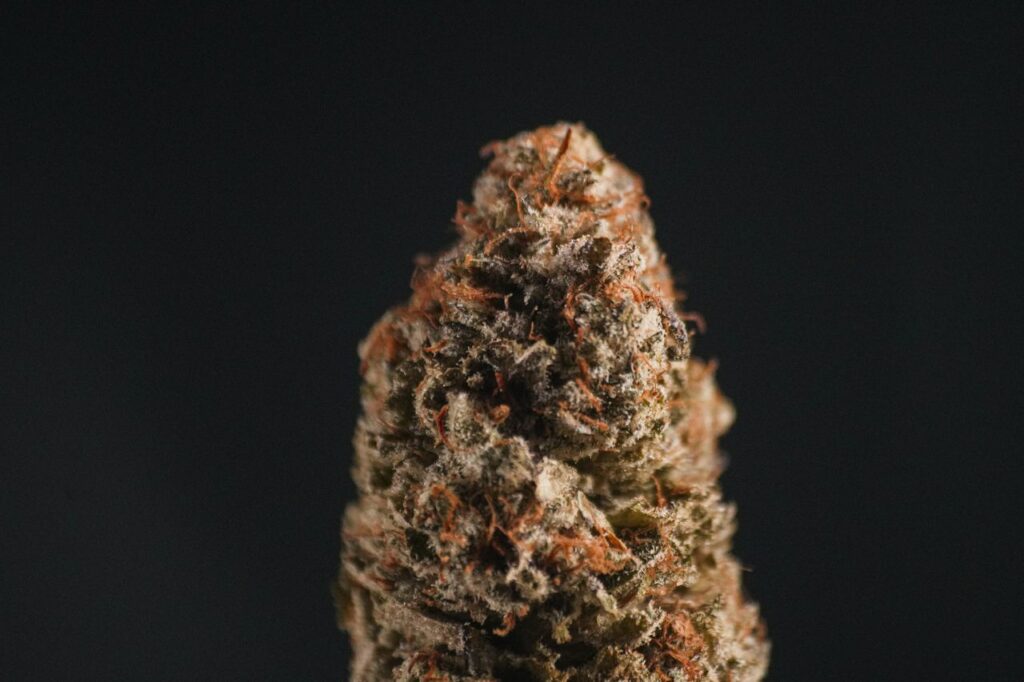
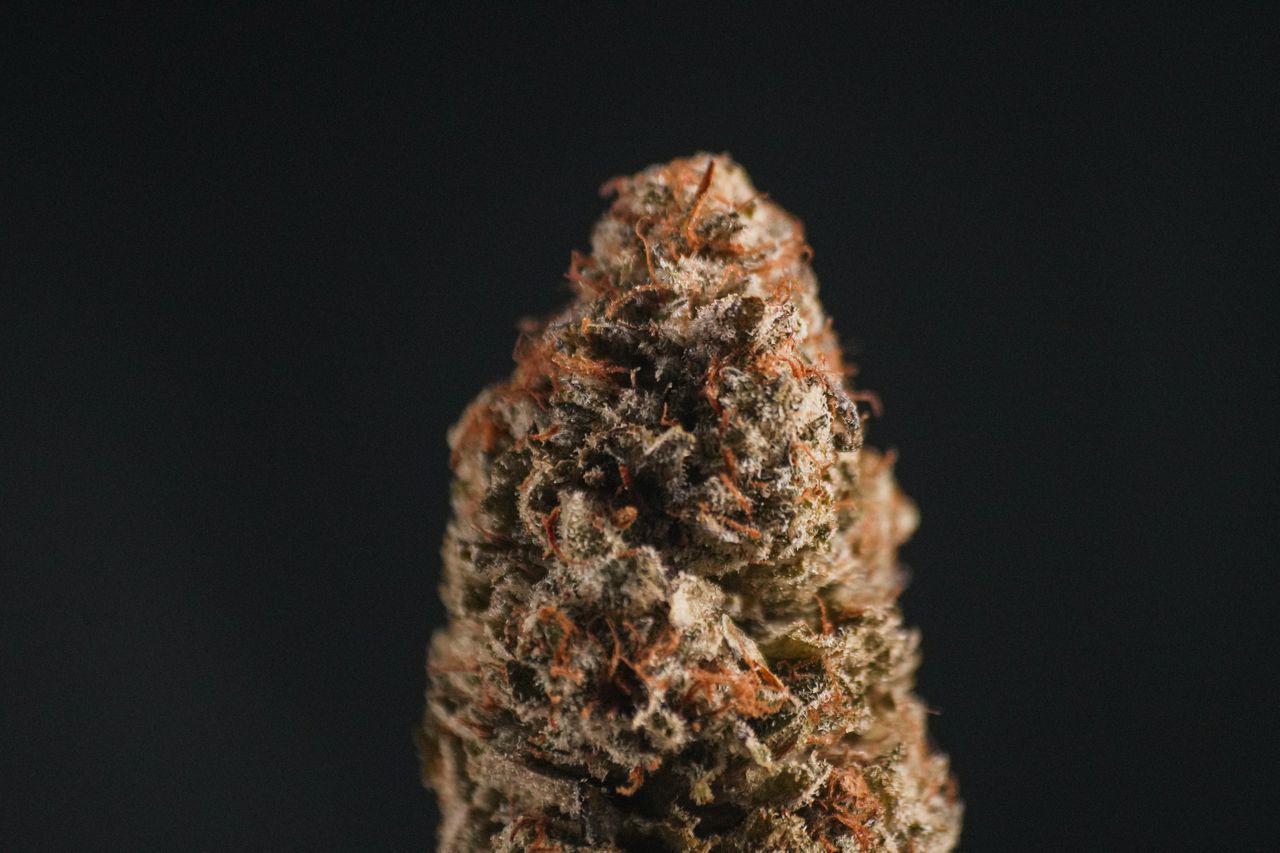
THCA is the acid form of delta-9 THC found in raw cannabis. It is not intoxicating itself, but heat from smoking, vaping or baking converts it into delta-9 THC. Delta-8 is a different THC isomer, made by chemically converting hemp CBD, and is less potent than delta-9. So smoked THCA flower delivers delta-9, typically the stronger of the two.
Many pages comparing the two describe THCA flower as a “legal alternative” to marijuana and delta-8 as a milder cousin. The chemistry is not controversial, but the legal framing has aged badly. THCA flower’s hemp status always depended on how samples were tested, and the new federal definition closes that gap from 11 December 2026.
Below we cover what each compound is, how they differ in effect, the quality of the evidence, safety and drug testing, and the legal picture. Our comparison of THCA and delta-9 THC goes deeper on the precursor itself.
At a glance
| Property | THCA | Delta-8 THC |
|---|---|---|
| What it is | Acid precursor of delta-9 THC in the raw plant1 | Isomer of delta-9 THC, double bond at carbon 8 |
| Natural amount | Can be up to 90% of total THC in the plant1 | Trace |
| How products are made | High-THCA cannabis flower and extracts | Chemical conversion of hemp CBD |
| Intoxicating? | Not in raw form; becomes delta-9 when heated | Yes, but less potent than delta-95 |
| Main effect when smoked or vaped | Delta-9 THC effects | Delta-8 effects |
| Human evidence | Preclinical only for THCA itself | Controlled crossover trials (2025)5,6 |
| Standard urine drug screen | Heated THCA yields delta-9, the main test target | Metabolites cross-react7 |
| US federal status | Counted in total THC; high-THCA flower is not hemp from 11 Dec 2026 | No longer hemp from 11 Dec 2026 |
| UK status | Flower is cannabis (Class B); isolated THCA under review12 | Class B controlled drug |
What THCA and delta-8 are
Cannabis plants do not make much THC directly. They make tetrahydrocannabinolic acid (THCA), which accumulates in the glandular trichomes on flowers and leaves and can account for up to 90% of the plant’s total THC.1 Our glossary entry on THCA covers the basics.
THCA carries an extra carboxyl group. Remove it and you get delta-9 THC. That reaction, decarboxylation, happens quickly with heat and slowly during storage.1 Laboratory work has shown that THCA decarboxylates cleanly to delta-9, without the side reactions seen with some other cannabinoid acids, and faster than the acid forms of CBD and CBG under the same conditions.2
Delta-8 is a separate molecule: an isomer of delta-9 with the double bond in a different position. It occurs in cannabis only in trace amounts, so commercial delta-8 is made by treating hemp CBD with acid and heat.
One reaction separates the two. THCA needs only heat to become ordinary delta-9 THC. Delta-8 needs a chemical conversion to exist in useful amounts at all, and once made it stays delta-8.
Effects: what you are actually consuming
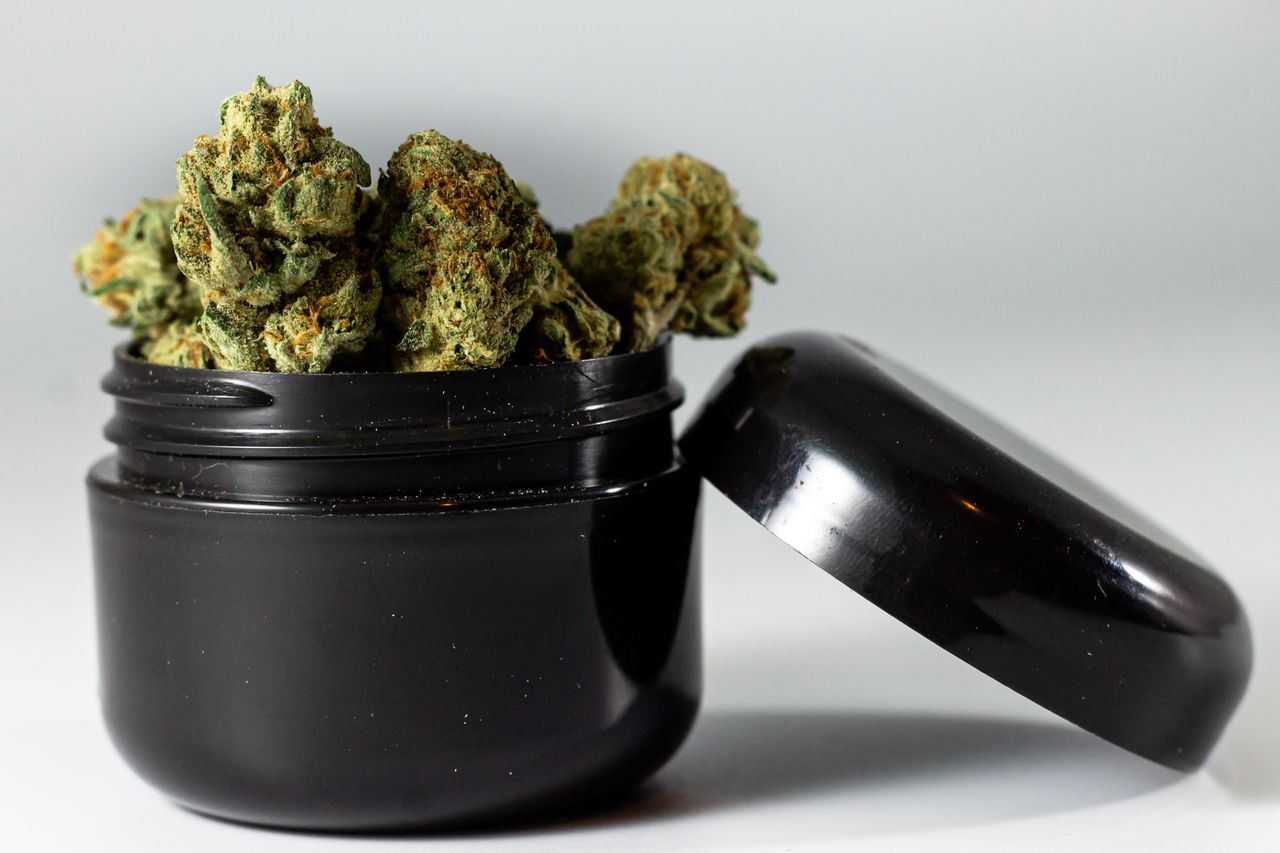
Because most THCA products are smoked, vaped or cooked, the practical comparison is usually delta-9 versus delta-8. THCA “hemp flower” is cannabis flower bred to be high in THCA and low in delta-9 at the moment of testing. Once lit, it behaves like conventional high-THC cannabis. See our entry on hemp flower for how this category emerged.
Delta-8 is measurably weaker per milligram. In a 2025 double-blind trial, 20 mg of oral delta-8 produced lower ratings of drug effect, less impairment and a smaller heart-rate increase than 20 mg of delta-9, although 40 mg of delta-8 was indistinguishable from 20 mg of delta-9.5 In a parallel vaping trial, a range of delta-8 doses produced effects broadly comparable to 20 mg of vaped delta-9, partly because people took larger puffs.6 Its pharmacology closely tracks delta-9, with weaker CB1 affinity explaining the difference.4
Raw, unheated THCA is different. It does not produce psychoactive effects in humans, although animal studies suggest it has some pharmacological activity.1 Raw THCA products can still contain some delta-9, since conversion begins in storage.
Concentrates change the scale
THCA is also sold as crystalline isolates and concentrates, often marketed as near-pure “diamonds”. Heated in a dab rig or vaporiser, these deliver large doses of delta-9 THC in a single inhalation. Delta-8 cartridges are concentrated too, but milligram for milligram delta-8 does less. The format matters as much as the molecule.
How strong is the evidence?
- THCA itself: in vitro and animal studies only. A 2016 review noted that many papers use “THCA” loosely for several related acids, and that most of the evidence comes from cell and rodent studies.1 Claims about THCA’s benefits should be read as preclinical at best.
- Heated THCA (delta-9 THC): the most studied cannabinoid there is, with a large body of human data on effects and risks.
- Delta-8: small but well-controlled human trials of acute effects, plus surveillance and survey data. Weak for long-term use.
In other words, the parts of this comparison with good evidence are the ones that make THCA flower look like ordinary cannabis. The parts that would make THCA look distinctive are the least studied.
Safety, side effects and drug testing
Smoked or vaped THCA flower carries the risks of high-THC cannabis: anxiety, paranoia, fast heart rate, impaired coordination and, for some people, more serious psychiatric effects. Smoking anything adds respiratory harms. Because THCA flower is sold as hemp, it has not always come with the labelling, potency limits or age checks of state cannabis markets.
Delta-8 has its own record. US poison centres logged 5,022 cases involving delta-8, delta-10 or THC-O acetate in 2021 and 2022, 98.1% involving delta-8, with 30.1% in children under six and 38.4% of all cases having a serious medical outcome.8
Drug tests
This is where the two converge. Standard urine screens look for THC metabolites. Smoking or vaping THCA produces delta-9 THC, so THCA flower should be expected to produce a positive result, just as marijuana would. Delta-8 metabolites also cross-react with common urine immunoassays, with sensitivity varying by kit and cutoff.7 Neither is a way to avoid a failed test.
Both impair driving. Anyone who takes prescription medicines, has a history of psychosis or heart problems, or is pregnant or breastfeeding should talk to a clinician before using either.
Legal status in September 2026
THCA flower and delta-8 exploited two different gaps in the 2018 Farm Bill, and the new law closes both.
THCA: the testing gap
The old definition capped delta-9 THC at 0.3% by dry weight. USDA’s hemp production rules already defined total THC as delta-9 plus 0.877 times THCA, to account for conversion on heating.3 The THCA flower market rested on the argument that the statute itself limited only delta-9, so finished flower could be judged on delta-9 alone. In a May 2024 letter, the DEA said that for enforcing the hemp definition, delta-9 levels must account for THCA.9
Take a flower with 20% THCA and 0.2% delta-9. Its total THC is about 17.7%, nearly 60 times the 0.3% limit.
The new federal definition
Section 781 of Public Law 119-37, enacted on 12 November 2025, defines hemp by total THC “including tetrahydrocannabinolic acid” at no more than 0.3% dry weight. It also excludes final products containing cannabinoids synthesised or manufactured outside the plant, or more than 0.4 mg per container of total THC plus similar-effect cannabinoids.10 A September 2026 law (H.R. 6500) delays all of this except the exclusion for cannabinoids not capable of being naturally produced until 11 December 2026.11
THCA and delta-8 both occur naturally, so both fall under the 11 December date. From then, high-THCA flower is marijuana under federal law, and delta-8 products lose hemp status as converted cannabinoids that exceed the per-container cap. Bills to delay or repeal the change are in committee. States vary, and several already restrict one or both; see our delta-8 state law guide.
UK: THCA flower is cannabis and therefore Class B. Isolated THCA was not controlled when the Advisory Council on the Misuse of Drugs reported in 2025, and the Council recommended Class B control.12 Delta-8 is already Class B. Canada: both are covered by the Cannabis Act and may be sold only through licensed channels.
Reading a THCA or delta-8 certificate of analysis
Where either product is still sold legally, the certificate of analysis tells you what you are getting. Our explainer on the hemp COA covers the layout. Key checks:
- Total THC, not just delta-9. For THCA flower, apply the formula yourself if needed: delta-9 plus 0.877 times THCA. A “0.2% delta-9” headline can hide a total THC near 20%.
- Test date. THCA converts to delta-9 slowly in storage, so an old COA may understate current delta-9.
- For delta-8, the full isomer panel. Delta-8, delta-9 and delta-10 should be listed separately, with residual solvents and heavy metals reported.
- Pesticides and microbes. Especially relevant for smokable flower.
- Batch match and accreditation. The COA batch should match the product, from an ISO/IEC 17025 accredited lab.
Once the new federal definition applies, no flower sold as hemp can lawfully exceed 0.3% total THC, and finished products face the 0.4 mg per container cap.
Frequently asked questions
Is THCA stronger than delta-8?
When heated, effectively yes, because THCA becomes delta-9 THC, which is more potent per milligram than delta-8. In a controlled trial, 20 mg of delta-8 produced weaker effects than 20 mg of delta-9.5 Raw THCA is not intoxicating, so the comparison only makes sense for smoked, vaped or cooked products.
Does THCA get you high?
Not on its own. THCA does not produce psychoactive effects in humans, but it converts to delta-9 THC when heated by smoking, vaping or baking, and slowly during storage.1 That is why THCA flower produces the same kind of high as conventional cannabis once it is lit.
Will THCA show up on a drug test?
If you smoke, vape or cook it, assume so. Heating turns THCA into delta-9 THC, whose metabolites are exactly what standard cannabis tests look for. Delta-8 metabolites also cross-react with common urine screening kits.7 Neither THCA flower nor delta-8 is a reliable way to pass a cannabis test.
Is THCA flower legal after the 2026 hemp changes?
Not federally, once the new definition applies on 11 December 2026. Hemp will be defined by total THC including THCA at 0.3% or less by dry weight,10 which typical THCA flower far exceeds, making it marijuana under federal law. Some states already treat it that way. Bills to delay the change are pending.
Is THCA flower just marijuana?
Chemically, largely yes. It is cannabis flower whose THC is mostly still in acid form at testing, and heating converts that acid to delta-9 THC.2 Its hemp status rested on measuring delta-9 alone after harvest, a gap the DEA disputed in 2024 and Congress has now closed.
Can THCA turn into delta-8?
Not in normal use. Heating THCA produces delta-9 THC, and over long storage THC degrades mainly to cannabinol (CBN).1 Delta-8 forms in meaningful amounts only under deliberate acid-catalysed conversion, which is how manufacturers make it from hemp CBD. A THCA product that shows significant delta-8 on its COA has been processed or blended.
Sources
- Moreno-Sanz G. Can You Pass the Acid Test? Critical Review and Novel Therapeutic Perspectives of Δ9-Tetrahydrocannabinolic Acid A. Cannabis Cannabinoid Res. 2016;1(1):124-130. DOI: 10.1089/can.2016.0008. PMID: 28861488. pubmed.ncbi.nlm.nih.gov
- Wang M, Wang YH, Avula B, et al.. Decarboxylation Study of Acidic Cannabinoids: A Novel Approach Using Ultra-High-Performance Supercritical Fluid Chromatography/Photodiode Array-Mass Spectrometry. Cannabis Cannabinoid Res. 2016;1(1):262-271. DOI: 10.1089/can.2016.0020. PMID: 28861498. pubmed.ncbi.nlm.nih.gov
- Electronic Code of Federal Regulations. 7 CFR 990.1, Definitions (Domestic Hemp Production Program), including “Decarboxylated” and “Total THC”. ecfr.gov
- Tagen M, Klumpers LE. Review of delta-8-tetrahydrocannabinol (Δ8-THC): Comparative pharmacology with Δ9-THC. Br J Pharmacol. 2022;179(15):3915-3933. DOI: 10.1111/bph.15865. PMID: 35523678. pubmed.ncbi.nlm.nih.gov
- Zamarripa CA, Spindle TR, Schriefer D, et al.. A within-subject cross-over trial comparing the acute effects of oral delta-8-tetrahydrocannabinol and delta-9-tetrahydrocannabinol in healthy adults. Drug Alcohol Depend. 2025;272:112676. DOI: 10.1016/j.drugalcdep.2025.112676. PMID: 40288059. pubmed.ncbi.nlm.nih.gov
- Spindle TR, Zamarripa CA, Schriefer D, et al.. A within-subject cross-over trial comparing the acute effects of vaporized delta-8-tetrahydrocannabinol and delta-9-tetrahydrocannabinol in healthy adults. Drug Alcohol Depend. 2025;272:112684. DOI: 10.1016/j.drugalcdep.2025.112684. PMID: 40334328. pubmed.ncbi.nlm.nih.gov
- Wolf CE, Pokhai AA, Poklis JL, Williams GR. The cross-reactivity of cannabinoid analogs (delta-8-THC, delta-10-THC and CBD), their metabolites and chiral carboxy HHC metabolites in urine of six commercially available homogeneous immunoassays. J Anal Toxicol. 2023;47(8):732-736. PMID: 37602947. pubmed.ncbi.nlm.nih.gov
- Burgess A, Hays HL, Badeti J, et al.. Delta-8 tetrahydrocannabinol, delta-10 tetrahydrocannabinol, and tetrahydrocannabinol-O acetate exposures reported to America’s Poison Centers. Clin Toxicol (Phila). 2024;62(4):256-266. DOI: 10.1080/15563650.2024.2340115. PMID: 38686923. pubmed.ncbi.nlm.nih.gov
- Adlin B. DEA Says ‘THCA Does Not Meet The Definition’ Of Legal Hemp As Congress Weighs Cannabinoid Recriminalization In Farm Bill. Marijuana Moment. 27 May 2024 (reporting a DEA letter dated 13 May 2024). marijuanamoment.net
- U.S. Congress. Continuing Appropriations, Agriculture, Legislative Branch, Military Construction and Veterans Affairs, and Extensions Act, 2026. Public Law 119-37 (H.R. 5371), Division B, Section 781, amending section 297A of the Agricultural Marketing Act of 1946 (7 U.S.C. 1639o). Enacted 12 November 2025. govinfo.gov
- U.S. Congress. Continuing Appropriations and Extensions Act, 2027. H.R. 6500 (enrolled bill), Section 2019, “Section 781 Extension”. 2026. govinfo.gov
- Advisory Council on the Misuse of Drugs. ‘Semi-synthetic’ Cannabinoids: Cannabinoids related to tetrahydrocannabinol and cannabidiol. Report and cover letter to the Minister of State, 22 May 2025. gov.uk
Editorial note: This article is for general information only and is not medical or legal advice. THCA and delta-8 THC products have not been evaluated by the FDA to diagnose, treat, cure or prevent any disease. Laws vary by location and change often, so verify the rules that apply where you are. Always talk to a licensed healthcare provider before use, especially if you are under 21, pregnant or nursing, taking medication, or managing a health condition.
More comparisons
-
Distillate vs Live Resin: Refining, Terpenes and What Carts Contain
-
Live Resin vs Live Rosin: Extraction Chemistry and Solvent Testing
-
Indica vs Sativa: What Genetic and Terpene Research Actually Shows
-
THCA vs CBD: Why Heat, Drug Tests and the Law Split Them Apart
-
Delta-8 vs CBD: Intoxication, Evidence, Drug Tests and the 2026 Law