
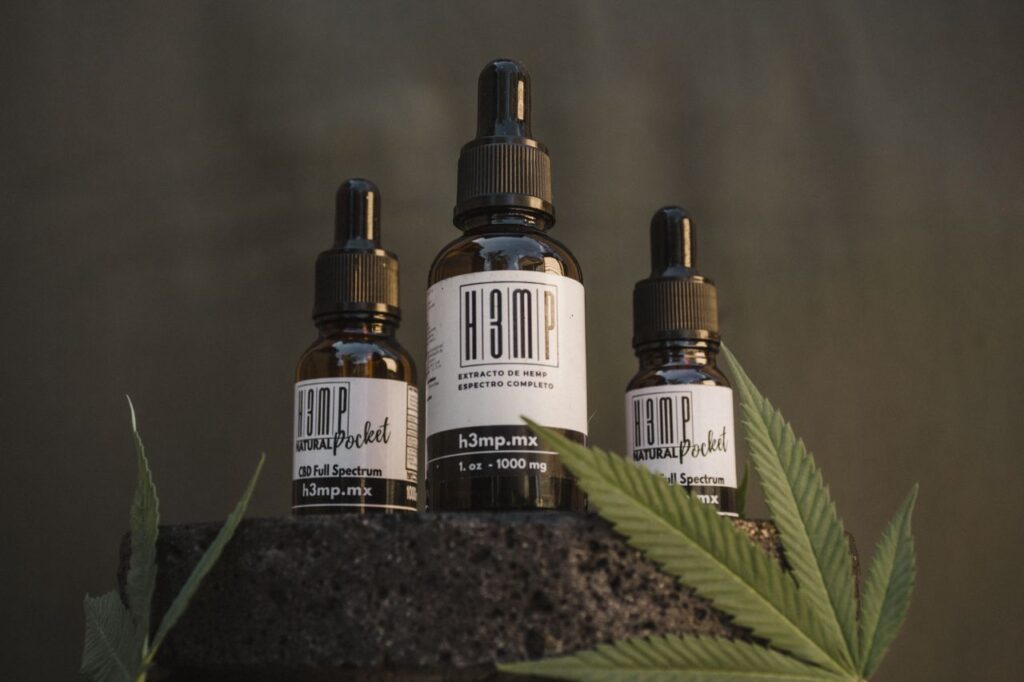
Delta-8 THC is intoxicating: it activates the CB1 receptor and produces a cannabis-like high, though less potent than delta-9. CBD is not intoxicating and has no meaningful abuse potential in humans. Most delta-8 is made by chemically converting CBD from hemp. They also differ on drug tests and law: delta-8 triggers cannabis screens and loses federal hemp status in December 2026.
Many pages ranking for “delta-8 vs CBD” are written by companies that sell both, and tend to present them as two points on a wellness menu. The evidence behind them is very different. CBD has a prescription form backed by large clinical trials for specific seizure disorders, plus a growing safety dataset. Delta-8 has a handful of studies on its acute effects and a steady stream of poison centre reports.
Below we compare what each compound is, what it does, how good the evidence is, the safety and drug-testing picture, and what the federal hemp redefinition means for each. For the broader picture, see our explainer on CBD vs hemp vs THC.
At a glance
| Property | Delta-8 THC | CBD |
|---|---|---|
| Intoxicating? | Yes, dose-dependent high3 | No4 |
| Main CB1 action | Partial agonist2 | Low affinity; acts on several other targets |
| Natural amount in hemp | Trace | Often the dominant cannabinoid |
| How products are made | Chemical conversion of hemp CBD | Extraction from hemp |
| Approved medicine? | No | Yes: Epidiolex, for specific seizure disorders5 |
| Key safety signals | Intoxication, impairment, child poisonings8 | Liver enzyme rises, drug interactions6,7 |
| Standard urine drug screen | Metabolites cross-react9 | CBD itself did not cross-react; THC in full-spectrum products can9 |
| US federal status from 11 Dec 2026 | No longer hemp | Can remain hemp if total THC is 0.4 mg or less per container |
| UK status | Class B controlled drug | Legal if free of controlled cannabinoids; food use under novel food rules |
What delta-8 and CBD are, and how one becomes the other
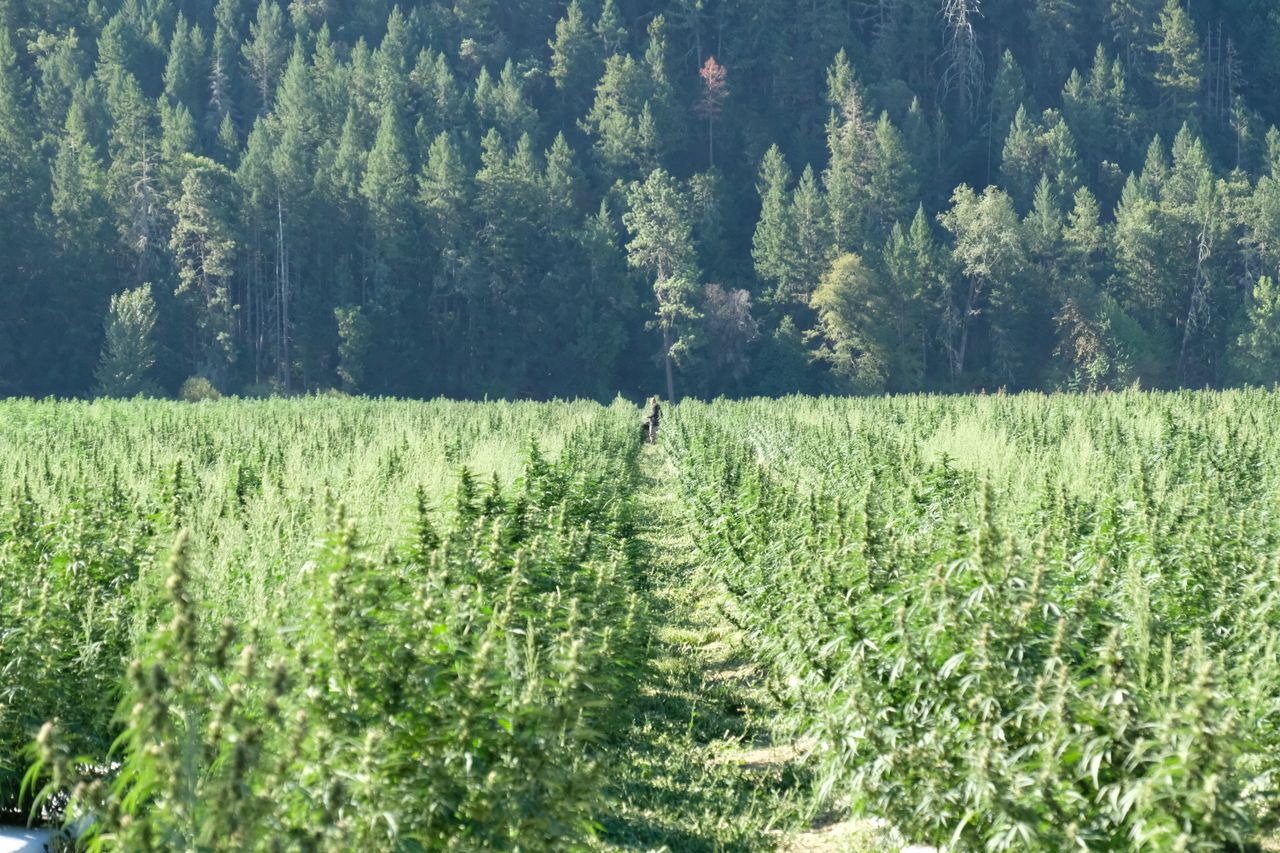
CBD (cannabidiol) is one of the most abundant cannabinoids in hemp and is extracted directly from the plant. Delta-8 THC is a THC isomer, the same atoms as delta-9 with one double bond moved. It occurs in hemp only in trace amounts.
One reaction separates the two. Treating CBD with an acid and heat closes one of its rings, turning it into THC isomers, mainly delta-8 under typical conditions. That is how nearly all delta-8 on the market is made, and why it boomed when hemp CBD became cheap and plentiful after 2018.
So the two share a starting material, but the conversion changes the molecule’s shape enough to change what it does in the body, how it is regulated, and how it shows up on a drug test.
How they act on the body, and how they feel
Delta-8 is a partial agonist at the CB1 receptor, the brain receptor responsible for cannabis intoxication. Its pharmacology closely resembles delta-9 THC, with weaker receptor affinity explaining its lower potency.2 In a 2025 double-blind trial, 20 mg of oral delta-8 produced weaker effects than 20 mg of delta-9, but 40 mg of delta-8 matched 20 mg of delta-9 on subjective effects and impairment.3
CBD works differently. It has low affinity for CB1 and acts on a range of other receptors and enzymes, and its mechanisms are still debated. A World Health Organization expert review concluded that CBD shows no effects indicative of abuse or dependence potential in humans.4
User reports match that divide. In a survey of 252 adults who had used delta-8, those who had also used CBD rated delta-8 higher for drug effect, feeling high, relaxation, sleepiness and appetite, but also for memory problems, trouble with routine tasks and paranoia.1 The same respondents said they chose delta-8 because they saw it as legal, as a substitute for delta-9, or as less intense.1 In short, delta-8 behaves like a milder THC, and CBD does not behave like THC at all.
What about products that combine them?
Some gummies and vapes contain both. Marketing often suggests CBD softens or balances the delta-8 high, but no controlled study has tested CBD combined with delta-8, so that claim is untested. In practical and legal terms, a product containing both is a delta-8 product: it is intoxicating, it can trigger a drug test, and it loses federal hemp status in December 2026.
How strong is the evidence?
The quality gap is wide.
- CBD: a purified prescription form, Epidiolex, is FDA-approved for seizures associated with Lennox-Gastaut syndrome, Dravet syndrome and tuberous sclerosis complex in patients aged one and over.5 That approval rests on randomised controlled trials. For the everyday uses CBD is marketed for, such as sleep, stress or pain, human trials are fewer, smaller and more mixed; our review of CBD and sleep trials shows what that looks like in practice.
- Delta-8: no approved medical uses and no large clinical trials. The best human data are small, well-controlled studies of acute effects, plus surveys and adverse event reports. Nothing establishes a therapeutic role.
It is also worth separating the prescription product from the shop shelf. The Epidiolex trials used a purified, consistently dosed medicine, typically at far higher doses than retail CBD products provide. Their results do not transfer automatically to a CBD gummy or oil.
Safety, side effects, interactions and drug testing
Delta-8
Delta-8’s risks are those of THC intoxication: anxiety, paranoia, fast heart rate, drowsiness and impaired coordination. US poison centres recorded 5,022 cases involving delta-8, delta-10 or THC-O acetate in 2021 and 2022, 98.1% of them delta-8; 30.1% involved children under six, and 38.4% of all cases had a serious medical outcome.8
CBD
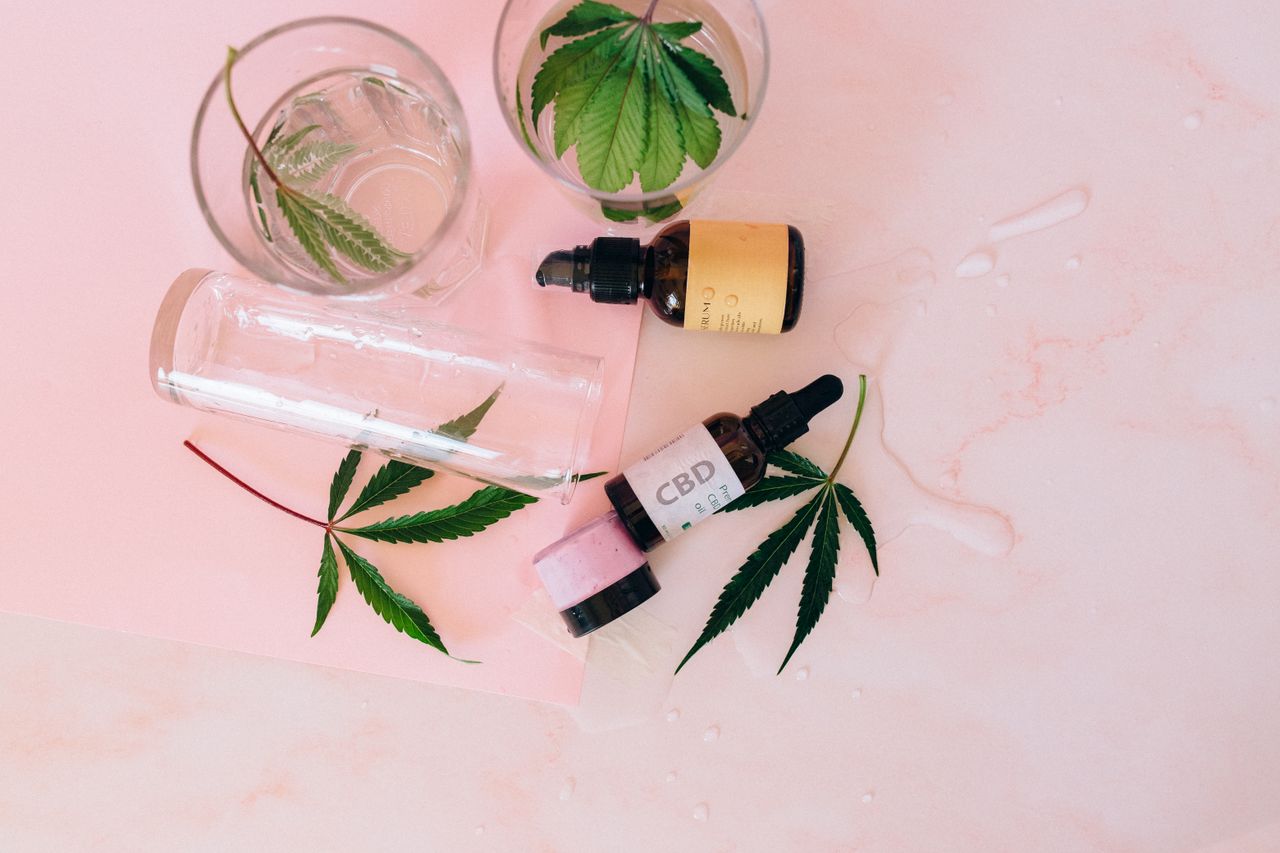
CBD is not intoxicating, but it is not inert. In a randomised, placebo-controlled trial of 201 healthy adults, 5.6% of those taking CBD at 5 mg/kg a day for four weeks developed liver enzyme levels more than three times the upper limit of normal, against none on placebo.6 The FDA has also cited possible interactions with medicines and potential harm to the male reproductive system.7 CBD affects enzymes that break down many drugs; see our entry on CBD drug interactions. The UK Food Standards Agency advises healthy adults to limit CBD from food to 10 mg a day.12
Drug tests
A study of six common urine immunoassays found delta-8 and its metabolites cross-reacted with cannabis screens. CBD itself and its main carboxylic acid metabolite did not, although two minor hydroxylated CBD metabolites showed some cross-reactivity in some kits.9 The bigger practical risk with CBD is THC: full-spectrum products can contain enough delta-9 to cause a positive result. Our guide on whether CBD can fail a drug test covers this in detail.
Legal status in September 2026: the split is widening
Under the 2018 Farm Bill, both were sold as hemp products as long as delta-9 THC stayed under 0.3% by dry weight. The new federal definition treats them very differently.
Section 781 of Public Law 119-37, enacted on 12 November 2025, takes effect on 12 November 2026.10 It measures total THC (including THCA) and excludes finished products containing cannabinoids that cannot be naturally produced by the plant, naturally occurring cannabinoids synthesised or manufactured outside the plant, or more than 0.4 mg per container of total THC plus cannabinoids with similar effects. A September 2026 law (H.R. 6500) delays everything except the first of those exclusions to 11 December 2026.11
- Delta-8: made from CBD outside the plant and intoxicating, so delta-8 products lose hemp status on 11 December 2026 and fall outside the hemp exemption from the Controlled Substances Act.
- CBD: extracted CBD is not excluded as such, so CBD products can remain hemp if they stay within 0.4 mg of total THC per container. That hits full-spectrum products hardest; see our analysis of the new federal THC limit for CBD. CBD made by chemical synthesis rather than extraction would fall under the “manufactured outside the plant” exclusion.
Separately, the FDA’s position is that CBD cannot lawfully be added to food or sold as a dietary supplement.5 Bills to delay or repeal the redefinition are in committee, and state rules vary widely.
UK: delta-8 is a Class B drug. CBD is legal if free of controlled cannabinoids, and CBD foods need novel food authorisation.12 Canada: the Cannabis Act covers phytocannabinoids, so both delta-8 and CBD are regulated as cannabis and, outside prescription drugs, may be sold only through licensed channels.
What to check on the label and COA
Because delta-8 is made from CBD, mix-ups and mislabelling are possible in both directions. A certificate of analysis from an accredited lab is the way to check. For either product, look for:
- A full cannabinoid panel listing CBD, delta-8, delta-9 and total THC separately. A “CBD” product showing delta-8 or delta-10 has been converted, deliberately or not.
- Total THC per container. From 11 December 2026 the federal hemp limit is 0.4 mg per container, which matters more for CBD buyers than the old percentage limit.
- Product type. Isolate, broad-spectrum and full-spectrum CBD differ in THC content; our comparison of full-spectrum and broad-spectrum CBD explains the trade-offs.
- Contaminants. Residual solvents, heavy metals, pesticides and microbial tests should all be reported.
- Batch match. The COA batch number should match the one on the pack.
Frequently asked questions
Does delta-8 get you high like CBD?
No. Delta-8 is intoxicating and CBD is not. Delta-8 activates the CB1 receptor and produced dose-dependent subjective effects and impairment in controlled trials.3 CBD does not produce a high, and a World Health Organization review found no signs of abuse or dependence potential in humans.4
Is delta-8 made from CBD?
Almost always. Delta-8 occurs in hemp only in trace amounts, so manufacturers treat hemp-derived CBD with an acid and heat, which rearranges the molecule into THC isomers, mainly delta-8. The same starting material ends up with very different effects, legal status and drug-test consequences.
Will CBD make me fail a drug test like delta-8?
Pure CBD is much less likely to. In a study of six urine screening kits, CBD and its main metabolite did not cross-react, while delta-8 and its metabolites did.9 The risk with CBD comes from THC in full-spectrum products, which can be enough for a positive result, especially with regular use.
Is CBD safer than delta-8?
They carry different risks. CBD does not cause intoxication, but at higher doses it raised liver enzymes in some healthy adults in a controlled trial and can interact with medicines.6 Delta-8 causes intoxication and impairment and features heavily in poison centre reports, including children.8 Talk to a clinician if you take other medicines.
Will CBD still be legal after the 2026 hemp changes?
Under US federal law, CBD products can remain hemp if they contain no more than 0.4 mg of total THC per container from 11 December 2026, and are not made synthetically.11 Many full-spectrum products will need reformulating. Delta-8 products lose hemp status on that date. State rules vary, and further federal changes are under discussion.
Sources
- Bergeria CL, Strickland JC, Spindle TR, et al.. A crowdsourcing survey study on the subjective effects of delta-8-tetrahydrocannabinol relative to delta-9-tetrahydrocannabinol and cannabidiol. Exp Clin Psychopharmacol. 2023;31(2):312-317. DOI: 10.1037/pha0000565. PMID: 35467921. pubmed.ncbi.nlm.nih.gov
- Tagen M, Klumpers LE. Review of delta-8-tetrahydrocannabinol (Δ8-THC): Comparative pharmacology with Δ9-THC. Br J Pharmacol. 2022;179(15):3915-3933. DOI: 10.1111/bph.15865. PMID: 35523678. pubmed.ncbi.nlm.nih.gov
- Zamarripa CA, Spindle TR, Schriefer D, et al.. A within-subject cross-over trial comparing the acute effects of oral delta-8-tetrahydrocannabinol and delta-9-tetrahydrocannabinol in healthy adults. Drug Alcohol Depend. 2025;272:112676. DOI: 10.1016/j.drugalcdep.2025.112676. PMID: 40288059. pubmed.ncbi.nlm.nih.gov
- World Health Organization Expert Committee on Drug Dependence. Cannabidiol (CBD): Critical Review Report. Fortieth Meeting, Geneva, June 2018. who.int
- U.S. Food and Drug Administration. FDA Regulation of Cannabis and Cannabis-Derived Products, Including Cannabidiol (CBD). Updated 16 July 2024. fda.gov
- Florian J, Salcedo P, Burkhart K, et al.. Cannabidiol and Liver Enzyme Level Elevations in Healthy Adults: A Randomized Clinical Trial. JAMA Intern Med. 2025;185(9):1070-1078. DOI: 10.1001/jamainternmed.2025.2366. PMID: 40622698. pubmed.ncbi.nlm.nih.gov
- U.S. Food and Drug Administration. FDA Concludes that Existing Regulatory Frameworks for Foods and Supplements are Not Appropriate for Cannabidiol. Statement, 26 January 2023. fda.gov
- Burgess A, Hays HL, Badeti J, et al.. Delta-8 tetrahydrocannabinol, delta-10 tetrahydrocannabinol, and tetrahydrocannabinol-O acetate exposures reported to America’s Poison Centers. Clin Toxicol (Phila). 2024;62(4):256-266. DOI: 10.1080/15563650.2024.2340115. PMID: 38686923. pubmed.ncbi.nlm.nih.gov
- Wolf CE, Pokhai AA, Poklis JL, Williams GR. The cross-reactivity of cannabinoid analogs (delta-8-THC, delta-10-THC and CBD), their metabolites and chiral carboxy HHC metabolites in urine of six commercially available homogeneous immunoassays. J Anal Toxicol. 2023;47(8):732-736. PMID: 37602947. pubmed.ncbi.nlm.nih.gov
- U.S. Congress. Continuing Appropriations, Agriculture, Legislative Branch, Military Construction and Veterans Affairs, and Extensions Act, 2026. Public Law 119-37 (H.R. 5371), Division B, Section 781, amending section 297A of the Agricultural Marketing Act of 1946 (7 U.S.C. 1639o). Enacted 12 November 2025. govinfo.gov
- U.S. Congress. Continuing Appropriations and Extensions Act, 2027. H.R. 6500 (enrolled bill), Section 2019, “Section 781 Extension”. 2026. govinfo.gov
- Food Standards Agency. Food Standards Agency and Food Standards Scotland update consumer advice for CBD. 12 October 2023. food.gov.uk
Editorial note: This article is for general information only and is not medical or legal advice. Delta-8 THC and non-prescription CBD products have not been evaluated by the FDA to diagnose, treat, cure or prevent any disease; the only FDA-approved CBD product is the prescription medicine Epidiolex. Laws vary by location and change often, so verify the rules that apply where you are. Always talk to a licensed healthcare provider before use, especially if you are under 21, pregnant or nursing, taking medication, or managing a health condition.
More comparisons
-
Distillate vs Live Resin: Refining, Terpenes and What Carts Contain
-
Live Resin vs Live Rosin: Extraction Chemistry and Solvent Testing
-
Indica vs Sativa: What Genetic and Terpene Research Actually Shows
-
THCA vs CBD: Why Heat, Drug Tests and the Law Split Them Apart
-
THC-P vs Delta-8: Potency Claims, Evidence and Legal Status