
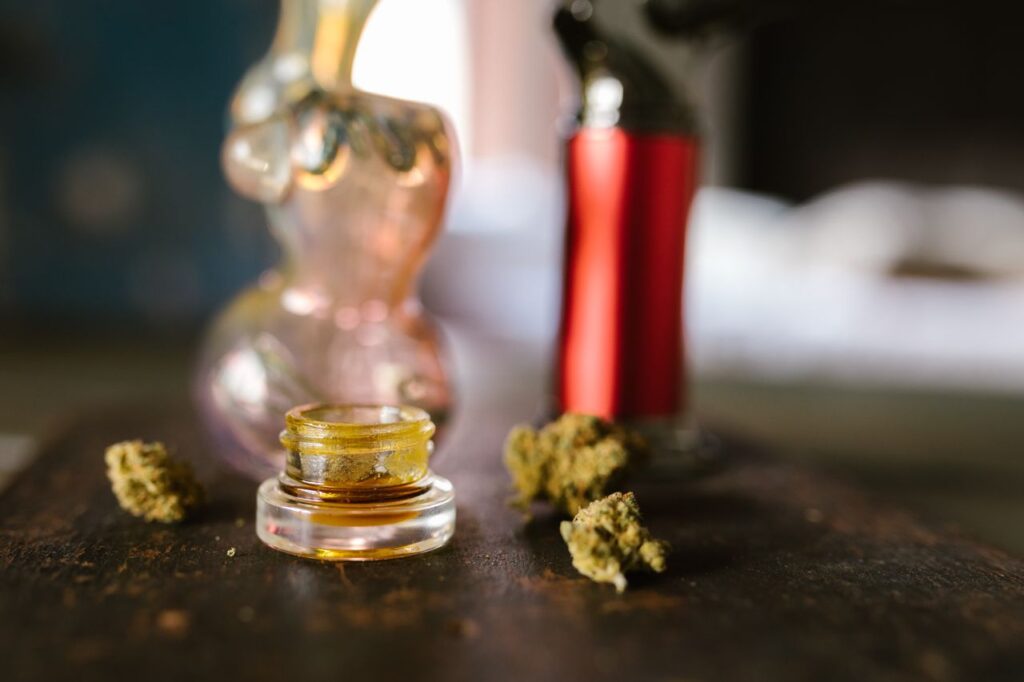
Distillate is a heavily refined cannabis oil in which THC, or another cannabinoid, has been separated from almost everything else by distillation. It keeps few natural terpenes, so flavour is usually added back. Live resin is a less refined extract of plants frozen at harvest, which keeps more of the plant’s own terpenes and minor compounds. Distillate usually tests higher in THC; live resin keeps more aroma.
Both turn up in the same places, especially vape cartridges, and menus often present live resin as the premium choice. The more useful questions are what else is in the oil, how it was flavoured or thinned, and how much THC each puff delivers.
This guide explains how each is made, what the chemistry and limited effect research show, the safety record of cartridge additives, legal status as of September 2026 and what to check on a lab report.
At a glance
| Property | Distillate | Live resin |
|---|---|---|
| Starting material | Usually dried flower or trim, or hemp-derived CBD | Fresh-frozen flower |
| Key process | Extraction, winterising, decarboxylation, vacuum distillation | Cold hydrocarbon extraction, then purging |
| Cannabinoid form | Mostly activated THC | Mostly THCA until heated |
| Native terpenes | Very low; flavour often added back | Higher; plant’s own profile |
| Typical THC | Higher | Lower than distillate, still far above flower |
| Common uses | Vape carts, edibles, infused pre-rolls | Dabs and vape carts |
| Main additive risk | Cutting agents and added flavourings1,2 | Plant waxes carried into aerosol4 |
| Hemp-derived versions | Often converted from CBD12 | Less common |
| Controlled comparisons | None | None |
How distillate and live resin are made
Distillate
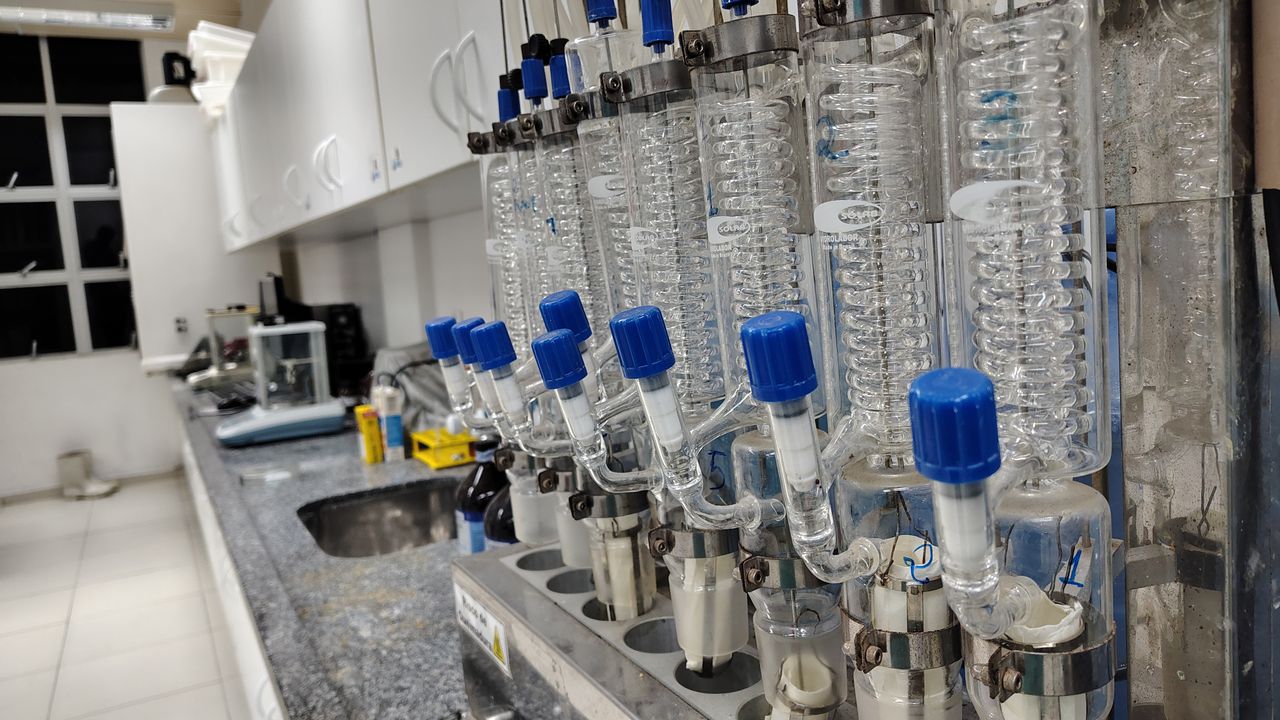
Distillate starts as a crude extract, usually made with ethanol, CO2 or hydrocarbons from dried flower or trim. The crude is winterised to remove fats and waxes, heated to decarboxylate THCA into THC, then run through short-path or wiped-film distillation. Under vacuum, compounds separate by boiling point, and the cannabinoid fraction is collected while most terpenes, chlorophyll and other plant material are left behind. Our distillate glossary entry covers the equipment.
Because its THC is already activated, distillate works in edibles as well as vapes. It is also a blank base: makers add flavour and sometimes thinning agents to reach the taste and consistency they want.
Live resin
Live resin skips drying. Plants are frozen at harvest, and the frozen material is washed with cold butane, propane or a blend in a closed-loop system. The solvent is recovered and the extract purged. The result keeps the terpene-rich fraction that distillation strips out, and most of its THC stays as THCA until heated. See our live resin glossary entry for textures and formats.
Hemp-derived distillates
Much hemp distillate is made by converting CBD into THC isomers with acid catalysts, a process sometimes called isomerisation. A 2025 review noted that poorly controlled reactions yield delta-9 and delta-8 THC along with side products that are rarely identified, and whose safety is largely unknown.12
Terpenes, flavourings and cutting agents
The biggest chemical difference is not THC. It is what sits alongside it.
Distillate carts need flavour, and it usually comes from added terpene blends, either cannabis-derived or botanical (from citrus, pine and other plants). Those blends are not always disclosed in detail. Laboratory work on vaporised THC oil found that adding terpenes raised levels of gas-phase degradation products, including isoprene, compared with THC alone.3
Thinning agents are a larger worry. During the 2019 EVALI outbreak, US investigators found vitamin E acetate in lung-fluid samples from 48 of 51 patients, and 47 of 50 with data had THC in the fluid or had reported vaping THC products.1 Researchers have also identified pine rosin (colophony), a known occupational asthma trigger, as an adulterant in a cannabis oil sample from an industry source.2 These problems have been concentrated in illicit and unregulated products, but they show why the ingredient list matters.
Live resin brings its own terpenes, so it rarely needs added flavour, but it carries plant waxes. An industry-funded 2026 study found long-chain alkanes from wax rose with extraction temperature and passed efficiently into the inhaled aerosol.4 Terpene-rich live resin also faces the same heat-breakdown chemistry as flavoured distillate.3
Effects and the strength of the evidence
No controlled human study has compared distillate with live resin. Claims that live resin gives a “fuller” or more balanced effect rest on the entourage effect, the idea that terpenes and minor cannabinoids shape THC’s action. The human evidence for that is thin.
- In a 2024 study of 20 adults, vaporised d-limonene given with 30 mg of THC reduced ratings of feeling anxious and paranoid compared with THC alone, while limonene by itself had no effect.5 It is one terpene, at a controlled dose, in a small sample.
- Cell studies found six common cannabis terpenes did not alter THC’s activity at human CB1 or CB2 receptors.6 Any terpene effect would have to work through other mechanisms.
What is better established is that dose drives effects. Distillate oil is usually more concentrated in THC than live resin oil, so a puff from a distillate cart is likely to deliver more THC, and people switching products can take more than they meant to. A 2022 systematic review linked higher-potency cannabis with greater risk of psychosis and cannabis use disorder.7 For practical purposes, potency and puff count matter more than the word on the box.
Route matters too. Inhaled THC from either product acts within minutes. Distillate is also the usual ingredient in gummies and other edibles, where onset is much slower and effects last longer; taking a second edible dose because the first seems not to be working is a common cause of unpleasant overconsumption.
Safety: vaping, additives, metals and drug testing
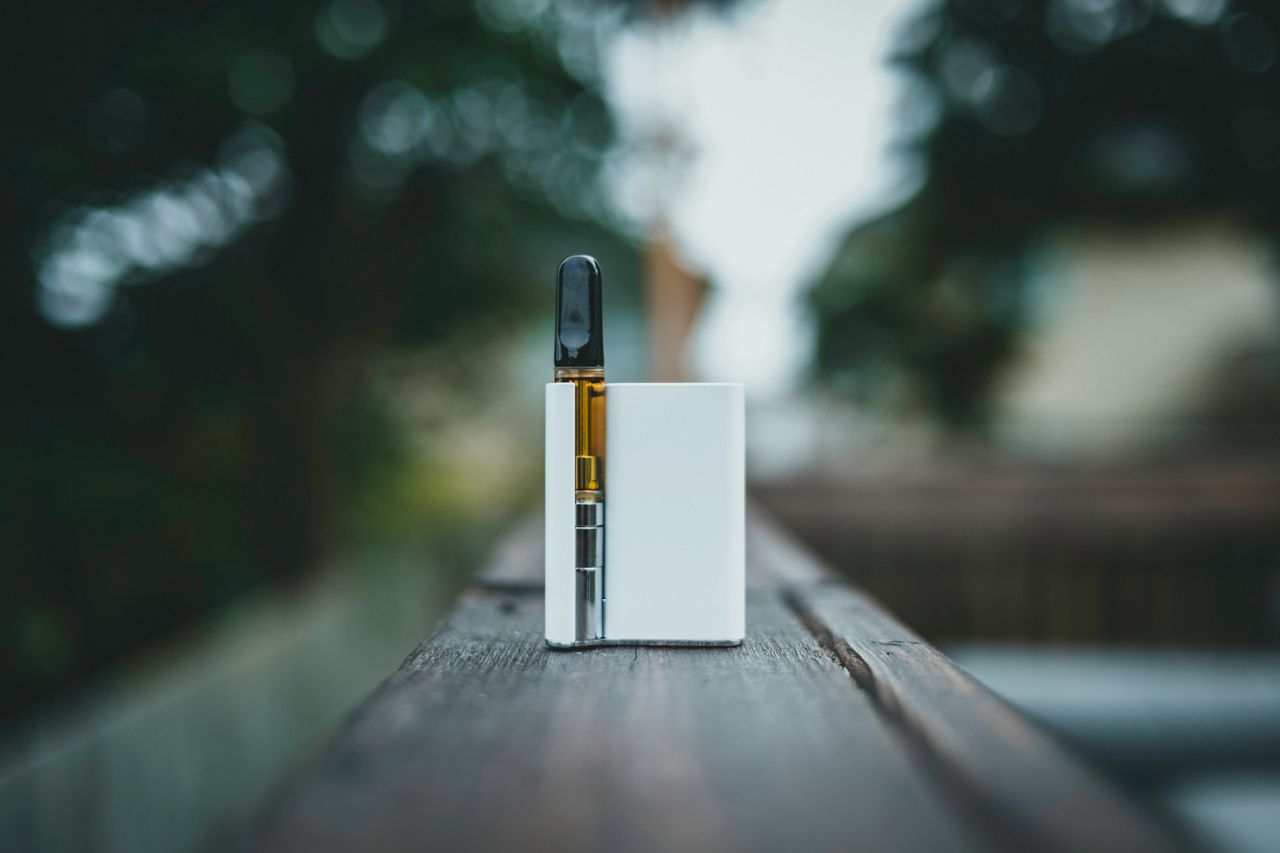
Both products are most often vaped, and most of the documented harms come from what is added to the oil or from contamination, rather than from distillation or hydrocarbon extraction itself.
- EVALI. Vitamin E acetate was strongly associated with the 2019 outbreak.1 Canada prohibits vitamins in cannabis extracts, and inhaled extracts may contain only ingredients with an accepted pharmacopoeial standard.11
- Metals. Heavy metals are a recognised class of impurity in cannabis products, including vaping liquids. A Health Canada risk assessment of legal, regulated vaping products concluded the risk from heavy metals was low, especially for people who do not vape daily.9 That finding does not extend to unregulated carts.
- Heat. Higher coil temperatures increase terpene and THC breakdown products,3 so lower settings are the practical harm-reduction step for either oil.
- Converted hemp distillates. Side products from CBD conversion are often unidentified.12 See our comparison of delta-8 vs delta-9 THC for more.
Drug tests detect THC metabolites, so both products, and hemp-derived THC distillates, can produce a positive result. People who are pregnant or breastfeeding, have a history of psychosis or have heart conditions face higher risks from high-potency THC.
Legal status in September 2026
United States. Marijuana-derived distillate and live resin follow marijuana’s federal status. Since 28 April 2026, marijuana covered by a state medical marijuana licence and FDA-approved marijuana products are in Schedule III; everything else, including adult-use carts and concentrates, remains in Schedule I while the DEA considers broader rescheduling.10 Sale is lawful only through state programmes, which set their own testing and additive rules.
Hemp-derived distillates are about to change status. The federal hemp redefinition moves to total THC and caps finished products at 0.4 mg of total THC per container from 11 December 2026, while cannabinoids not naturally occurring in the plant lose hemp status from 12 November 2026.8 That captures most hemp THC carts, including delta-8, and bills to delay or repeal it remain in committee.
United Kingdom. Both are controlled as Class B cannabis products, with no legal recreational market.
Canada. Licensed distillate and live resin products are legal for adults. Each immediate container of a cannabis extract may hold no more than 1,000 mg of THC.11
What to check on the label and COA
- Full ingredient list. For carts, look for exactly what the oil contains beyond cannabinoids. Avoid anything listing vitamin E acetate, and be wary of unnamed “thickeners” or “proprietary blends”.
- Terpene source. Distillate labels should say whether terpenes are cannabis-derived or botanical. A live resin product should not need added terpenes; if the label or COA suggests they were added, the “live” claim means less.
- Cannabinoid profile. Total THC, and for hemp products a breakdown of delta-9, delta-8 and other isomers. A distillate near the top of the potency range needs a smaller dose.
- Contaminant panels. Residual solvents, pesticides and, for vapes, heavy metals, from an accredited lab with a batch number that matches the product.
- Blends. Some carts combine distillate with live resin or with “live resin terpenes”. Wording such as “infused” or “enhanced” can signal a blend, so check the ingredient list and ask for proportions if they are not given.
- Licensed source. The EVALI cases and adulterant findings were concentrated in illicit or unregulated products.1,2 A regulated retailer with published test results lowers, but does not remove, the risk.
Frequently asked questions
Is live resin better than distillate?
Neither is better in any proven way. Live resin keeps more of the plant’s own terpenes, which many users prefer for flavour, while distillate is purer in THC and usually stronger. No controlled study has compared their effects, and evidence that terpenes change how THC feels is limited to small studies.5,6 The quality of a specific batch, and its lab report, matters more than the category.
Is distillate stronger than live resin?
Usually, yes, in THC content. Distillation strips out most terpenes and other plant compounds, so the remaining oil is mostly cannabinoid, while live resin keeps a larger non-THC fraction. Stronger oil means more THC per puff, so switching from live resin to distillate without adjusting can lead to taking more than intended. Higher-potency cannabis is linked to greater risk of psychosis and dependence.7
Do distillate carts have added terpenes?
Most do, because distillation removes much of the natural terpene content and leaves a fairly bland oil. Makers add cannabis-derived or botanical terpene blends for flavour. Laboratory work found that added terpenes increased gas-phase breakdown products when THC oil was vaporised,3 so a strong flavour is not a sign of quality. Check the label for the terpene source.
Can distillate or live resin carts cause lung injury?
The 2019 EVALI outbreak was strongly linked to vitamin E acetate, found in lung fluid from 48 of 51 patients tested, most of whom had used THC vaping products.1 That points to additives in mostly illicit carts rather than distillate or live resin as such. Long-term effects of vaping cannabis oils are not well studied, so any breathing symptoms after vaping warrant medical attention.
Will distillate or live resin show up on a drug test?
Yes. Both contain THC, and drug tests look for THC metabolites, not the extraction method. The same applies to hemp-derived THC distillates. How long a result stays positive depends on how much and how often someone uses, and on the test type.
Sources
- Blount BC, Karwowski MP, Shields PG, Morel-Espinosa M, Valentin-Blasini L, Gardner M, et al. Vitamin E Acetate in Bronchoalveolar-Lavage Fluid Associated with EVALI. N Engl J Med. 2020;382(8):697-705. DOI: 10.1056/NEJMoa1916433. PMID: 31860793. pubmed.ncbi.nlm.nih.gov
- Meehan-Atrash J, Strongin RM. Pine rosin identified as a toxic cannabis extract adulterant. Forensic Sci Int. 2020;312:110301. DOI: 10.1016/j.forsciint.2020.110301. PMID: 32460222. pubmed.ncbi.nlm.nih.gov
- Meehan-Atrash J, Luo W, McWhirter KJ, Strongin RM. Aerosol Gas-Phase Components from Cannabis E-Cigarettes and Dabbing: Mechanistic Insight and Quantitative Risk Analysis. ACS Omega. 2019;4(14):16111-16120. DOI: 10.1021/acsomega.9b02301. PMID: 31592479. pubmed.ncbi.nlm.nih.gov
- Sosa ME, Paryani TR, Reed RJ, Siegel AW, Ai Q, Lee E, et al. Temperature Control Minimizes Wax-Derived Alkane Carryover in Hydrocarbon Cannabis Extraction. ACS Omega. 2026;11(27):39743-39752. DOI: 10.1021/acsomega.5c13451. PMID: 42518476. pubmed.ncbi.nlm.nih.gov (Funded by and largely authored by employees of Abstrax Tech.)
- Spindle TR, Zamarripa CA, Russo E, Pollak L, Bigelow G, Ward AM, et al. Vaporized D-limonene selectively mitigates the acute anxiogenic effects of Δ9-tetrahydrocannabinol in healthy adults who intermittently use cannabis. Drug Alcohol Depend. 2024;257:111267. DOI: 10.1016/j.drugalcdep.2024.111267. PMID: 38498958. pubmed.ncbi.nlm.nih.gov
- Santiago M, Sachdev S, Arnold JC, McGregor IS, Connor M. Absence of Entourage: Terpenoids Commonly Found in Cannabis sativa Do Not Modulate the Functional Activity of Δ9-THC at Human CB1 and CB2 Receptors. Cannabis Cannabinoid Res. 2019;4(3):165-176. DOI: 10.1089/can.2019.0016. PMID: 31559333. pubmed.ncbi.nlm.nih.gov
- Petrilli K, Ofori S, Hines L, Taylor G, Adams S, Freeman TP. Association of cannabis potency with mental ill health and addiction: a systematic review. Lancet Psychiatry. 2022;9(9):736-750. DOI: 10.1016/S2215-0366(22)00161-4. PMID: 35901795. pubmed.ncbi.nlm.nih.gov
- Hemp Law Group. Federal hemp ban 2026: where things stand. September 2026. hemplawgroup.com
- Achuthan S, Waye A, Abramovici H. Risk assessment of metals measured in regulated Canadian dried cannabis and cannabis vaping products: case study and perspectives. Front Toxicol. 2025;7:1755875. DOI: 10.3389/ftox.2025.1755875. PMID: 41626285. pubmed.ncbi.nlm.nih.gov
- Drug Enforcement Administration. Marijuana Rescheduling Regulatory Actions (including the final rule published 28 April 2026). dea.gov
- Health Canada. Guide on composition requirements for cannabis products. canada.ca
- Nivorozhkin A, Palfreyman MG. Acid-Catalyzed Conversion of Cannabidiol to Tetrahydrocannabinols: En Route to Demystifying Manufacturing Processes and Controlling the Reaction Outcomes. Cannabis Cannabinoid Res. 2025;10(3):377-388. DOI: 10.1089/can.2025.0015. PMID: 40250991. pubmed.ncbi.nlm.nih.gov
Editorial note: This article is for general information only and is not medical or legal advice. Cannabis distillate and live resin products have not been evaluated by the FDA to diagnose, treat, cure or prevent any disease. Laws vary by location and change often, so verify the rules that apply where you are. Always talk to a licensed healthcare provider before use, especially if you are under 21, pregnant or nursing, taking medication, or managing a health condition.
More comparisons
-
Live Resin vs Live Rosin: Extraction Chemistry and Solvent Testing
-
Indica vs Sativa: What Genetic and Terpene Research Actually Shows
-
THCA vs CBD: Why Heat, Drug Tests and the Law Split Them Apart
-
Delta-8 vs CBD: Intoxication, Evidence, Drug Tests and the 2026 Law
-
THC-P vs Delta-8: Potency Claims, Evidence and Legal Status