
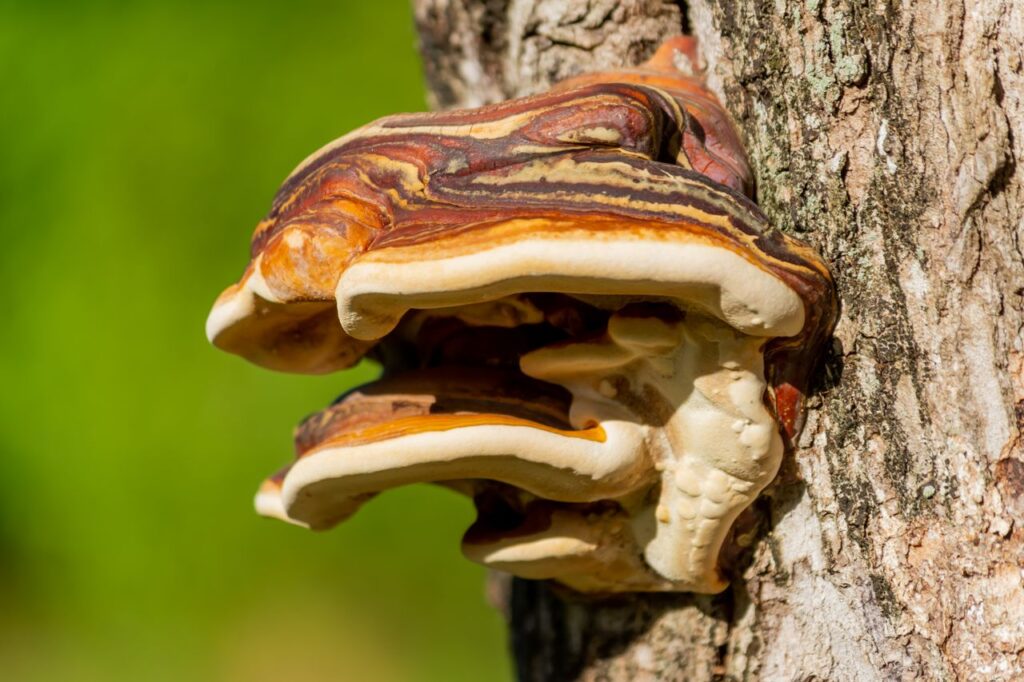
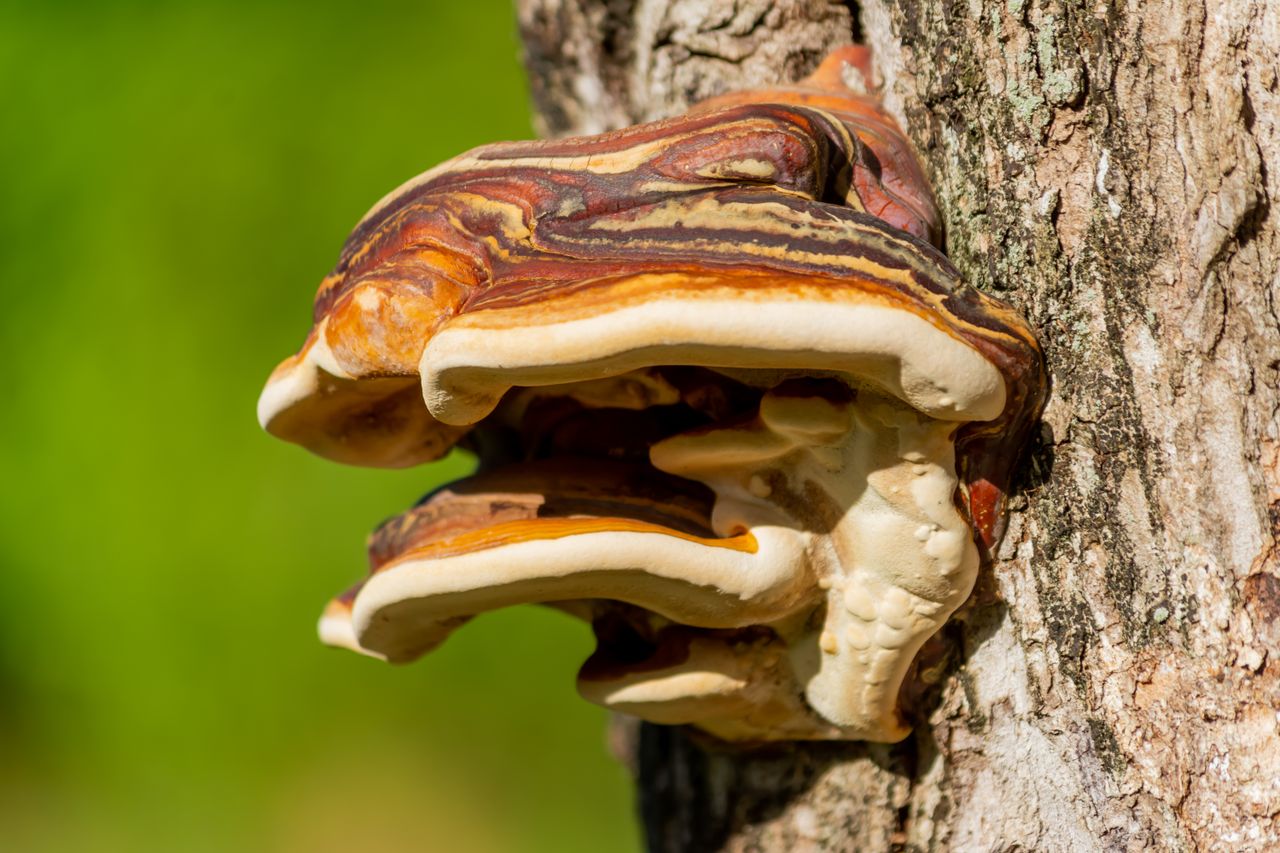
Reishi (Ganoderma lucidum and close relatives) is a hard, bitter, woody fungus studied mainly for immune markers, blood sugar and lipids. Lion’s mane (Hericium erinaceus) is a soft, edible mushroom studied mainly for memory and cognition. Reishi’s signature compounds are triterpenes; lion’s mane’s are hericenones and erinacines. Reishi also carries more interaction warnings and rare liver-injury reports.
They are often sold side by side, sometimes in the same capsule, with reishi pitched for calm and evenings and lion’s mane for focus and mornings. Those roles come from marketing and tradition more than from head-to-head evidence. No trial has compared the two directly.
Below we set out what each fungus is, what the human research has examined, where the evidence is weak, the safety signals worth knowing, and how to read a label so you know what you are actually buying.
At a glance
| Property | Reishi | Lion’s mane |
|---|---|---|
| Species | Ganoderma lucidum; many Asian products are G. lingzhi | Hericium erinaceus |
| Texture and taste | Woody, inedible as food, very bitter | Soft, edible, mild seafood-like flavour |
| Compounds most studied | Triterpenes (ganoderic acids), beta-glucans | Hericenones, erinacines, beta-glucans |
| Main research focus | Immune markers, cancer adjunct, blood sugar, lipids | Cognition, mild cognitive impairment, mood |
| Best available evidence | Two Cochrane reviews; small, low-quality trials | A few small RCTs and pilot trials |
| Liver case reports | Yes, including one fatal case with powder | No clear signal in published trials |
| Interaction flags | Anticoagulants, immunosuppressants, possible CYP effects | Limited data |
| Typical extraction | Hot water and alcohol (“dual extract”) | Hot water; some whole powders |
| US status | Dietary supplement; not FDA-approved for any condition | Dietary supplement; not FDA-approved for any condition |
What reishi and lion’s mane are
Reishi, known as lingzhi in Chinese, is a shiny, reddish bracket fungus that grows on wood. It is too tough to eat, so it has traditionally been sliced and simmered into a bitter decoction. The name Ganoderma lucidum is used loosely on labels; taxonomists now treat much of the cultivated East Asian material as a separate species, G. lingzhi, which is why some papers use that name.
Its two compound families behave differently. Triterpenes such as ganoderic acids give reishi its bitterness and dissolve better in alcohol. Polysaccharides, including beta-glucans, are extracted with hot water. That is why reishi products are often marketed as “dual extracts”.
Lion’s mane is a culinary mushroom with cascading white spines. Its hericenones sit mainly in the fruiting body and its erinacines mainly in the mycelium.3 Both have been studied in cells and animals for effects on nerve growth factor. Our lion’s mane glossary entry explains the terms.
Lion’s mane products split into fruiting body powders or extracts, and mycelium products that may contain erinacines but also the grain the mycelium was grown on. Some mycelium strains are grown with erinacine content in mind, but few labels report a figure.
What the human research has examined
Reishi
Reishi is one of the few functional mushrooms with Cochrane reviews. The 2016 cancer review found five randomised trials of generally unsatisfying quality. Pooled data suggested people given reishi alongside chemotherapy or radiotherapy were more likely to show tumour response, and some immune cell counts rose slightly, but no trial measured long-term survival. The authors found insufficient evidence to justify reishi as a first-line cancer treatment.4
A 2015 Cochrane review of cardiovascular risk factors included five trials with 398 participants. In the analysable trials, all in people with type 2 diabetes, reishi did not significantly reduce HbA1c, cholesterol, blood pressure or triglycerides compared with placebo.5 Memorial Sloan Kettering’s summary adds small studies on lower urinary tract symptoms in men and limited data on fatigue and anxiety.6
Lion’s mane
The best known trial gave 30 Japanese adults with mild cognitive impairment lion’s mane tablets or placebo for 16 weeks. Cognitive scale scores rose in the lion’s mane group, then fell within four weeks of stopping.1 In 41 healthy young UK adults, a 2023 pilot found a faster response on one task an hour after a single dose, and only a non-significant trend towards lower stress after 28 days.2 Our round-up of lion’s mane trials in 2026 covers the rest.
How they are used and how reported effects differ
Reishi is sold for winding down: teas, evening capsules and hot chocolate-style blends. Users commonly describe a mild sense of calm, although controlled human data on sleep and anxiety are sparse, and the product that users take rarely matches what was tested.
Lion’s mane is sold for daytime focus. Reported effects are subtle and, in the trials that found changes, appeared over weeks rather than hours. Neither mushroom is a stimulant or a sedative in the pharmaceutical sense.
Taste is a practical difference. Reishi is intensely bitter, so it tends to appear in capsules or heavily flavoured drinks. Lion’s mane can simply be cooked and eaten, which makes it the only one of the two that doubles as food.
Reishi also appears as spore powder and spore oil. These are different products from fruiting body extracts, with a different composition and even thinner human data, so a label should say exactly which part of the fungus is used.
Evidence quality compared
On paper, reishi has the larger evidence base. In practice, the Cochrane reviews show how weak it is: small trials, unclear risk of bias, surrogate outcomes, and a null result on metabolic markers in type 2 diabetes. The cancer data concern reishi as an add-on to conventional treatment in trials of poor quality, not reishi on its own.
Lion’s mane has fewer trials, all small, with outcomes such as test scores rather than daily function. A 2025 systematic review could pool Mini Mental State Examination data from just two studies.3 Several trials used products supplied by manufacturers.
Geography matters too. Most reishi and lion’s mane trials were run in East Asia with locally produced preparations, and product standards there differ from those in US or UK supplements. That does not make the results wrong, but it limits how far they transfer to a capsule bought online.
The same caveat applies to both: results belong to the specific preparation tested. The US National Cancer Institute notes that the FDA has not approved medicinal mushrooms to treat any medical condition and that ingredients may vary between lots.12
Safety, liver reports and drug interactions
Reishi has a small but notable liver signal. A 2004 Hong Kong report described hepatotoxicity linked to a reishi formulation.7 A 2007 Thai report described fatal fulminant hepatitis; in both cases the patients had used traditionally boiled reishi without problems and developed liver injury one to two months after switching to a powder.8 A 2023 case described acute liver injury after reishi powder combined with alcohol, which resolved after stopping.9
Case reports cannot prove cause, and contamination or other medicines may have contributed. They are still a reason to treat unexplained fatigue, dark urine or yellowing skin during use as a prompt to stop and seek medical advice.
Memorial Sloan Kettering lists nausea, insomnia, dry mouth and constipation among reishi’s reported side effects, and flags these interactions:6
- Anticoagulants and antiplatelets: possible added bleeding risk.
- Immunosuppressants: reishi may enhance immune responses and work against these medicines.
- Liver enzymes: laboratory studies show inhibition of CYP1A2, CYP2E1 and CYP3A; clinical relevance is unknown.
- Chemotherapy: theoretical interactions; discuss with the oncology team.
The same summary describes mild blood-sugar-lowering effects in some studies, so people on diabetes medicines have a reason to tell their prescriber and monitor more closely.6
Lion’s mane has a lighter profile. Reported side effects include stomach discomfort, headache and allergic reactions.3 See our page on lion’s mane side effects. Neither mushroom is a target of standard drug tests.
Legal status in September 2026
United States: both are sold as dietary supplements, are not scheduled, and are not approved by the FDA to treat any condition. Labels may carry structure or function statements only.
United Kingdom: both are sold as food supplements and cannot carry medicinal claims.
Canada: products marketed with health claims are regulated as natural health products; licensed products show an eight-digit Natural Product Number (NPN).
Legal status does not separate them. Quality control does.
What to check on a reishi or lion’s mane label
Reishi is one of the few mushrooms whose supplement quality has been tested systematically. In a 2017 study of 19 reishi products bought online in the US, only 5 matched their labels. The characteristic reishi beta-glucan was found in 5, reishi-type triterpenes in 8, and starch-like polysaccharides in 13.10
Starch usually comes from mycelium grown on grain and sold with the grain still in it. The beta-glucan method published by McCleary and Draga, which underpins the Megazyme kit, measures total glucan and alpha-glucan separately and calculates beta-glucan from the difference.11 A figure for total “polysaccharides” alone can hide a product that is largely starch.
- Latin name, including whether reishi is G. lucidum or G. lingzhi.
- Part used: fruiting body, mycelium, or mycelium with grain.
- Beta-glucan by a named method, with alpha-glucan reported.
- For reishi, a triterpene figure if a dual extract is claimed.
- A batch-matched certificate of analysis for heavy metals and microbes.
More on this in our guides to signs a brand is third-party tested and functional mushroom label problems in 2026.
Frequently asked questions
Can you take reishi and lion’s mane together?
Many blends do, and there is no known direct interaction between them. There are also no trials of the combination, so claims of synergy are not evidence-based. The more relevant risks come from reishi’s own interaction flags, particularly with blood thinners and immunosuppressants. Anyone on prescription medicines should check with a pharmacist first.
Is reishi bad for your liver?
Most people in trials tolerated reishi, and Cochrane reviewers found no major toxicity across the included studies.4 However, there are case reports of liver injury, including a fatal case after switching to a reishi powder.8 Causation is not proven, but anyone with liver disease, heavy alcohol use or symptoms such as dark urine or jaundice should stop and seek medical advice.
Should reishi be taken at night and lion’s mane in the morning?
That split comes from marketing and tradition. No trial has tested timing for either mushroom, and neither is a sedative or a stimulant in the pharmaceutical sense. If a product causes insomnia or drowsiness, that is worth noting, and reishi’s listed side effects do include insomnia for some users.
Does reishi or lion’s mane help with anxiety?
Neither is an established treatment for anxiety. Reishi’s anxiety data are limited, and a small lion’s mane pilot found only a non-significant trend towards lower stress after 28 days. Anyone dealing with persistent anxiety should speak to a clinician rather than rely on a supplement.
Is lion’s mane or reishi better for the brain?
Lion’s mane is the one studied for cognition, with small trials in older adults with mild cognitive impairment and in healthy young adults. Reishi has not been studied in the same way. Even for lion’s mane, the trials are too small and short to support claims of protecting or improving brain health, and results were tied to specific products.
What is a reishi dual extract?
It means the mushroom was extracted in both hot water, which pulls out polysaccharides such as beta-glucans, and alcohol, which pulls out triterpenes. The term is not regulated. A credible dual extract should state both a beta-glucan figure by a named method and a triterpene figure on its certificate of analysis.
Sources
- Mori K, Inatomi S, Ouchi K, Azumi Y, Tuchida T. Improving effects of the mushroom Yamabushitake (Hericium erinaceus) on mild cognitive impairment: a double-blind placebo-controlled clinical trial. Phytother Res. 2009;23(3):367-372. DOI: 10.1002/ptr.2634. PMID: 18844328. pubmed.ncbi.nlm.nih.gov
- Docherty S, Doughty FL, Smith EF. The Acute and Chronic Effects of Lion’s Mane Mushroom Supplementation on Cognitive Function, Stress and Mood in Young Adults: A Double-Blind, Parallel Groups, Pilot Study. Nutrients. 2023;15(22):4842. DOI: 10.3390/nu15224842. PMID: 38004235. pubmed.ncbi.nlm.nih.gov
- Menon A, Jalal A, Arshad Z, Nawaz FA, Kashyap R. Benefits, side effects, and uses of Hericium erinaceus as a supplement: a systematic review. Front Nutr. 2025;12:1641246. DOI: 10.3389/fnut.2025.1641246. PMID: 40959699. pubmed.ncbi.nlm.nih.gov
- Jin X, Ruiz Beguerie J, Sze DM, Chan GC. Ganoderma lucidum (Reishi mushroom) for cancer treatment. Cochrane Database Syst Rev. 2016;4(4):CD007731. DOI: 10.1002/14651858.CD007731.pub3. PMID: 27045603. pubmed.ncbi.nlm.nih.gov
- Klupp NL, Chang D, Hawke F, Kiat H, Cao H, Grant SJ, Bensoussan A. Ganoderma lucidum mushroom for the treatment of cardiovascular risk factors. Cochrane Database Syst Rev. 2015;2015(2):CD007259. DOI: 10.1002/14651858.CD007259.pub2. PMID: 25686270. pubmed.ncbi.nlm.nih.gov
- Memorial Sloan Kettering Cancer Center. About Herbs: Reishi Mushroom. Updated 5 May 2026. mskcc.org
- Yuen MF, Ip P, Ng WK, Lai CL. Hepatotoxicity due to a formulation of Ganoderma lucidum (lingzhi). J Hepatol. 2004;41(4):686-687. DOI: 10.1016/j.jhep.2004.06.016. PMID: 15464254. pubmed.ncbi.nlm.nih.gov
- Wanmuang H, Leopairut J, Kositchaiwat C, Wananukul W, Bunyaratvej S. Fatal fulminant hepatitis associated with Ganoderma lucidum (Lingzhi) mushroom powder. J Med Assoc Thai. 2007;90(1):179-181. PMID: 17621752. pubmed.ncbi.nlm.nih.gov
- Guedikian R, Kim B, Singh G, Alexander R. Ganoderma lingzhi (Reishi Mushroom)-Induced Acute Liver Injury in the Setting of Alcohol Use: A Case Report and Review of the Literature. Cureus. 2023;15(9):e45953. DOI: 10.7759/cureus.45953. PMID: 37885515. pubmed.ncbi.nlm.nih.gov
- Wu DT, Deng Y, Chen LX, Zhao J, Bzhelyansky A, Li SP. Evaluation on quality consistency of Ganoderma lucidum dietary supplements collected in the United States. Sci Rep. 2017;7(1):7792. DOI: 10.1038/s41598-017-06336-3. PMID: 28798349. pubmed.ncbi.nlm.nih.gov
- McCleary BV, Draga A. Measurement of β-Glucan in Mushrooms and Mycelial Products. J AOAC Int. 2016;99(2):364-373. DOI: 10.5740/jaoacint.15-0289. PMID: 26957216. pubmed.ncbi.nlm.nih.gov
- PDQ Integrative, Alternative, and Complementary Therapies Editorial Board. Medicinal Mushrooms (PDQ®), Health Professional Version. National Cancer Institute. Updated 2024. cancer.gov
Editorial note: This article is for general information only and is not medical or legal advice. Reishi and lion’s mane have not been evaluated by the FDA to diagnose, treat, cure or prevent any disease. Laws vary by location and change often, so verify the rules that apply where you are. Always talk to a licensed healthcare provider before use, especially if you are under 21, pregnant or nursing, taking medication, or managing a health condition.
More comparisons