
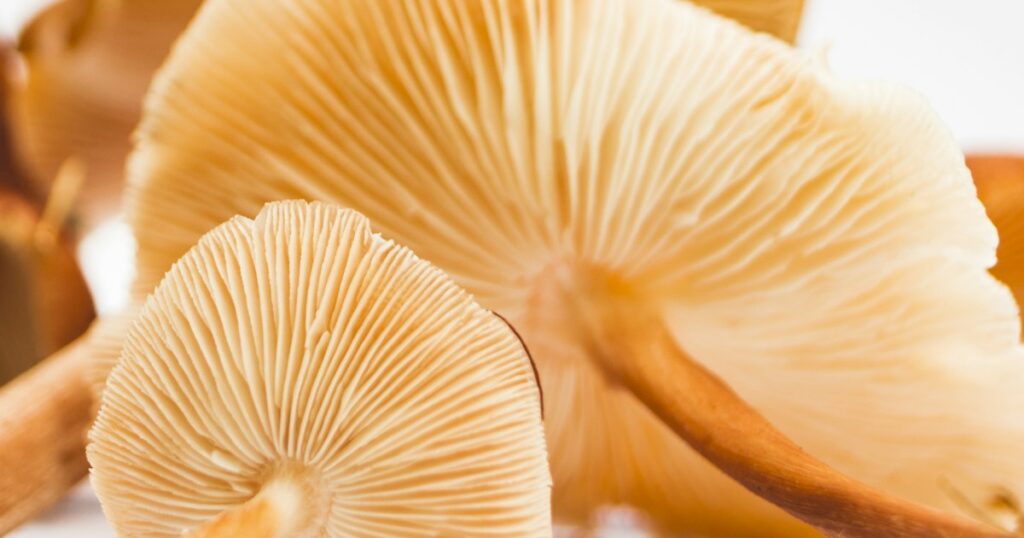
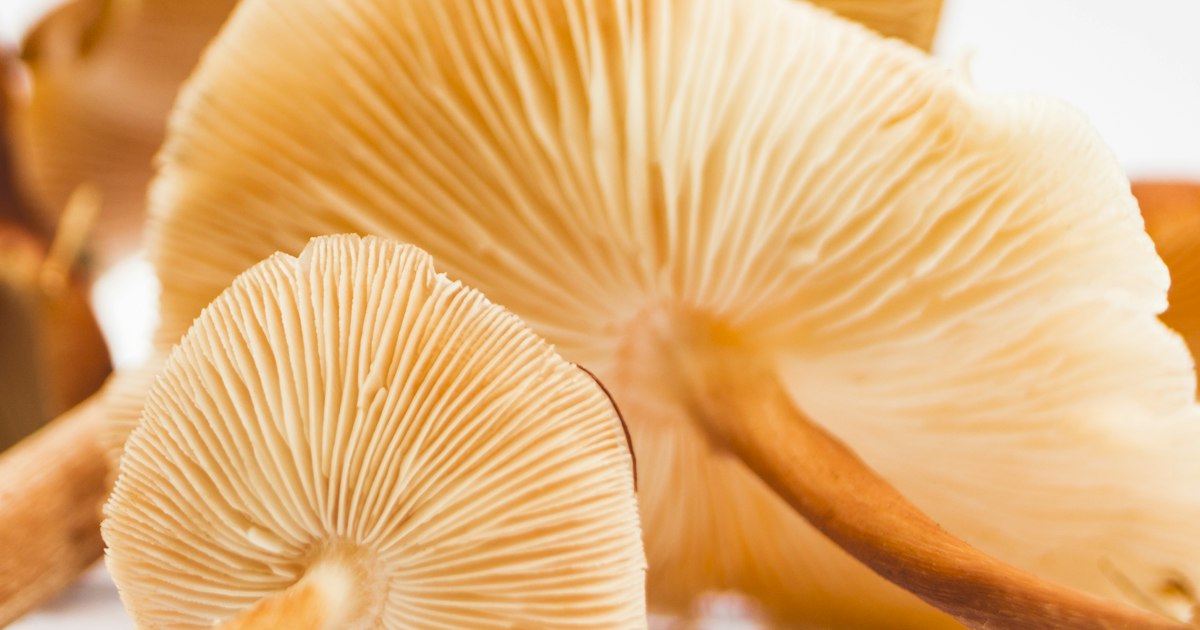
Functional mushrooms are one of the fastest-growing corners of the supplement and food market, but the science and the labels have not kept pace with the sales. Market analysts estimate the global category in the tens of billions of dollars and project double-digit annual growth, while independent testing has repeatedly found products that contain less of the claimed mushroom compounds than buyers would assume, and in some cases the wrong species entirely.134
The human evidence is uneven. A few preparations have meaningful clinical records, most notably the turkey tail extract PSK, which is used alongside cancer treatment in Japan. Lion’s mane, reishi and cordyceps have small or low-quality trials with mixed results, and chaga has almost no human trial evidence but does have case reports of serious kidney injury with long-term use.11912
The category also carries a reputational problem that has little to do with lion’s mane or reishi. In 2024, “mushroom” branded chocolates and gummies sold as Diamond Shruumz were linked to 180 illnesses across 34 states, and FDA testing found substances such as muscimol, psilocin and the prescription drug pregabalin in samples.5 What follows separates the market data, the labeling debates, the safety record and the evidence for each major mushroom.
How big the functional mushroom market is
Market sizing depends heavily on definitions, and that matters when reading headline figures. Grand View Research estimates the global functional mushroom market at about USD 38.2 billion in 2025, rising to roughly USD 42.3 billion in 2026 and USD 96.0 billion by 2033, a compound annual growth rate of 12.4% from 2026 to 2033.1
Those numbers are not a measure of lion’s mane capsules alone. The same report says shiitake, a common culinary mushroom, held the largest product share at about 33.8% in 2025, and that food and beverages accounted for about 41.7% of revenue. Dietary supplements are only one segment.1 Other research firms publish estimates that differ by tens of billions of dollars, largely because they draw the category boundary in different places.
Mycelium on grain vs fruiting body
A mushroom is the fruiting body of a fungus. Mycelium is the threadlike network that grows through a substrate. Both are real fungal tissue used in supplements.
The dispute is about how mycelium is grown. Many products use mycelium cultivated on sterilized grain such as oats or rice. The fungus colonizes the grain, and the whole mass is then dried and milled. Because the grain cannot be fully separated from the mycelium, the finished powder can contain a substantial proportion of leftover grain. A label that says “organic lion’s mane mycelium” does not usually say how much of the powder is substrate.
Why the growth method changes the chemistry
Fruiting bodies and mycelium do not have identical chemical profiles. Some compounds are associated more with one tissue than the other; hericenones, for example, are typically discussed in connection with lion’s mane fruiting bodies, and erinacines with its mycelium. Neither tissue is automatically better; the practical issue is that a grain-grown product may deliver less fungal material per gram than buyers assume.
Our explainer on nine functional mushrooms and what the research actually says covers the species-level background in more detail.
Beta-glucan, alpha-glucan and starch: the label problem
Beta-glucans are the polysaccharides most often cited as the active fraction of medicinal mushrooms. Many labels instead list a “polysaccharide” percentage, which can mislead. Older polysaccharide tests measure total carbohydrate polymers, which include alpha-glucans such as starch. Grain is mostly starch, so a grain-heavy mycelium product can post an impressive “polysaccharide” figure without containing much beta-glucan at all.
Enzyme-based methods can measure beta-glucan and alpha-glucan separately. Nammex, a supplier that sells fruiting-body extracts and therefore has a commercial stake in this debate, reports that in its testing of roughly 100 samples, fruiting bodies showed beta-glucan levels from about 6.79% to 49.3% with starch generally under 3%, while mycelium-on-grain products typically showed 1% to 15% beta-glucan and averaged 35% to 40% starch.2 Those figures come from an interested party rather than a peer-reviewed survey, but they are consistent with what independent researchers found when they looked for starch in reishi products.
| Label wording | What it can mean | What to look for |
|---|---|---|
| “Mushroom” or species name only | Could be fruiting body, mycelium, or mycelium on grain | A statement of which part is used |
| “Polysaccharides 30%” | May include starch and other alpha-glucans | Beta-glucan measured by a specific method, plus starch or alpha-glucan result |
| “Full spectrum” or “myceliated” | Often grain colonized by mycelium, milled whole | Disclosure of substrate and starch content |
| “Extract 10:1” | Ratio of starting material to extract; says nothing about compound content | Measured markers on a certificate of analysis |
| Latin name | May not match the species actually present | Identity testing, such as DNA or chemical fingerprinting |
What independent testing has found
The best-documented problems involve reishi, one of the oldest and most widely sold medicinal mushrooms.
In a study published in Scientific Reports, Wu and colleagues analyzed 19 Ganoderma lucidum products bought from US e-commerce sites. Only 5 of the 19 (26.3%) had measured ingredients consistent with their labels. Triterpenes, a characteristic reishi compound class, were detected in 8 of 19. Polysaccharide profiles consistent with authentic reishi appeared in 5 of 19. Starch or maltodextrin, which is essentially absent from reishi fruiting bodies, was detected in 13 of 19 products (68.4%). The authors described the quality consistency of the products as poor.3
A separate DNA-based study by Loyd and colleagues in Frontiers in Microbiology examined 20 manufactured reishi products and 17 grow-your-own kits. About 93% of the manufactured products contained Ganoderma lingzhi, not the G. lucidum named on labels, and none of the manufactured products contained G. lucidum in the strict sense.4 Loose historical naming is partly to blame, but a Latin name on a bottle is not proof of identity.
These studies are older and cover one mushroom, but they show why a certificate of analysis that reports identity, beta-glucan and starch is more informative than a marketing percentage. Our guide to the signs a supplement brand is actually third-party tested explains how to read those documents.
Recalls, adulteration and the Diamond Shruumz outbreak
The most serious safety event connected to “mushroom” products in recent years did not involve lion’s mane or reishi. It involved Diamond Shruumz chocolate bars, cones and gummies, which were marketed with psychedelic-style branding.
The manufacturer, Prophet Premium Blends of Santa Ana, California, recalled all flavors on June 27, 2024. By the time FDA completed its investigation in November 2024, the agency counted 180 illnesses, 73 hospitalizations and 3 potentially associated deaths across 34 states. CDC’s outbreak summary, which uses a slightly different case window, lists 2 deaths. Reported effects included seizures, loss of consciousness and respiratory failure.5
FDA testing found muscimol, a compound from Amanita muscaria, in chocolate bars, cones and a raw ingredient, and ibotenic acid in the raw ingredient. Samples also contained psilocin, a Schedule I controlled substance, along with acetylpsilocin, kavalactones and pregabalin, a prescription drug.5
In December 2024, FDA stated that Amanita muscaria, its extracts and its constituents muscimol, ibotenic acid and muscarine are not generally recognized as safe and are not authorized for use in conventional food. The agency said it was also evaluating their use in dietary supplements.6
What the evidence supports, mushroom by mushroom
The table below summarizes the strongest human evidence we could verify for five widely sold species. “Limited” means small, short or low-quality trials; it does not mean the mushroom has been shown not to work.
| Mushroom | Most studied uses | Best human evidence | Safety notes | Overall strength |
|---|---|---|---|---|
| Lion’s mane (Hericium erinaceus) | Cognition, mood | A 16-week trial in 30 older adults with mild cognitive impairment reported improved scores; a 2025 crossover trial in 18 young adults found no overall acute effect on cognition or mood | LiverTox score E, an unlikely cause of liver injury | Limited |
| Reishi (Ganoderma spp.) | Immune support, adjunct in cancer care | Cochrane review of 5 randomized trials: possible benefit alongside chemotherapy or radiotherapy, but study quality generally unsatisfying | Few side effects reported in trials; product identity is a known problem | Limited to low |
| Cordyceps (C. sinensis, C. militaris) | Exercise capacity | 2025 meta-analysis of 14 athlete trials: small improvements in some aerobic measures with C. sinensis, based on 4 studies | Short-term tolerability reported as good; adverse event monitoring was inconsistent | Limited |
| Turkey tail (Trametes versicolor) | Adjunct in cancer care | PSK extract: randomized trials and a meta-analysis of 8 trials with 8,009 gastric cancer patients reported longer survival with chemotherapy plus PSK | Evidence applies to standardized PSK, not generic powders | Moderate for PSK only |
| Chaga (Inonotus obliquus) | Antioxidant, immune claims | No robust human trials identified | High oxalate content; case reports of oxalate kidney injury, including end-stage kidney disease | Very limited |
Lion’s mane
The trial most often cited for lion’s mane, Mori and colleagues in 2009, gave 30 Japanese adults aged 50 to 80 with mild cognitive impairment either lion’s mane powder or placebo for 16 weeks. Cognitive scores improved in the mushroom group and not in the placebo group.7 The study was small. A 2025 double-blind crossover trial by Surendran and colleagues gave 18 healthy adults aged 18 to 35 a single dose of a fruiting body extract and found no significant effect on global cognition or mood, with a mix of better and worse results on individual tasks.8 LiverTox rates lion’s mane as an unlikely cause of clinically apparent liver injury.7 For more, see what human trials report about lion’s mane side effects.
Reishi
A 2016 Cochrane review by Jin and colleagues included 5 randomized trials in people with cancer. Patients given reishi alongside chemotherapy or radiotherapy were more likely to respond than those given conventional treatment alone, and some immune markers rose modestly, but the reviewers described the methodological quality of the trials as generally unsatisfying. They concluded the evidence does not justify reishi as a first-line treatment.9
Cordyceps
A 2025 systematic review and meta-analysis by Shu and colleagues pooled 14 randomized trials involving 528 athletes and several fungi. For Cordyceps sinensis, based on 4 studies, the authors reported statistically significant but borderline improvements in endurance, ventilatory threshold and peak oxygen uptake.10 The cordyceps findings rest on a handful of small trials, and adverse events were not systematically monitored.
Turkey tail
Turkey tail has the strongest record in this group, with an important caveat. The National Cancer Institute’s PDQ summary notes that PSK, a standardized extract, is approved in Japan and has been used there as adjuvant cancer therapy for decades. The summary describes a meta-analysis of 8 randomized trials with 8,009 gastric cancer patients and pooled data from 3 colorectal cancer studies with 1,094 patients, both reporting longer survival or fewer recurrences with PSK.11 Those results apply to a specific pharmaceutical-grade extract used alongside treatment. They do not transfer automatically to turkey tail capsules or coffee blends.
Chaga
Chaga is widely sold as a tea and powder, yet human trial evidence is thin. The clearest human data are safety signals. Lee and colleagues reported a 49-year-old man who took chaga powder daily for about five years and developed end-stage kidney disease with oxalate crystal deposits, requiring dialysis. At publication, the authors described it as only the second such case reported worldwide.12 Case reports cannot establish how common this is.
Where regulation stands as of September 2026
In the United States, functional mushroom supplements are regulated as dietary supplements. They do not need FDA approval before sale, manufacturers are responsible for safety and labeling, and products may not claim to treat or prevent disease. Mushroom coffees and snacks are regulated as conventional foods, with different ingredient rules.
FDA’s December 2024 position on Amanita muscaria remains the most specific federal action touching the “mushroom” product space: the mushroom and its constituents are not authorized for use in conventional food, and the agency has said it is evaluating their use in supplements.6 Psilocybin and psilocin remain Schedule I controlled substances under federal law. We did not identify a federal rule that requires supplements to disclose grain substrate or starch content, so those disclosures remain voluntary. State rules on psychoactive mushroom products vary and have been changing, so readers should check current law where they live.
Frequently asked questions
Is mycelium on grain a fake mushroom product?
No. It contains real fungal tissue. The concern is that the finished powder can include a large share of leftover grain starch, which may dilute the fungal content and inflate polysaccharide claims if the test used does not distinguish beta-glucan from starch.
What should a good mushroom certificate of analysis show?
Look for species identity testing, beta-glucan measured by a method specific to beta-glucan, a starch or alpha-glucan result, and screening for heavy metals and microbial contaminants, all tied to the batch you are buying.
Were Diamond Shruumz products functional mushroom supplements?
No. They were edibles with psychedelic-style branding, a different category from lion’s mane or reishi supplements, and were recalled in June 2024.
Which functional mushroom has the best evidence?
The standardized turkey tail extract PSK has the most substantial clinical record, as an add-on to cancer treatment in Japan. That evidence does not automatically apply to general turkey tail supplements. The other species reviewed here have limited human evidence.
Is chaga safe to take long term?
Long-term safety has not been established. Chaga is high in oxalates, and case reports describe serious kidney injury after years of daily use. People with kidney disease or a history of kidney stones should be especially cautious and speak with a clinician first.
Sources
- Grand View Research. Functional Mushroom Market Size, Share Report, 2026-2033. Grand View Research, 2026. https://www.grandviewresearch.com/industry-analysis/functional-mushroom-market-report
- Nammex. Redefining Medicinal Mushrooms (white paper). Nammex, undated. https://www.nammex.com/redefining-medicinal-mushrooms/
- Wu DT, Deng Y, Chen LX, et al. Evaluation on quality consistency of Ganoderma lucidum dietary supplements collected in the United States. Scientific Reports, 2017. https://pmc.ncbi.nlm.nih.gov/articles/PMC5552695/
- Loyd AL, Richter BS, Jusino MA, et al. Identifying the “Mushroom of Immortality”: Assessing the Ganoderma Species Composition in Commercial Reishi Products. Frontiers in Microbiology, 2018. https://pubmed.ncbi.nlm.nih.gov/30061872/
- US Food and Drug Administration. Investigation of Illnesses: Diamond Shruumz-Brand Chocolate Bars, Cones, & Gummies (June 2024). FDA, 2024. https://www.fda.gov/food/outbreaks-foodborne-illness/investigation-illnesses-diamond-shruumz-brand-chocolate-bars-cones-gummies-june-2024 See also CDC. Outbreak Investigation of Diamond Shruumz Products. https://www.cdc.gov/environmental-health-studies/outbreak-investigation-diamond-shruumz-products/index.html
- US Food and Drug Administration. FDA Alerts Industry and Consumers about Use of Amanita Muscaria or its Constituents in Food. FDA, 2024. https://www.fda.gov/food/hfp-constituent-updates/fda-alerts-industry-and-consumers-about-use-amanita-muscaria-or-its-constituents-food
- National Institute of Diabetes and Digestive and Kidney Diseases. Lion’s Mane. LiverTox, NCBI Bookshelf, 2024. https://www.ncbi.nlm.nih.gov/books/NBK599740/
- Surendran G, et al. Acute effects of a standardised extract of Hericium erinaceus (Lion’s Mane mushroom) on cognition and mood in healthy younger adults: a double-blind randomised placebo-controlled study. Frontiers in Nutrition, 2025. https://www.frontiersin.org/journals/nutrition/articles/10.3389/fnut.2025.1405796/full
- Jin X, Ruiz Beguerie J, Sze DM, Chan GC. Ganoderma lucidum (Reishi mushroom) for cancer treatment. Cochrane Database of Systematic Reviews, 2016. https://www.cochranelibrary.com/cdsr/doi/10.1002/14651858.CD007731.pub3/full
- Shu et al. Effects of fungal supplementation on endurance, immune function, and hematological profiles in adult athletes: a systematic review and meta-analysis. Frontiers in Nutrition, 2025. https://pmc.ncbi.nlm.nih.gov/articles/PMC12631420/
- PDQ Integrative, Alternative, and Complementary Therapies Editorial Board. Medicinal Mushrooms (PDQ). National Cancer Institute, 2024. https://www.ncbi.nlm.nih.gov/books/NBK424937/
- Lee S, Lee HY, Park Y, et al. Development of End Stage Renal Disease after Long-Term Ingestion of Chaga Mushroom: Case Report and Review of Literature. Journal of Korean Medical Science, 2020. https://pmc.ncbi.nlm.nih.gov/articles/PMC7234858/
Editorial note: This article is for general information only and is not medical or legal advice. Functional mushroom products have not been evaluated by the FDA to diagnose, treat, cure or prevent any disease. Laws vary by location and change often, so verify the rules that apply where you are. Always talk to a licensed healthcare provider before use, especially if you are under 21, pregnant or nursing, taking medication, or managing a health condition.