
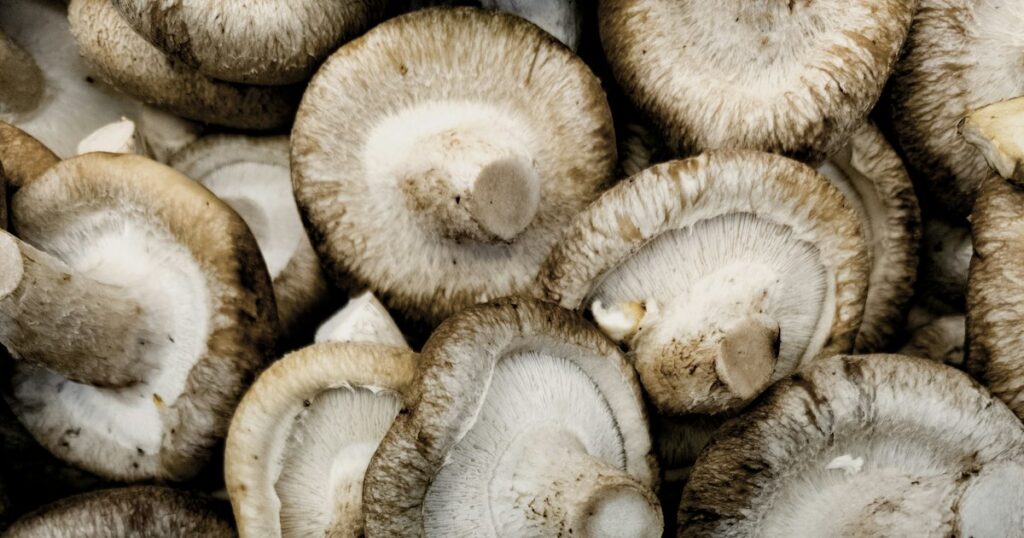
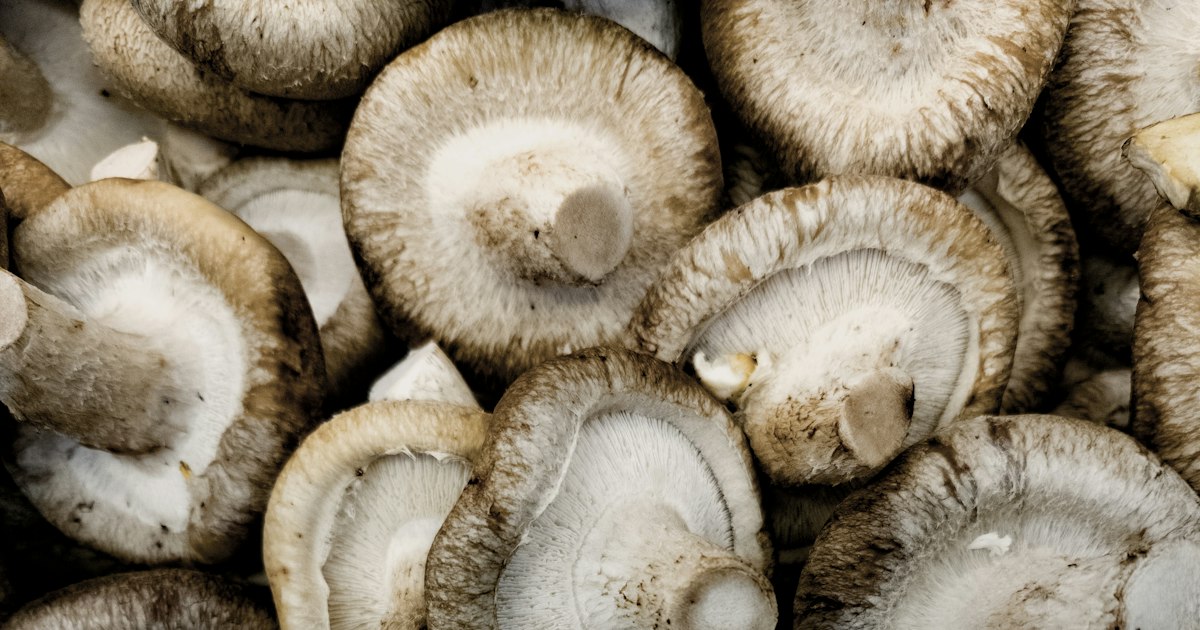
Shiitake (Lentinula edodes) is one of the few culinary mushrooms with a real human research record. That record is thinner than supplement marketing suggests, though. The best evidence for the whole mushroom is a four-week trial in 52 healthy adults. In it, eating 5 or 10 grams of dried shiitake a day was linked to changes in several immune markers, but the trial did not measure whether anyone got sick less often.1
The stronger clinical data come from two concentrated products, not from shiitake as a food. Lentinan, a purified beta-glucan from the mushroom, is approved in Japan as an adjunct to chemotherapy for gastric cancer. Its trial results are mixed: an older pooled analysis found a survival benefit, but a large phase III trial published in 2016 did not.24 AHCC, an extract made from cultured shiitake mycelia, has small human studies in areas such as persistent HPV infection, and they are still at an early, hypothesis-testing stage.6
Shiitake also has a well-described side effect called shiitake dermatitis, a whip-like rash usually linked to raw or undercooked mushrooms.8 Below is what each line of evidence shows, and where it stops.
Three different things called “shiitake”
Much of the confusion about shiitake benefits comes from treating three different materials as interchangeable.
- The whole mushroom. The fruiting body sold fresh or dried in grocery stores. It is a food, and the human research on it is mostly short-term and focused on biomarkers.
- Lentinan. A purified beta-1,3-glucan with beta-1,6 branches, isolated from the fruiting body. In Japan it is a licensed drug used alongside chemotherapy, historically given by injection in clinical trials.3
- AHCC (active hexose correlated compound). A standardized, proprietary extract made from cultured shiitake mycelia, the root-like network of the fungus, rather than the cap and stem. It is sold as a dietary supplement.67
The same logic applies across the functional mushroom category. Extraction method, the part of the fungus used and the dose all shape what a product contains, which is a theme in our overview of nine functional mushrooms and what the research actually says.
| Material | Source | Main human evidence | Overall strength |
|---|---|---|---|
| Whole dried shiitake | Fruiting body | One 4-week randomized trial in 52 healthy adults measuring immune markers | Limited, surrogate outcomes only |
| Lentinan | Purified beta-glucan from fruiting body | Multiple Japanese and Chinese trials with chemotherapy; meta-analyses; one negative phase III trial | Moderate volume, conflicting results |
| AHCC | Cultured mycelia extract | Small randomized and single-arm studies (HPV, liver and pancreatic cancer settings) | Early and small |
What the Dai et al. 2015 immune trial found
The most cited human study on eating shiitake is a randomized trial by Dai and colleagues at the University of Florida, published in the Journal of the American College of Nutrition in 2015. Fifty-two healthy adults aged 21 to 41 ate either 5 or 10 grams of dried shiitake every day for four weeks.1
Researchers took blood and saliva samples before and after. They reported that gamma-delta T cells proliferated about 60 percent more when stimulated in the lab, and NK-T cells about twice as much. Levels of secretory immunoglobulin A, an antibody found in saliva and on mucosal surfaces, rose. C-reactive protein, a general marker of inflammation, fell. The authors interpreted this as a sign of improved immune cell function and reduced inflammation.1
How to read those results
The findings are interesting, but they have clear limits:
- Surrogate outcomes. The trial measured lab markers. It did not track colds, infections or any other clinical event, so it cannot show that shiitake prevents illness.
- Short duration. Four weeks says nothing about longer-term effects.
- Small, young, healthy sample. The results may not apply to older adults, people with chronic disease or people who are immunocompromised.
- No placebo arm. The two groups received different amounts of mushroom and were compared with their own baseline values, which makes it harder to rule out other influences.
In short, dietary shiitake appears to shift some immune markers in healthy young adults. That is not evidence that it “boosts immunity” in a clinically meaningful sense.
Lentinan: an adjunct cancer drug in Japan
Lentinan is the part of the shiitake story most often mentioned in marketing, usually without the context that it is a purified pharmaceutical used under medical supervision. Review authors describe it as approved and widely used as an adjuvant for advanced or recurrent cancer in parts of Asia, including China and Japan, for more than two decades.3 In Japan it is licensed as a biological response modifier for gastric cancer, meaning it is intended to work through the immune system alongside chemotherapy rather than on its own. Lentinan is not an FDA-approved drug in the United States.
The early evidence looked positive
In 2009, Oba and colleagues published an individual patient meta-analysis in Anticancer Research. They pooled data from 650 patients with unresectable or recurrent gastric cancer across five randomized trials conducted in Japan. Adding lentinan to chemotherapy was associated with longer overall survival, with a hazard ratio of 0.80 (95 percent confidence interval 0.68 to 0.95).2 Those trials date from 1979 to 1989, an era of chemotherapy regimens that are no longer standard.3
A broader 2017 meta-analysis by Wang and colleagues in Cancer Medicine included 17 studies and 1,423 patients from China and Japan, mostly with gastrointestinal or lung cancer. Lentinan plus chemotherapy was associated with a higher one-year survival rate (risk ratio 1.46), a higher overall response rate (risk ratio 1.28) and fewer adverse events. However, the authors found no significant difference in two-year survival and said its sustained effect on survival remained unclear.3
The phase III trial that did not confirm a benefit
The most rigorous single test came from the JFMC36-0701 trial, published by Yoshino and colleagues in the European Journal of Cancer in 2016. It randomly assigned 309 patients with unresectable or recurrent gastric cancer to S-1 chemotherapy alone or S-1 plus lentinan. Median overall survival was 13.8 months with S-1 alone and 9.9 months with the combination, a difference that was not statistically significant. Time to treatment failure was significantly worse in the lentinan group (2.6 versus 4.3 months). The authors concluded that the study showed no efficacy of lentinan combined with S-1 in this population.4
A 2026 systematic review and meta-analysis by Sohn and colleagues in Integrative Cancer Therapies pooled 22 trials of shiitake extracts in 1,723 cancer patients. Across 13 randomized trials, extracts were associated with a better tumor response rate (odds ratio 1.45), but not with longer overall survival, better quality of life or fewer adverse events. The authors wrote that the evidence does not support clear recommendations.5
| Study | Design | Patients | Main finding |
|---|---|---|---|
| Oba et al., 2009 | Individual patient meta-analysis, 5 RCTs | 650, gastric cancer | Longer overall survival (HR 0.80) |
| Wang et al., 2017 | Meta-analysis, 17 studies | 1,423, mainly GI and lung cancer | Better 1-year survival and response; no clear 2-year survival benefit |
| Yoshino et al., 2016 (JFMC36-0701) | Randomized phase III | 309, gastric cancer | No survival benefit; shorter time to treatment failure |
| Sohn et al., 2026 | Meta-analysis, 22 trials | 1,723, various cancers | Better response rate; no survival or quality-of-life difference |
Two points matter for US readers. First, all of this research used purified lentinan or standardized extracts, often by injection, given with chemotherapy by oncologists. It does not describe what happens when someone eats shiitake or takes an over-the-counter capsule. Second, anyone in cancer treatment should discuss any mushroom product with their oncology team before using it.
AHCC: the mycelia extract
AHCC is a proprietary extract of cultured shiitake mycelia developed in Japan and rich in alpha-glucans. It is marketed as a dietary supplement, and much of its clinical research has been done with the branded product.6
Persistent HPV infection
The most discussed AHCC study is a phase II randomized, double-blind, placebo-controlled trial led by Judith Smith at UTHealth Houston, published in Frontiers in Oncology in 2022 (registered as NCT02405533). It enrolled 50 women over 30 with high-risk HPV infections that had persisted for more than two years. Participants took 3 grams of AHCC daily for six months followed by six months of placebo, or placebo for 12 months.611
Forty-one women completed the study. In the AHCC group, 14 of 22 (63.6 percent) tested negative for HPV RNA and DNA after six months, and 9 of those 14 remained negative six months after stopping. In the placebo group, 2 of 19 (10.5 percent) were negative at 12 months. The authors reported no significant adverse effects.6
These are notable results, but the trial was small, a meaningful share of participants did not finish, and it was run by the group that developed the research program with a branded product. Larger independent trials would be needed before AHCC could be considered an established option for HPV.
Cancer settings
AHCC has also been studied as a supportive therapy in cancer. In a single-arm, open-label Japanese study published in 2022, 29 patients took AHCC for two years after surgery for hepatocellular carcinoma. The two-year recurrence-free survival rate was 48 to 55 percent depending on how patients were counted, and no adverse events were reported. Without a control group, however, the study cannot show whether AHCC changed recurrence rates. The authors called for randomized trials.7
Shiitake dermatitis and other side effects
For most people, cooked shiitake is an ordinary food. The best-known adverse reaction is shiitake dermatitis, sometimes called flagellate dermatitis because the rash looks like whip marks.
A 2017 systematic review by Nguyen and colleagues in the International Journal of Dermatology analyzed 50 published cases. The reaction was linked to eating raw or undercooked shiitake and is attributed to lentinan. Linear, whip-like streaks appeared in 98 percent of cases and itching in 78 percent. The rash resolved without treatment in about 12.5 days on average, and symptomatic treatment may have shortened this to 9 to 11 days.8
DermNet, a dermatology reference, notes that the rash usually appears about 24 hours after eating the mushroom, though the range runs from a few hours to five days. It is most often reported in China and Japan and tends to affect the trunk. Because lentinan is heat-sensitive, thorough cooking is the main prevention step.9
Memorial Sloan Kettering’s integrative medicine monograph lists other reported concerns, including hypersensitivity pneumonitis in people exposed to shiitake spores, such as mushroom workers, and a possible rise in eosinophil counts with chronic consumption.10 For a comparison of how side effects are reported for a related mushroom, see our review of what human trials report on lion’s mane side effects.
Where regulation stands as of September 2026
In the United States, whole shiitake is regulated as a food. Shiitake extracts, mycelium products and AHCC are sold as dietary supplements. Under federal law, supplement makers do not need FDA approval before marketing, and they may not claim that a product treats, cures or prevents a disease. Lentinan has no FDA approval as a drug.
In Japan, lentinan holds drug status as an adjunct for gastric cancer, which is a very different category from the supplements sold online in the US. Buyers should know that labels saying “lentinan” or “beta-glucan” do not mean a product matches the purified material used in clinical trials. Independent testing is one way to check what a product contains. Our guide to signs a supplement brand is actually third-party tested covers what to look for.
What the evidence cannot tell you yet
Taken together, the research on shiitake has several recurring gaps:
- Few large, independent, placebo-controlled trials. Many studies are small, open-label or single-arm.
- Heavy reliance on surrogate markers. Immune cell counts and cytokine levels do not always translate into fewer infections or longer survival.
- Geographic concentration. Most lentinan data come from Japan and China, often from older trials using chemotherapy regimens that have since changed.
- Product variation. Results for purified lentinan or branded AHCC cannot be assumed to apply to other extracts, powders or capsules.
- Conflicting results in cancer. The largest modern randomized trial of lentinan was negative, and the latest meta-analysis found no survival benefit.45
Shiitake remains a nutritious food with intriguing research behind it. The honest summary is that its immune effects are measurable in the lab, its cancer adjunct role is unsettled, and AHCC is promising but early.
Frequently asked questions
Does eating shiitake boost the immune system?
One randomized trial found that 5 to 10 grams of dried shiitake a day for four weeks changed several immune markers in healthy adults.1 It did not measure infections or illness, so it cannot show a clinical benefit.
Is lentinan the same as a shiitake supplement?
No. Lentinan is a purified beta-glucan that is licensed as a drug in Japan and was usually given by injection alongside chemotherapy in trials. Over-the-counter shiitake supplements are not standardized to match it.
Is AHCC made from shiitake?
Yes. AHCC is a standardized extract of cultured shiitake mycelia, not the mushroom cap. Its human evidence includes a small phase II trial in persistent HPV infection and small studies in cancer settings.67
What causes shiitake dermatitis?
It is linked to eating raw or undercooked shiitake and is attributed to lentinan. The whip-like, itchy rash usually clears on its own within about two weeks. Cooking the mushrooms thoroughly is the main prevention step.89
Can shiitake help treat cancer?
The evidence does not support that. Some lentinan trials suggested benefits when combined with chemotherapy, but a large phase III trial and a 2026 meta-analysis found no survival benefit.45 People with cancer should talk with their oncologist before using any mushroom product.
Sources
- Dai X, Stanilka JM, Rowe CA, et al. Consuming Lentinula edodes (Shiitake) Mushrooms Daily Improves Human Immunity: A Randomized Dietary Intervention in Healthy Young Adults. Journal of the American College of Nutrition, 2015. https://pubmed.ncbi.nlm.nih.gov/25866155/
- Oba K, Kobayashi M, Matsui T, et al. Individual Patient Based Meta-analysis of Lentinan for Unresectable/Recurrent Gastric Cancer. Anticancer Research, 2009. https://ar.iiarjournals.org/content/29/7/2739
- Wang H, Cai Y, Zheng Y, et al. Efficacy of biological response modifier lentinan with chemotherapy for advanced cancer: a meta-analysis. Cancer Medicine, 2017. https://pmc.ncbi.nlm.nih.gov/articles/PMC5633561/
- Yoshino S, Nishikawa K, Morita S, et al. Randomised phase III study of S-1 alone versus S-1 plus lentinan for unresectable or recurrent gastric cancer (JFMC36-0701). European Journal of Cancer, 2016. https://doi.org/10.1016/j.ejca.2016.06.012
- Sohn BS, Choi IS, Kim SY, et al. Lentinula edodes in Cancer Treatment: A Systematic Review and Meta-Analysis. Integrative Cancer Therapies, 2026. https://doi.org/10.1177/15347354261483632
- Smith JA, Gaikwad AA, Mathew L, et al. AHCC Supplementation to Support Immune Function to Clear Persistent Human Papillomavirus Infections. Frontiers in Oncology, 2022. https://pmc.ncbi.nlm.nih.gov/articles/PMC9256908/
- Kamiyama T, Orimo T, Wakayama K, et al. Preventing Recurrence of Hepatocellular Carcinoma After Curative Hepatectomy With Active Hexose-correlated Compound Derived From Lentinula edodes Mycelia. Integrative Cancer Therapies, 2022. https://pmc.ncbi.nlm.nih.gov/articles/PMC8793419/
- Nguyen AH, Gonzaga MI, Lim VM, et al. Clinical features of shiitake dermatitis: a systematic review. International Journal of Dermatology, 2017. https://pubmed.ncbi.nlm.nih.gov/28054338/
- Trowbridge E, Thomas L. Shiitake flagellate dermatitis. DermNet, 2016. https://dermnetnz.org/topics/shiitake-flagellate-dermatitis
- Memorial Sloan Kettering Cancer Center. Shiitake Mushroom. About Herbs integrative medicine database, 2023. https://www.mskcc.org/cancer-care/integrative-medicine/herbs/shiitake-mushroom
- ClinicalTrials.gov. Phase II Evaluation of AHCC for the Eradication of HPV Infections (NCT02405533). US National Library of Medicine, 2015. https://clinicaltrials.gov/study/NCT02405533
Editorial note: This article is for general information only and is not medical or legal advice. Shiitake extracts, lentinan and AHCC have not been evaluated by the FDA to diagnose, treat, cure or prevent any disease. Laws vary by location and change often, so verify the rules that apply where you are. Always talk to a licensed healthcare provider before use, especially if you are under 21, pregnant or nursing, taking medication, or managing a health condition.