
Hemp delta-9 gummies are the product that confuses people the most, and for good reason. They contain real delta-9 THC, the same compound found in cannabis, yet they are sold legally online in much of the country. The trick is in the math, not in some loophole cannabinoid. This guide explains how that works and ranks twelve hemp delta-9 gummy brands on the only thing that matters to us: whether they prove what is in the gummy with a current third-party lab report you can open.
How hemp delta-9 actually works
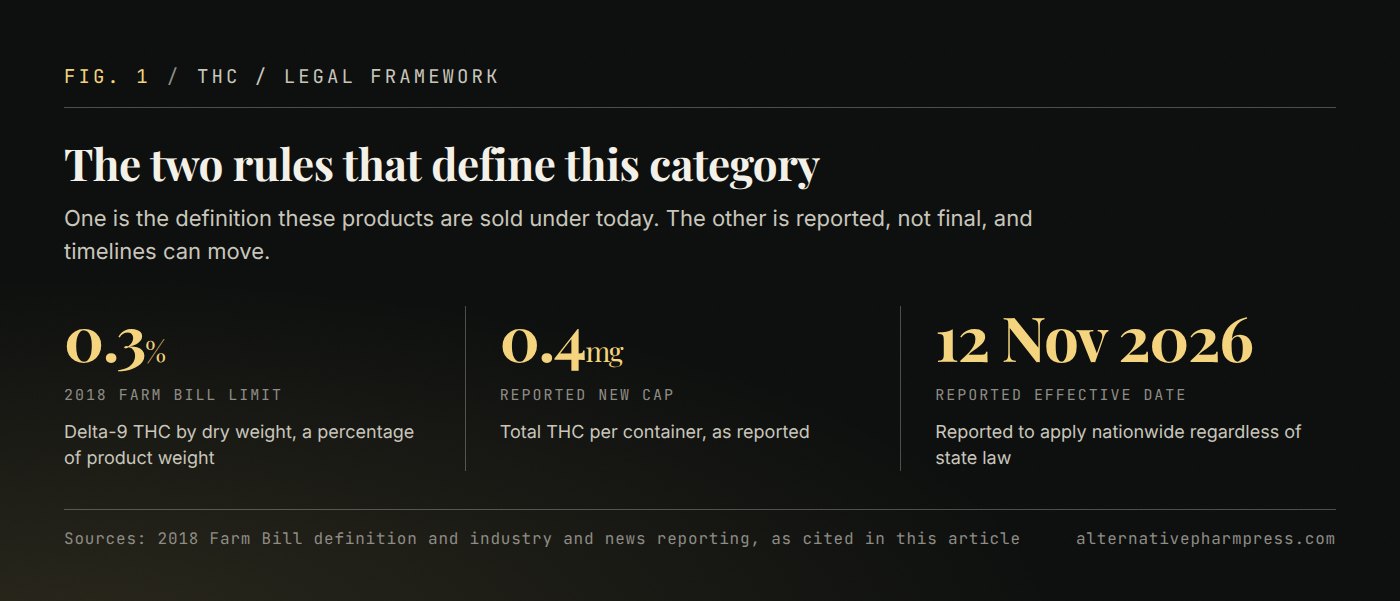
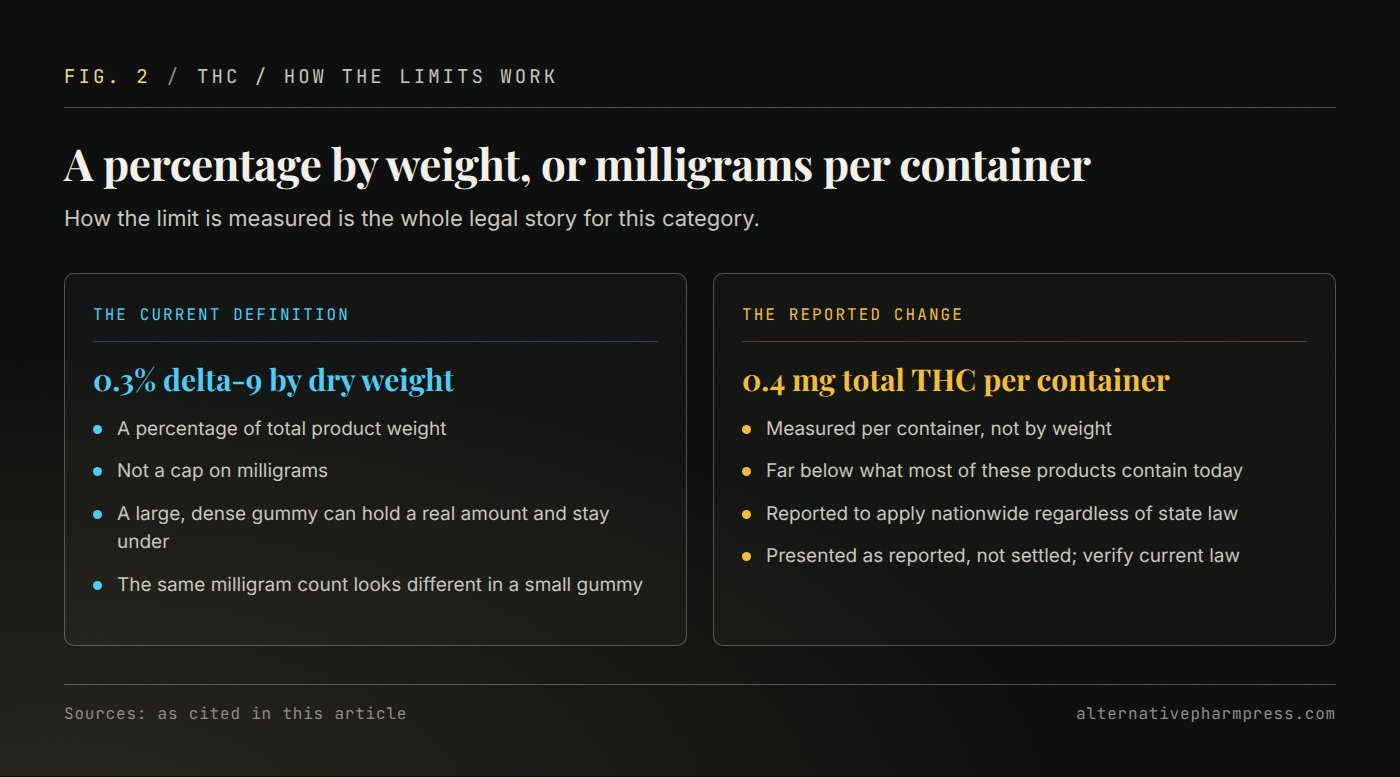
Under the 2018 Farm Bill, hemp is defined as cannabis containing no more than 0.3% delta-9 THC by dry weight. That is a percentage of total product weight, not a cap on milligrams. A gummy is heavy, so a relatively large, dense gummy can hold a meaningful amount of delta-9 THC and still stay under 0.3% by weight. That is why product size and per-serving math matter so much here: the same milligram count looks compliant in a big gummy and non-compliant in a tiny one. It is real delta-9, sold under the hemp definition because of how the percentage is calculated. Our explainer on delta-8 versus delta-9 versus THC-O and our CBD versus hemp versus THC primer go deeper.
Read this first, because this is the pressure point. According to industry and news reporting, in late 2025 the US Congress passed a measure that redefines hemp to exclude intoxicating hemp-derived cannabinoids (delta-8, delta-10, THC-P, THCA and similar) and sets a limit of 0.4 mg total THC per container. That change is reported to take full effect on November 12, 2026, and to apply nationwide regardless of state law. For hemp delta-9 gummies this matters enormously: a 0.4 mg per-container cap is far below what most of these products contain today, so the reported rule would hit this category hard. We present this as reported, not as settled, and timelines can move. Verify the current law where you live before you buy, and check our legal states guide for context.
None of the brands below are in our verified directory, so we label all of them as industry picks. We keep to general, widely-reported facts only: whether a brand publishes third-party COAs, whether it uses US-grown hemp, and what product types it offers. We do not invent potency or milligram figures.
How we ranked these
Every brand here meets the same bar, and none of it is about strength. First, a current third-party certificate of analysis (COA) you can open, not a badge. Second, batch-matched testing, so the report reflects the gummies in the bottle. Third, accurate dosing and potency labeling, which matters more here than almost anywhere because the per-serving math is the whole legal story. Fourth, contaminant panels for heavy metals, pesticides, residual solvents and microbials. Fifth, honest shipping that respects state bans. Our guides on real third-party testing and reading a lab report show how we check each one.
The brands (all industry picks)
1. BudPop, best for flavor-forward delta-9 gummies
BudPop runs a colorful, flavor-driven gummy range and publishes third-party testing. It describes US-grown hemp and sells delta-9 alongside other cannabinoids. If flavor variety is the draw, it is a reasonable place to compare, provided the batch report confirms the per-serving delta-9 figure and the weight math behind it.
2. Exhale Wellness, best for simple ingredient lists
Exhale Wellness markets vegan, plant-focused gummies and publishes third-party lab results. It leans on US-grown hemp and keeps the lineup tight, which makes the exact product easier to find. As always, the COA you can open for the current batch settles it, not the label.
3. Hometown Hero, best for transparency-minded shoppers
Hometown Hero is a Texas-based brand vocal on hemp policy, with a public emphasis on testing and compliance. It publishes third-party COAs and describes US-grown hemp. Given the reported federal change, a policy-aware brand is worth a look, but confirm the current report and the per-serving math all the same.
4. 3Chi, best for a well-documented catalog
3Chi is one of the most recognized hemp THC names and publishes COAs across a broad catalog that includes delta-9 gummies. It describes US-grown hemp. Recognition is a starting point, not a guarantee, so open the report for your batch and check the date and dosing.
5. Delta Extrax, best for blended formulations
Delta Extrax is known for gummies that blend delta-9 with other hemp cannabinoids, with third-party testing published. Blends complicate what you are taking, so the COA matters more: confirm the per-serving content for the exact product. If vapes interest you too, see our delta-8 vapes and carts guide.
6. Cornbread Hemp, best for organic-focused sourcing
Cornbread Hemp markets USDA-organic and Kentucky-grown hemp and publishes third-party testing for its products, including delta-9 gummies. An organic-focused sourcing story is appealing, but it does not replace a batch-matched COA, so check the document for your order and confirm the delta-9 figure.
7. Mr. Hemp Flower, best for compliance-focused positioning
Mr. Hemp Flower positions itself around Farm Bill compliance and publishes lab results across its catalog, including delta-9 gummies. It describes US-grown hemp. A compliance-forward posture fits this category well, especially with the reported federal change looming, but verify the current report rather than trusting the framing.
8. Urb, best for a broad cannabinoid shelf
Urb carries a wide range of hemp cannabinoids, with delta-9 gummies among them, and publishes COAs. The breadth helps if you like comparing options in one place. With a deep catalog, testing varies by SKU, so verify the specific gummy before you buy.
9. TribeTokes, best for a curated lineup
TribeTokes keeps a curated catalog and emphasizes cleaner formulations, with delta-9 gummies and third-party testing published. It describes US-grown hemp. A tighter range makes verification simpler, but the rule holds: confirm the batch-matched COA and the per-serving dose.
10. Binoid, best for a wide cannabinoid range
Binoid carries one of the broader hemp-cannabinoid catalogs, with delta-9 gummies sitting alongside delta-8, THC-P and blends. It publishes COAs and offers a lot of variety. The flip side of a big catalog is that you should verify the specific product, since testing differs by SKU.
11. Cake, best for retail recognition
Cake is a widely distributed hemp brand found across vape shops and online stores, with delta-9 gummies in its lineup and COAs published. Wide distribution means the listing quality depends on the seller, so buy from a storefront that links the current batch report.
12. Koi, best for CBD-to-THC crossover
Koi built its name in CBD before expanding into hemp-derived THC, bringing that testing posture to its delta-9 gummies. It publishes COAs and sells a familiar, retail-friendly range. Crossover brands often have mature testing programs, but open the current report rather than trusting the history.
Quick comparison
| Brand | Best for | COAs published | In our directory |
|---|---|---|---|
| BudPop | Flavor-forward gummies | Yes (verify batch) | No, industry pick |
| Exhale Wellness | Simple ingredient lists | Yes (verify batch) | No, industry pick |
| Hometown Hero | Transparency-minded shoppers | Yes (verify batch) | No, industry pick |
| 3Chi | Well-documented catalog | Yes (verify batch) | No, industry pick |
| Delta Extrax | Blended formulations | Yes (verify batch) | No, industry pick |
| Cornbread Hemp | Organic-focused sourcing | Yes (verify batch) | No, industry pick |
| Mr. Hemp Flower | Compliance-focused positioning | Yes (verify batch) | No, industry pick |
| Urb | Broad cannabinoid shelf | Yes (verify batch) | No, industry pick |
| TribeTokes | Curated lineup | Yes (verify batch) | No, industry pick |
| Binoid | Wide cannabinoid range | Yes (verify batch) | No, industry pick |
| Cake | Retail recognition | Yes (verify batch) | No, industry pick |
| Koi | CBD-to-THC crossover | Yes (verify batch) | No, industry pick |
What to check before you buy
Hemp delta-9 gummies reward careful reading more than most products, because the dosing math is the whole legal story. Confirm five things every time. A current third-party COA you can open, with a recent date, not a badge. A batch or lot number that matches the bottle. A clear per-serving delta-9 figure, plus the total per container, since the reported federal cap is measured per container. Contaminant panels for heavy metals, pesticides, residual solvents and microbials. And honest shipping that blocks states with active bans rather than leaving the legal risk to you. Our guide on real third-party testing covers the dodges, and the USDA hemp program page explains the 0.3% dry-weight definition that makes these products possible.
For broader context, the FDA’s consumer page on cannabis products lays out what regulators have and have not evaluated. You can also browse our THC category, our best delta-8 brands of 2026 roundup, the hemp glossary entry and the cannabis glossary entry. Nearby comparisons include our delta-8 gummies guide and our THC-P products guide.
Are you a hemp THC brand?
If you make or sell hemp delta-9 gummies and want to be considered for this list, we review brands on lab transparency, not ad spend. You can apply to be reviewed and listed or register your brand in our directory. Send us current, batch-matched third-party COAs that show the per-serving and per-container delta-9 figures, and we will take a look. Directory placement is clearly disclosed and never disguised as editorial. You can also see how we handle reviews and coupons.
Frequently asked questions
How are delta-9 gummies legal if they contain real THC?
Because the 2018 Farm Bill defines hemp by percentage, not milligrams: no more than 0.3% delta-9 THC by dry weight. A large, heavy gummy can hold a meaningful dose of delta-9 and still stay under that percentage. It is real delta-9 sold under the hemp definition because of how the weight math works. The reported federal change for late 2026 targets exactly this with a per-container cap.
What is the reported 0.4 mg per-container limit?
According to industry and news reporting, a federal measure passed in late 2025 would redefine hemp to exclude intoxicating cannabinoids and cap total THC at 0.4 mg per container, reported to take full effect November 12, 2026, nationwide. That cap is far below what most hemp delta-9 gummies contain today, which is why this category is the pressure point. Treat it as reported and verify the current law.
What is the best delta-9 hemp gummy brand in 2026?
There is no single best brand. The brands above are industry picks that publish third-party COAs and describe US-grown hemp. The right one for you is whichever publishes a current, batch-matched report showing the per-serving and per-container delta-9 figures for the exact gummy you intend to buy.
How do I know a delta-9 gummy is actually tested?
Find a third-party COA you can open, confirm the batch number matches the bottle, check the date is recent, and make sure it lists the delta-9 content per serving and per container plus contaminant screens. A “lab tested” claim with no document behind it does not count.
How can my brand get added to this list?
Apply through our advertise or brand registration pages and send current, batch-matched third-party COAs. We assess brands on transparency and testing, label directory placements clearly, and keep editorial coverage independent of advertising.
Editorial note: None of the brands here are paid placements in our editorial coverage, and we assess brands on lab transparency rather than ad spend. This article is for general information only and is not medical or legal advice. These products have not been evaluated by the FDA to diagnose, treat, cure, or prevent any disease. Laws vary by location and change often and a federal change is reported for late 2026, so verify the current rules that apply to you. Always talk to a licensed healthcare provider before use, especially if you are under 21, pregnant or nursing, taking medication, or managing a health condition.