
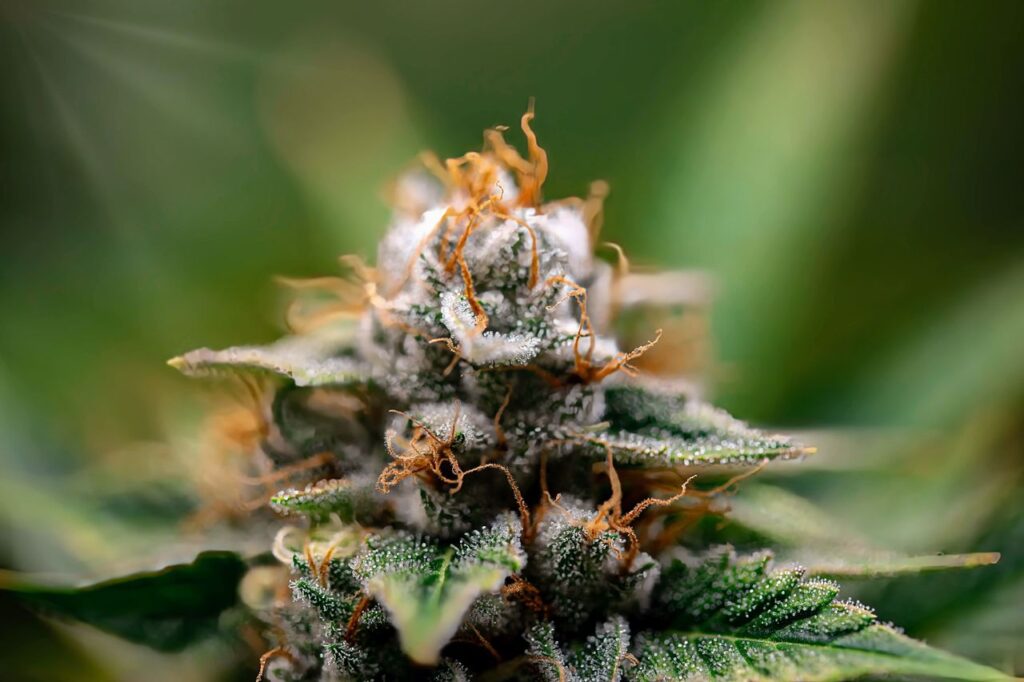
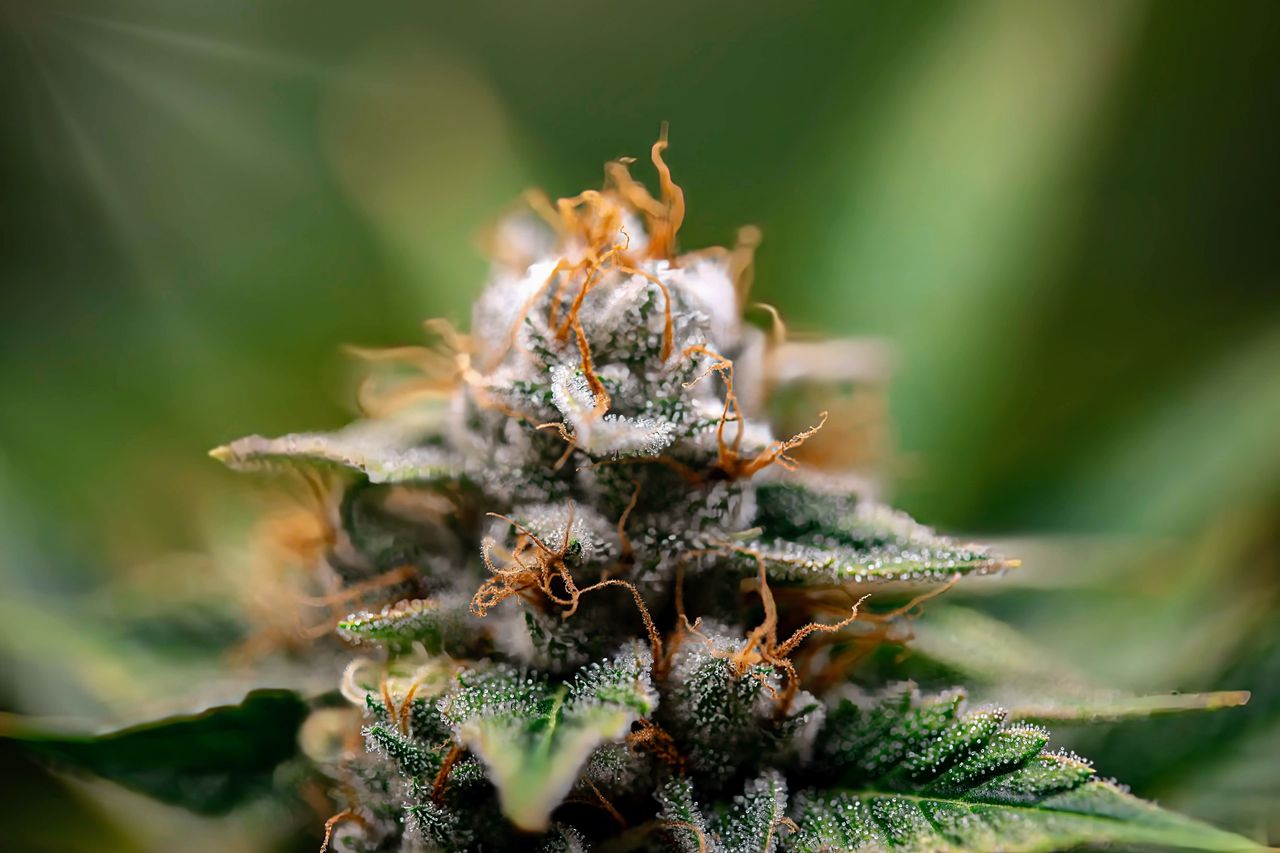
THCA is the raw acid form of THC: it is not intoxicating on its own, but heat from smoking, vaping or baking turns it into THC, with the same high and the same drug test results. CBD is a separate cannabinoid that stays non-intoxicating whether heated or not. In practice, smoked THCA flower is a THC product; CBD is not.
That difference drives everything else on this page. It explains why THCA flower was sold as hemp for several years, why it can fail a drug test when a CBD isolate is unlikely to, and why the federal hemp definition taking effect in December 2026 removes most THCA products from the legal market.
Below we compare the chemistry, effects, research, safety, drug testing, legal status and how to read a certificate of analysis. For the closely related comparison with THC itself, see our guide to THCA vs delta-9 THC.
At a glance
| Property | THCA | CBD |
|---|---|---|
| What it is | Acid precursor of THC made by the plant | Non-intoxicating cannabinoid, formed from CBDA |
| Intoxicating? | Not in raw form; becomes THC when heated | No, heated or not |
| Effect of smoking or vaping | Converts largely to THC | Stays CBD |
| CB1 receptor activity | Very little in lab tests | Low affinity |
| Human evidence | Almost none for THCA alone | Large trials; approved medicine |
| Approved medicine | None | Epidiolex (US), Epidyolex (UK) |
| Drug test risk | High once heated; THC metabolites result | Low for pure CBD; THC content is the risk |
| US hemp status from 11 December 2026 | Counted in total THC; flower and most products excluded | Permitted up to 0.4 mg total THC per container |
| UK status | Pure THCA not listed, but cannabis flower is controlled | Pure CBD not controlled |
| What a COA must show | THCA and delta-9 THC, then total THC | CBD, delta-9 THC and THCA |
Two different molecules, and one reaction that matters
Cannabis does not make much THC or CBD directly. It makes acids, THCA and CBDA, both built from the same precursor. THCA can make up as much as 90% of the total THC potential in the plant.2 Over time, and much faster with heat, the acids lose a carboxyl group and become THC and CBD, a process called decarboxylation.
Laboratory kinetics show THCA converts about twice as fast as CBDA at the same temperature, and cleanly, without side products.3 Smoking, vaping and baking convert THCA to THC quickly, and stored THC slowly degrades further into CBN.2
So the useful comparison is not really THCA against CBD. It is THC, in waiting, against a compound that never becomes intoxicating. THCA and CBD are chemically different, and only one of them has THC on the other side of a lighter.
Effects in practice: raw, heated and ingested
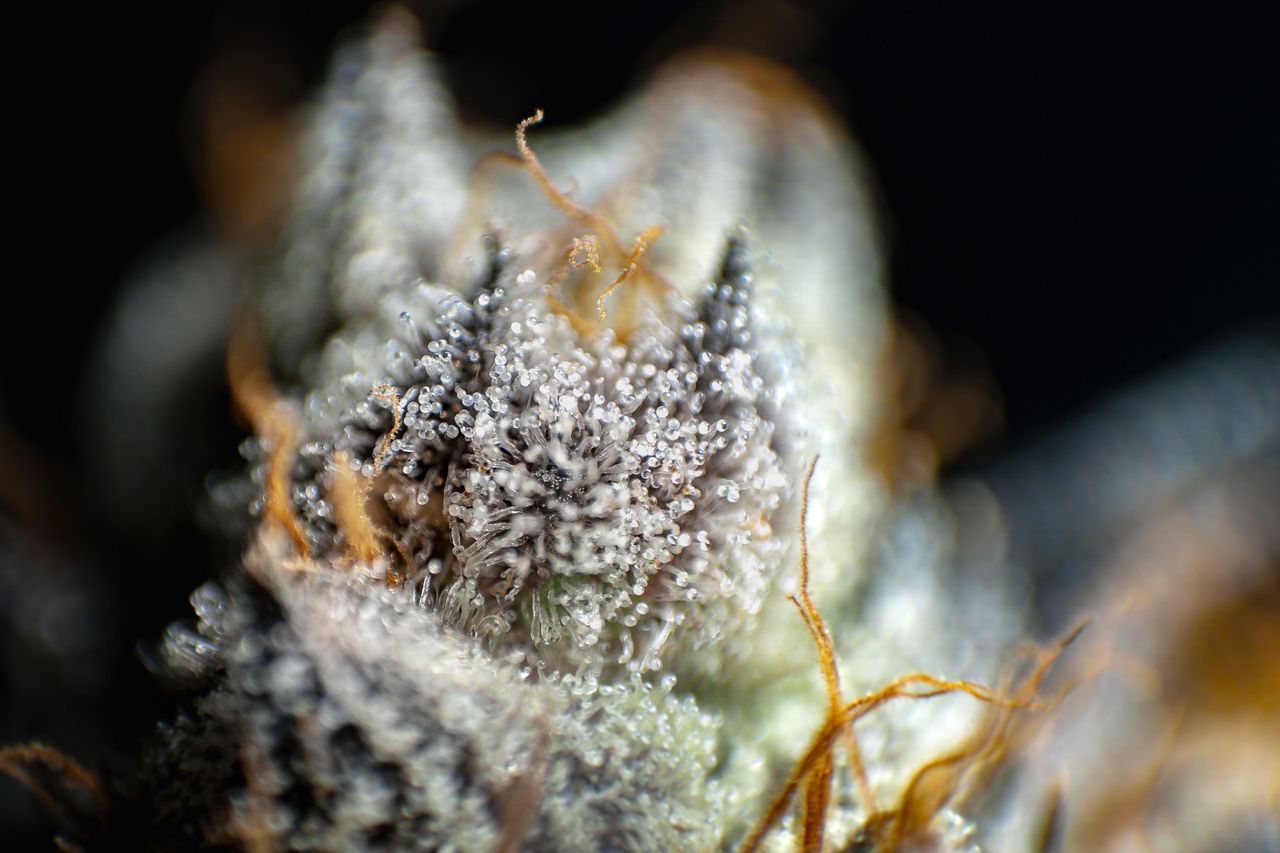
In receptor studies, THCA showed little binding or activity at CB1 and CB2. The researchers found that even certified THCA reference samples contained about 2% THC, and concluded that contamination with THC is nearly unavoidable.1 That is why raw THCA is described as non-intoxicating, and why “raw” products are rarely pure.
- Smoked or vaped THCA flower: behaves like conventional cannabis, because most of the THCA becomes THC.
- Unheated extracts or raw juice: little direct intoxication from THCA itself, but any THC present, or formed during storage, still acts.
- Edibles made with THCA: baking converts it, so the result is a THC edible.
- CBD in any form: no intoxication, whether heated or not.
A 2025 laboratory study shows why the distinction is less tidy than marketing suggests. A hemp-derived “full-spectrum” oral product containing CBD, CBDA, THC and THCA produced subjective intoxication and working memory impairment at the highest dose, which held about 7 mg of THC and 5 mg of THCA. Blood levels of the acids were 19 to 25 times higher than their neutral forms.5
When THCA and CBD meet in one product
Many hemp products contain both, and CBD is not a neutral bystander. In a crossover study, a brownie containing 640 mg of CBD and 20 mg of THC raised blood exposure to THC by 161% compared with the same THC dose taken without CBD, consistent with CBD slowing the liver enzyme that clears THC. The same dose also inhibited enzymes that handle common medicines such as omeprazole.12 That dose of CBD is far higher than most retail products, but it shows that combining the two can change how strongly THC acts, not only whether it is present.
What the research does and does not show
CBD has randomised trials in rare epilepsies and an approved medicine, Epidiolex, with detailed safety information.9 Its evidence for everyday uses such as stress or sleep is weaker than the marketing, but it is at least studied in people.
THCA has almost no human research of its own. A 2016 review described anti-inflammatory, neuroprotective and other effects in cell studies, and a few effects in rodents, while noting that many papers use “THCA” loosely for several different acids.2 One widely cited mouse study found THCA activated PPAR-gamma, a receptor involved in metabolism and inflammation, and protected nerve cells in a toxin model.4
Those findings are preclinical. There are no controlled trials showing that THCA products help any condition in people, and most THCA sold in the US in recent years was flower intended to be smoked, which delivers THC rather than THCA.
Two practical problems also limit what raw THCA research could tell consumers. THCA is unstable, so products drift towards THC during storage, and the purity problem noted in receptor studies means a “THCA” dose almost always includes some THC.1,2 Any future benefit would have to be shown with products whose composition is measured at the point of use.
Safety and drug testing
Safety
Once heated, THCA carries the risks of THC: impairment, effects on driving and memory, anxiety or paranoia in some people, and dependence with heavy use. Treat THCA flower exactly as you would cannabis, including never driving after use. CBD’s main documented risks, from prescription data, are raised liver enzymes, sleepiness and interactions through the CYP2C19 and CYP3A4 liver enzymes, including with clobazam.9
Drug testing
Workplace tests look for THC metabolites. Smoking or vaping THCA produces THC, so a positive result is expected. Even unheated THCA products tend to contain some THC, and in the laboratory study above, THC metabolites were often still detectable in blood 48 hours after an oral dose.5
CBD is a different case. In a controlled study, pure oral or vaporised CBD showed no conversion to THC, and the authors concluded that pure CBD is unlikely to affect drug testing.11 The risk comes from THC in the product: in a 2026 study, adding as little as 1 mg of THC to 100 mg of CBD produced positive urine tests in some participants.10 Our guide on whether CBD can fail a drug test covers this in more detail.
Legal status in September 2026
United States. Under the 2018 Farm Bill, hemp was defined by delta-9 THC alone. Federal rules already required growers to test crops for total THC, calculated as delta-9 THC plus 0.877 times THCA, a factor that reflects the weight lost when THCA converts.6 Finished products, however, were often marketed on delta-9 figures alone, and “THCA flower” relied on that gap.
A law passed in November 2025 closes it. Hemp is redefined by total THC, including THCA, and finished products are capped at 0.4 mg of total THC per container. Most provisions take effect on 11 December 2026 after a one-month delay signed in September 2026.7 THCA flower cannot meet that limit, while CBD isolate products can. Bills to delay or repeal the change are in committee, and state rules on THCA vary widely. See our explainer on the federal hemp THC limit.
United Kingdom. The Home Office says pure, isolated THCA is not controlled under the Misuse of Drugs Act, but notes that it readily degrades to THC, a Class B drug. Cannabis flower itself is controlled, whatever its THCA content. Pure CBD is not controlled.8 Canada. Both are phytocannabinoids regulated under the Cannabis Act and sold only through authorised retailers.
Reading a COA for THCA or CBD products
The most common trick with THCA products is a certificate of analysis (COA) that highlights a low delta-9 THC figure while listing a large THCA figure further down. Always work out total THC yourself.
Worked example: a flower reporting 0.2% delta-9 THC and 25% THCA contains 0.2 + (0.877 × 25), or about 22.1% total THC. That is typical cannabis potency, not low-THC hemp.
- Batch match: the lot number on the COA should match the product.
- Accredited laboratory: look for ISO/IEC 17025 accreditation for the methods used.
- Acids and neutrals reported separately: THCA, delta-9 THC, CBDA and CBD, ideally with a stated total THC.
- Per-container figures: the new US rule and drug-test risk both depend on total THC per container, not percentages alone.
- Contaminants: pesticides, heavy metals, microbes and, for extracts, residual solvents.
Be wary of COAs that test only the plant material at harvest, or a different batch, when the product is a finished edible or vape. Since THCA converts during processing and storage, the finished product can differ considerably from the raw material it came from.
Our hemp COA glossary entry explains each section of a typical report.
Frequently asked questions
Does THCA get you high?
Not in its raw form, according to receptor studies showing THCA has very little activity at the CB1 receptor.1 But heat converts it to THC, so smoking, vaping or cooking THCA produces a normal cannabis high. Raw products also tend to contain some THC, and a full-spectrum product with a few milligrams of THC and THCA caused measurable intoxication in a laboratory study.5
Will THCA show up on a drug test?
Very likely if it is smoked, vaped or cooked, because it becomes THC and the body produces the same metabolites that drug tests detect. Unheated THCA products usually contain some THC as well, and in a laboratory study THC metabolites were often still detectable in blood 48 hours after oral dosing.5 Pure CBD is far less likely to cause a positive result.11
Is THCA flower legal in 2026?
In the US, it is being removed from the federal hemp definition. The November 2025 law counts THCA in total THC and caps products at 0.4 mg per container, with most provisions effective from 11 December 2026.7 State rules vary. In the UK and Canada, THCA flower is treated as cannabis.
Is THCA the same as CBD?
No. They are different molecules made by different enzymes in the plant. THCA is the precursor of THC and converts into it with heat. CBD comes from a separate acid, CBDA, and does not become intoxicating when heated.2,3 Their legal treatment, drug-testing risk and research base are all different as a result.
Is THCA flower just marijuana?
Chemically, high-THCA flower is very close to conventional cannabis: once smoked, it delivers THC at similar potency. The legal distinction rested on measuring delta-9 THC before heating rather than total THC.6 Using the standard 0.877 conversion factor, a flower with 25% THCA contains roughly 22% potential THC, which the new federal definition counts in full.
Sources
- McPartland JM, MacDonald C, Young M, Grant PS, Furkert DP, Glass M. Affinity and Efficacy Studies of Tetrahydrocannabinolic Acid A at Cannabinoid Receptor Types One and Two. Cannabis Cannabinoid Res. 2017;2(1):87-95. DOI: 10.1089/can.2016.0032. PMID: 28861508. pubmed.ncbi.nlm.nih.gov
- Moreno-Sanz G. Can You Pass the Acid Test? Critical Review and Novel Therapeutic Perspectives of Δ9-Tetrahydrocannabinolic Acid A. Cannabis Cannabinoid Res. 2016;1(1):124-130. DOI: 10.1089/can.2016.0008. PMID: 28861488. pubmed.ncbi.nlm.nih.gov
- Wang M, Wang YH, Avula B, et al. Decarboxylation Study of Acidic Cannabinoids: A Novel Approach Using Ultra-High-Performance Supercritical Fluid Chromatography/Photodiode Array-Mass Spectrometry. Cannabis Cannabinoid Res. 2016;1(1):262-271. DOI: 10.1089/can.2016.0020. PMID: 28861498. pubmed.ncbi.nlm.nih.gov
- Nadal X, Del Río C, Casano S, et al. Tetrahydrocannabinolic acid is a potent PPARγ agonist with neuroprotective activity. Br J Pharmacol. 2017;174(23):4263-4276. DOI: 10.1111/bph.14019. PMID: 28853159. pubmed.ncbi.nlm.nih.gov
- Elder HJ, Zamarripa CA, Klausner M, et al. The Pharmacokinetics and Pharmacodynamics of a Hemp-Derived “Full-Spectrum” Oral Cannabinoid Product with a 1:1 Ratio of Cannabidiol to Cannabidiolic Acid and Delta-9-Tetrahydrocannabinol to Delta-9-Tetrahydrocannabinolic Acid: A Double-Blind, Placebo-Controlled, Within-Subjects Human Laboratory Study. Cannabis Cannabinoid Res. 2025;10(2):e299-e313. DOI: 10.1089/can.2024.0187. PMID: 40040421. pubmed.ncbi.nlm.nih.gov
- Electronic Code of Federal Regulations. 7 CFR 990.1, Definitions (Domestic Hemp Production Program): “Decarboxylated” and “Total THC”. ecfr.gov
- Hemp Law Group. Federal Hemp Law in 2026: The Ban, the Deadline, and Every Bill Trying to Change It. Updated September 2026. hemplawgroup.com
- UK Home Office. Drug Licensing Factsheet: Cannabis, CBD and other cannabinoids. Revised September 2024. gov.uk
- US Food and Drug Administration. EPIDIOLEX (cannabidiol) oral solution: highlights of prescribing information. Revised June 2025. accessdata.fda.gov
- Wolinsky D, Zamarripa CA, Spindle TR, et al. The acute and chronic pharmacokinetics and pharmacodynamics of oral cannabidiol with and without low doses of delta-9-tetrahydrocannabinol. J Anal Toxicol. 2026;50(1):bkaf075. DOI: 10.1093/jat/bkaf075. PMID: 40704705. pubmed.ncbi.nlm.nih.gov
- Sholler DJ, Spindle TR, Cone EJ, et al. Urinary Pharmacokinetic Profile of Cannabidiol (CBD), Δ9-Tetrahydrocannabinol (THC) and Their Metabolites following Oral and Vaporized CBD and Vaporized CBD-Dominant Cannabis Administration. J Anal Toxicol. 2022;46(5):494-503. DOI: 10.1093/jat/bkab059. PMID: 34089060. pubmed.ncbi.nlm.nih.gov
- Bansal S, Zamarripa CA, Spindle TR, et al. Evaluation of Cytochrome P450-Mediated Cannabinoid-Drug Interactions in Healthy Adult Participants. Clin Pharmacol Ther. 2023;114(3):693-703. DOI: 10.1002/cpt.2973. PMID: 37313955. pubmed.ncbi.nlm.nih.gov
Editorial note: This article is for general information only and is not medical or legal advice. THCA and CBD products have not been evaluated by the FDA to diagnose, treat, cure or prevent any disease. Laws vary by location and change often, so verify the rules that apply where you are. Always talk to a licensed healthcare provider before use, especially if you are under 21, pregnant or nursing, taking medication, or managing a health condition.
More comparisons
-
Distillate vs Live Resin: Refining, Terpenes and What Carts Contain
-
Live Resin vs Live Rosin: Extraction Chemistry and Solvent Testing
-
Indica vs Sativa: What Genetic and Terpene Research Actually Shows
-
Delta-8 vs CBD: Intoxication, Evidence, Drug Tests and the 2026 Law
-
THC-P vs Delta-8: Potency Claims, Evidence and Legal Status