
This article is for educational purposes only and does not constitute medical advice.
Last updated: October 15, 2026. Updated for the DEA’s 2026 7-OH rule and current testing standards.
Quick answer: The best kratom powder is the one you can verify. Look for a batch-specific certificate of analysis (COA) from an accredited third-party lab that reports mitragynine and 7-OH content and passes heavy metal and microbial tests, plus airtight packaging and a vendor that follows GMP. Price, color and strain names alone tell you little.
Key Takeaways
Quality is essential for consistency, safety, and reliability in kratom products.
Alkaloid content gives an idea of composition but should be interpreted with context.
New for 2026: check the 7-OH result on the COA. Natural leaf should show 7-OH well under 0.1% (1 mg/g), the federal Schedule I threshold.
A good COA is batch-specific, from an ISO 17025-accredited lab, and covers heavy metals and microbes, not just alkaloids.
Color and odor may provide additional clues but are not conclusive on their own.
Packaging is important to maintain freshness and prevent contamination.
GMP-certified vendors follow recognized quality manufacturing standards.
AKA-approved vendors follow guidelines that promote transparency and safety.
Evaluate quality in conjunction with price, testing, and sourcing transparency.
Looking for specific vendors? See our best kratom brands of 2026, vetted for lab transparency.
As kratom continues to grow in popularity, many people are looking for ways to find quality products. There are so many different options that it can be hard to know what to look for. Quality is an important consideration — differences in sourcing, processing, and storage can have a big impact on the final product.
There is no standardized regulation for kratom as there is with highly regulated products, so quality varies from vendor to vendor. This makes it imperative that consumers know what to look for before purchasing. To understand how to interpret lab reports once you have them, see our Kratom COA Guide.
Why Quality Matters
High-quality kratom powder is typically produced with careful attention to each stage of the process, from leaf selection to final packaging. Quality is very much connected to safety — unverified products may contain contaminants like heavy metals and microbes. Regulatory authorities such as the FDA have highlighted concerns about product quality, contamination, and the importance of proper testing in kratom products.
Alkaloid Content as a Quality Indicator
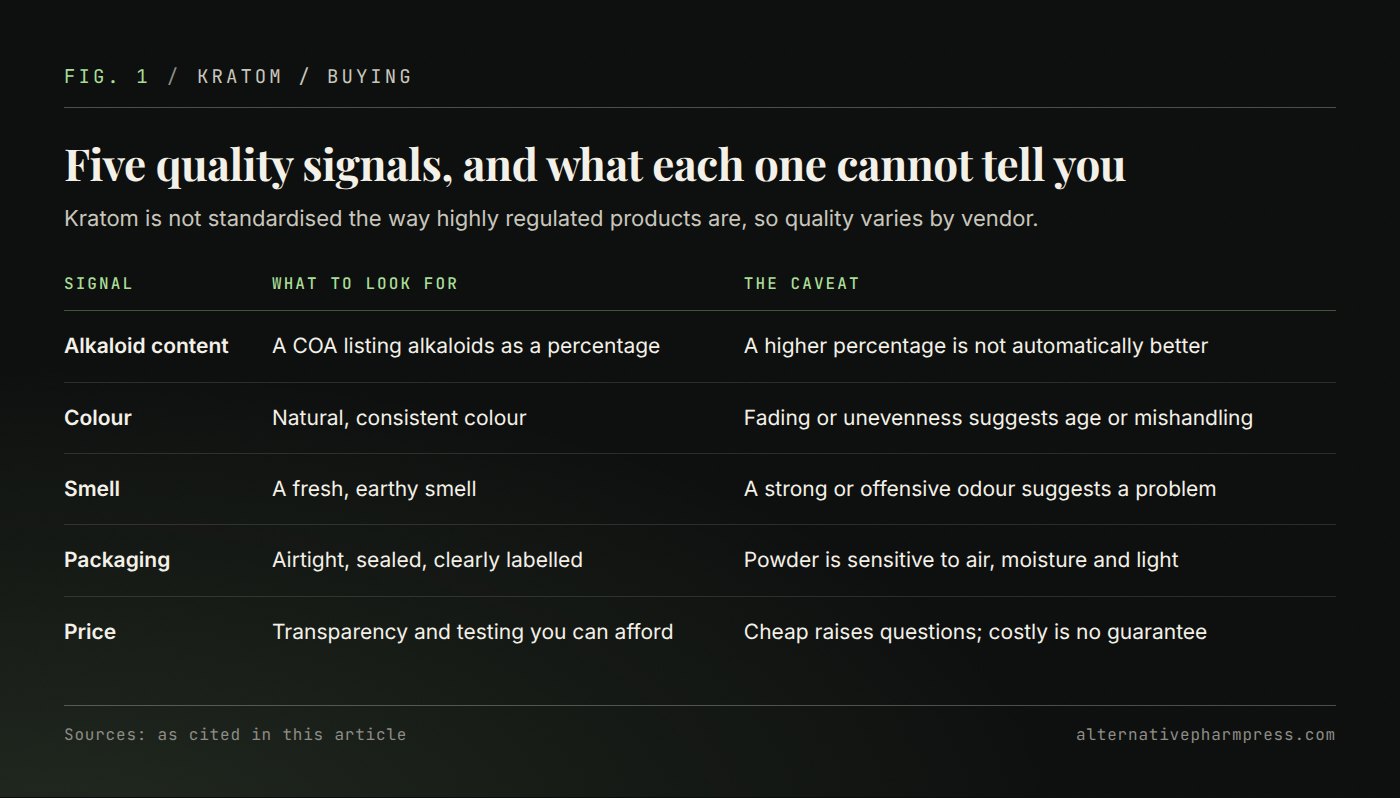
The alkaloid content is one of the most important factors in evaluating kratom powder. Mitragynine is one of the most common alkaloids measured. A Certificate of Analysis (COA) will list alkaloid content as a percentage, giving information about product composition. However, a higher alkaloid percentage doesn’t automatically mean a better product — a balanced alkaloid profile is often more important than a single high value, and batch consistency matters too.
Good vendors will have lab-test results available for their products. Scientific research has examined kratom’s alkaloid composition and how variations can influence product consistency via PubMed.
Check the 7-OH Result (New for 2026)
On October 14, 2026, the DEA published notice that it will temporarily place 7-hydroxymitragynine (7-OH) and mitragynine pseudoindoxyl in Schedule I when either exceeds 1 mg per gram (0.1%) of a solid product, or when the ratio of mitragynine to these compounds is below 100 to 1. The order can take effect on or after November 13, 2026.
Natural leaf powder normally contains only trace 7-OH, so a legitimate powder should sit comfortably under both limits. When you read a COA:
- Find the 7-OH line. It should be well below 0.1%, or reported as below the detection limit.
- Divide the mitragynine figure by the 7-OH figure. The result should be well above 100.
- Be wary of any “powder” marketed as enhanced, fortified or extra-potent. A high 7-OH value suggests it has been spiked with lab-made 7-OH.
Our kratom COA guide walks through each section of a lab report.
Contaminant Testing: Heavy Metals and Microbes
Alkaloid numbers say nothing about purity. In 2018, a Salmonella outbreak linked to kratom sickened people in dozens of states and led to multiple recalls, and FDA testing in 2019 found heavy metals such as lead and nickel in a number of kratom products. A complete COA should show passing results for:
- Heavy metals: lead, arsenic, cadmium and mercury
- Microbes: Salmonella, E. coli, yeast and mold
- Residual solvents or pesticides, where the lab offers them
Check that the batch number on the COA matches the batch number on your package, that the lab is named and ISO/IEC 17025-accredited, and that the test date is recent.
Color & Smell Indicators
Visual and sensory features can offer additional clues about kratom quality, though they shouldn’t be the only metric used. High-quality kratom powder typically has a natural, consistent color. Extreme fading or unevenness may be a sign of mishandling or age. Fresh kratom usually has a characteristic, earthy smell — a strong, strange, or offensive odor may indicate contamination or improper storage. These factors should be taken as additional indicators combined with laboratory testing and vendor transparency.
Packaging & Freshness
Kratom powder is sensitive to air, moisture, and light, which can alter its composition over time. High-quality kratom is generally stored in airtight, sealed packaging that protects it from environmental elements. Clear labeling also demonstrates a greater degree of transparency from the vendor. For a full picture of how kratom is processed and packaged before it reaches you, see our How Kratom Is Processed guide.
GMP Certification Explained
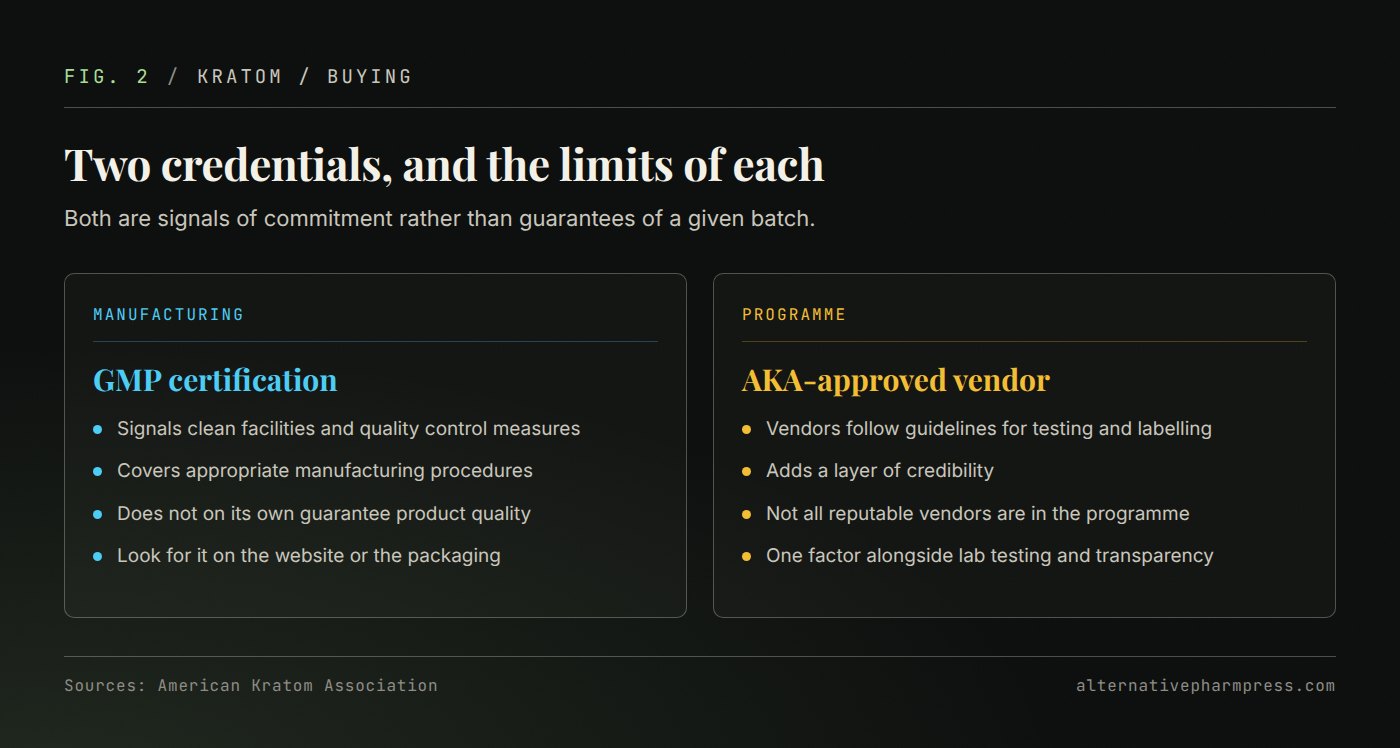
Good Manufacturing Practices (GMP) certification indicates that a vendor follows accepted quality standards — clean facilities, quality control measures, and appropriate manufacturing procedures. GMP certification alone doesn’t guarantee product quality, but it reflects a commitment to safety and professionalism. Consumers can look for GMP compliance information on the vendor’s website or product packaging.
AKA-Approved Vendors
The American Kratom Association (AKA) is an organization that supports responsible kratom practices and consumer awareness. AKA-approved vendors follow guidelines for product testing, labeling, and quality control. This is not to say that all reputable vendors are in this program, but it can add an extra layer of credibility. Keep in mind that the AKA is an industry advocacy group, so its approval is a voluntary program rather than government oversight. It is one of many factors to consider alongside lab testing and customer transparency.
Price vs Quality
While lower prices can be tempting, they sometimes come at the cost of quality. Sourcing, processing, testing, and packaging all contribute to the final price of a high-quality product. Very cheap prices can raise questions about quality control. On the other hand, higher prices don’t always mean better quality. The key is finding a balance — look for transparency, testing, and responsible sourcing at a price you can afford.
Red Flags to Avoid
- No COA, a generic COA with no batch number, or a COA from the vendor’s own lab
- Health claims that kratom treats pain, anxiety, addiction or any disease (the FDA has not approved it for any use)
- Products sold as “enhanced,” “ultra” or “7-OH” powder
- No company name, address or contact details on the label
- Sales to anyone under 21, or shipping to states where kratom is banned
Frequently Asked Questions
Q: What is a good mitragynine percentage for kratom powder?
Plain leaf powder typically tests at roughly 0.5% to 2% mitragynine. Much higher figures usually mean an extract or an enhanced product rather than plain leaf.
Q: How much 7-OH should kratom powder have?
Very little. Under the DEA’s 2026 notice, products above 1 mg/g (0.1%) 7-OH or with a mitragynine-to-7-OH ratio below 100 would be Schedule I. Natural leaf should fall well below both.
Q: Is AKA approval enough to trust a vendor?
It helps, but it is a voluntary industry program. Always check the batch COA yourself.
Q: Does color tell you which powder is better?
No. Color and smell can hint at freshness, but only lab testing confirms alkaloid content and purity.
Conclusion
Selecting the best kratom powder involves considering many factors — alkaloid content, lab testing, packaging, and vendor credibility. When you compare products against reliable standards rather than marketing claims, you can more accurately assess quality and consistency. Taking the time to evaluate these factors leads to more informed, responsible purchasing decisions. With the federal 7-OH threshold arriving in 2026, checking the 7-OH line on every COA is now part of buying responsibly.