
Opioid Receptor Basics (Mu, Kappa, Delta)
Opioid receptors are a class of proteins located mainly in the brain and nervous system. They belong to a larger system that controls the way the body reacts to certain signals, such as those associated with pain, mood, and other physiological processes. There are three primary types of opioid receptors:-
Mu (μ) Receptors
-
Kappa (K) Receptors
-
Delta (δ) Receptors
How Mitragynine Binds to Receptors
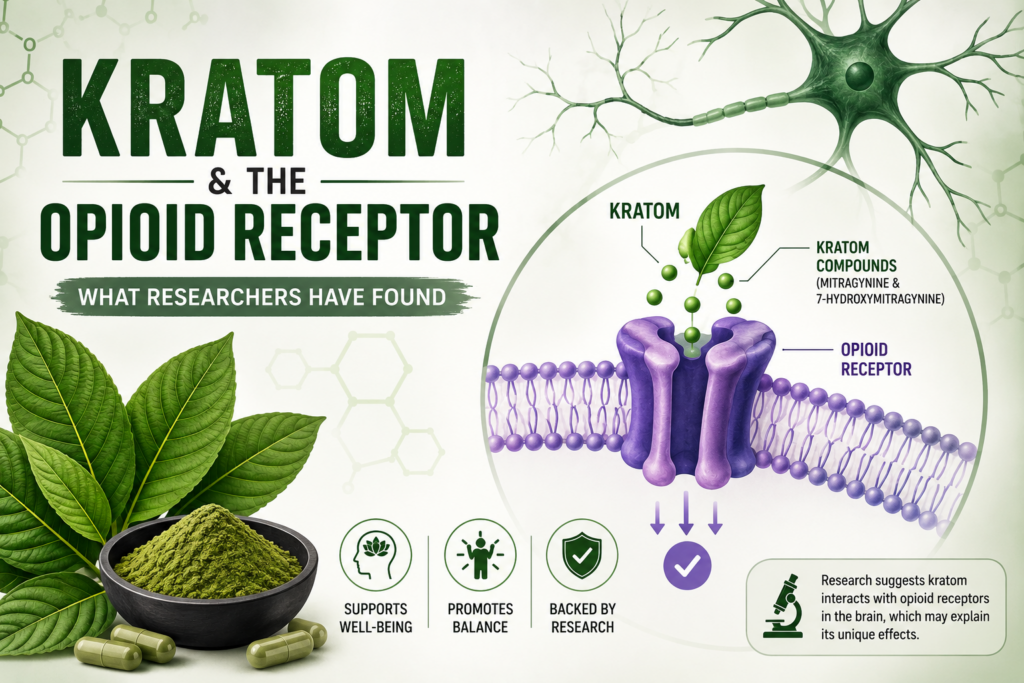
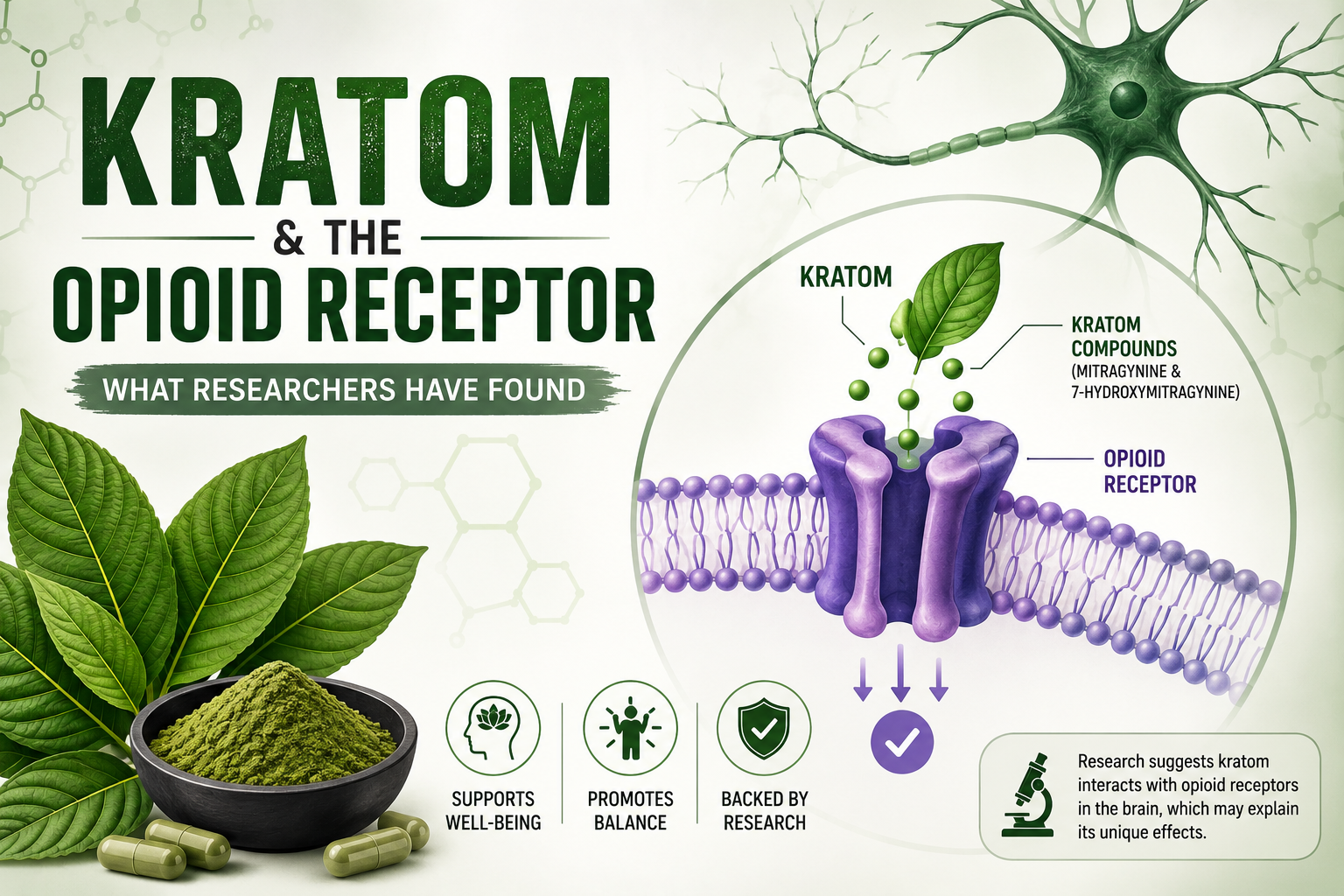
Kratom is comprised of several natural compounds called alkaloids, with mitragynine being one of the most significant. Another compound, 7-hydroxymitragynine, is also often studied because of its activity. Research indicates that mitragynine may bind to opioid receptors, especially the mu receptor. But the way in which it binds and activates these receptors is different from many traditional opiate substances. Mitragynine seems to be more selective in its action on the receptor instead of fully activating it. This means it might turn on some signaling pathways but not others to the same extent. This selective interaction is a key area of research, as it might help explain why kratom is often described with a different profile from conventional opioids. Laboratory research has investigated how mitragynine and related compounds bind to receptors and influence cell responses. The results suggest that kratom’s alkaloids interact with the opioid system, but not through full opioid receptor activation. Scientific studies have examined how kratom’s alkaloids interact with opioid receptors and influence receptor signaling pathways (PubMed).Partial Agonist vs Full Agonist Distinction
Understanding the difference between partial and full agonists is useful to know how kratom interacts with opioid receptors.- Full Agonist:
- Partial Agonist:
Why This is Different from Classic Opioids
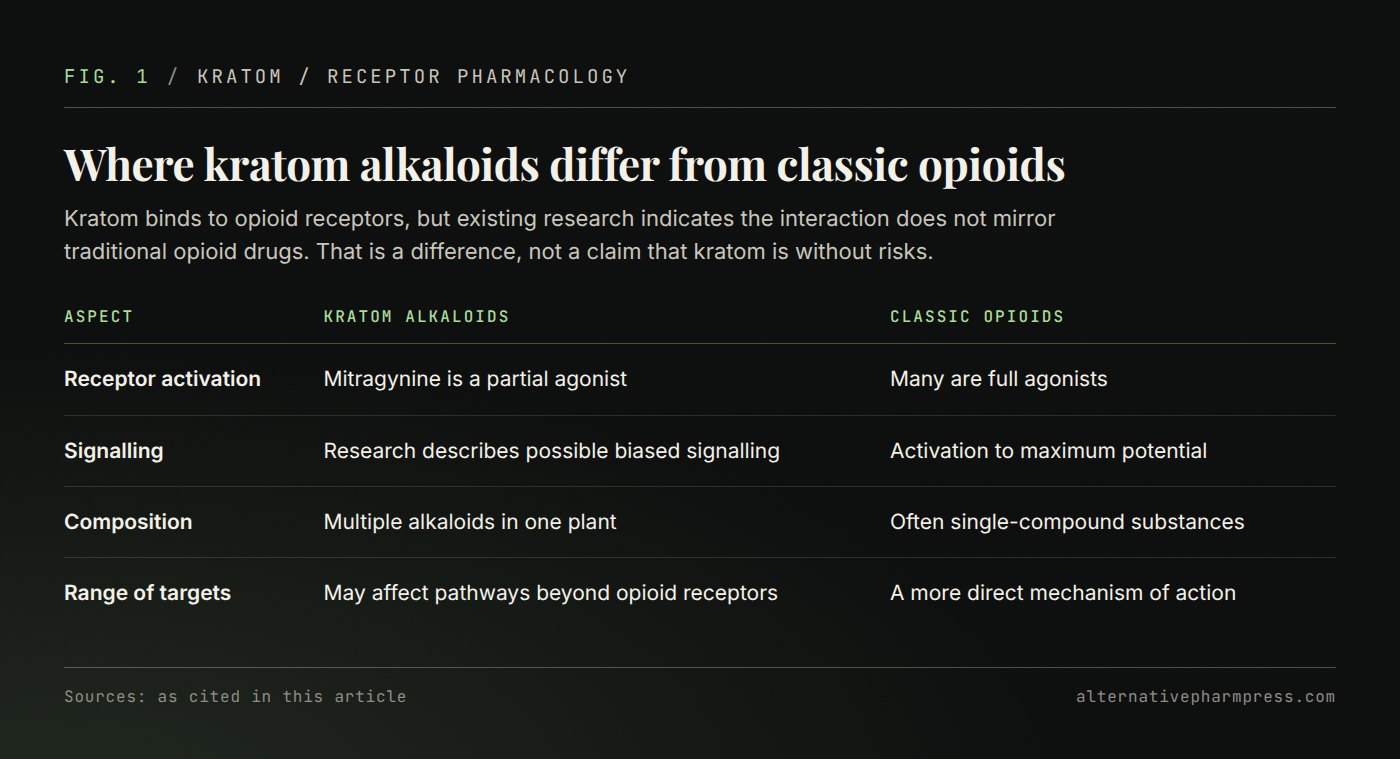
Kratom binds to opioid receptors, but it is not the same as classic opioids in the way it affects the body. One of the major differences is how kratom’s alkaloids act on receptors. Mitragynine is a partial agonist, as we discussed, and many classic opioids are full agonists. This results in differences in receptor activation and downstream consequences. Another is that kratom contains multiple alkaloids. These compounds can interact with multiple systems in the body, creating a more complex profile. In contrast, many traditional opioids are single-compound substances with a more direct mechanism of action. Research also indicates that compounds in kratom may affect many pathways, not just opioid receptors. This broader interaction may underlie the differences noted between kratom and classic opioids. It is important to emphasize that there are differences, but this does not mean that kratom is without risks or can be easily compared in any simple way. The relationship between kratom and opioid receptors is complex and is still being studied.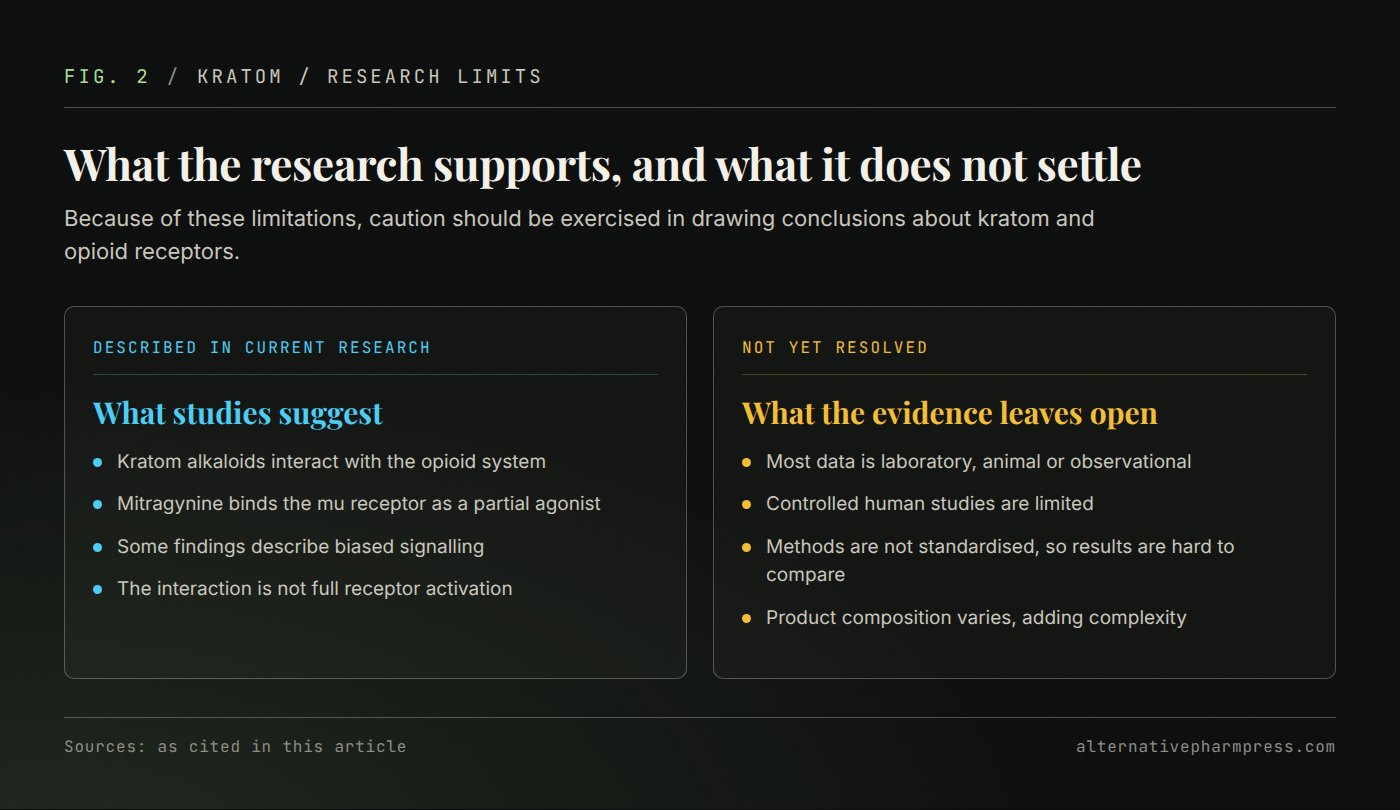
Research Limitations
Kratom has garnered increasing interest, but there remains limited research on its interaction with opioid receptors. Most of the information is based on laboratory studies, animal models, and observational reports, rather than on large-scale clinical trials in humans. One limitation is the absence of standardized research. Studies may use different methods, making it difficult to directly compare results. In addition, the composition of kratom products varies, adding another layer of complexity. The limited number of controlled human studies is another challenge. Laboratory results can be informative, but more work is needed to translate such findings to real-world settings. There’s also a current debate within the scientific community about how to interpret existing findings. Some aspects of kratom’s pharmacology remain not fully understood, and more research is needed to shed light on its mechanisms. Due to these limitations, caution should be exercised in making conclusions about kratom and opioid receptors. Further research is expected to clarify this issue over time.What This Means (Not Medical Advice)
A little context can be gained by knowing how kratom interacts with opioid receptors, but this information must be taken with a grain of salt. Studies suggest that kratom’s constituents may affect opioid receptors differently than traditional opioids. This includes partial agonism and selective signaling, which could explain its unique profile. But the fact that there is receptor interaction also points to the importance of consciousness. Anything that interacts with biological systems will have different effects based on the individual, their health, metabolism, use, etc. This article is for informational purposes only and is not to be taken as medical advice. Individual results may vary. Anyone seeking medical advice should consult a healthcare professional. With further research, a more complete picture of how kratom interacts with opioid receptors may become apparent. Until then, it’s important to stay informed and keep a balanced perspective on the subject. Regulatory authorities such as the FDA have raised concerns about kratom’s interaction with biological systems and the need for further research.Conclusion
A well-studied aspect of the pharmacology of kratom is its interaction with opioid receptors, but it is a complex and rapidly changing field. Studies indicate that its main alkaloids bind to these receptors differently than traditional opioids do, especially through partial agonism and selective signaling. Having context for these findings with an understanding of the roles of mu, kappa, and delta receptors is helpful. At the same time, it is important to be aware of the limitations of the present research so as to keep a balanced perspective. While kratom shares similarities with substances that bind to opioid receptors, direct comparison alone cannot fully account for kratom. Its special composition and mechanisms underline the need for further investigations. The expansion of scientific knowledge might offer a clearer view of kratom’s pharmacological profile. Awareness of the informed and cautious interpretation remains key until then.Key Takeaways
- Opioid receptors (mu, kappa, delta) are members of the body’s signaling system.
- Kratom contains alkaloids such as mitragynine that bind to those receptors.
- Mitragynine is not a full agonist; it is a partial agonist.
- Kratom acts on the receptors differently than traditional opioids.
- There is still very little research, and it is mostly done in the laboratory.
- These mechanisms need to be better understood in humans.
- Please read the information below carefully and do not consider it medical advice.