 7-OH gummies are a newer format in the kratom alkaloid market, sitting alongside tablets, shots, powders, and disposable vapes as one of the five main product types available to American consumers in 2026. For users new to the category, the gummies versus tablets question is one of the first format decisions they need to make.
Both formats deliver the same active 7-hydroxymitragynine but in different physical packages with meaningful differences in onset speed, flavor experience, dosing precision, and cost per milligram. This guide compares the two formats directly across the dimensions that matter most to new buyers, with practical recommendations for which format fits which use case.
How do 7-OH gummies differ from tablets?
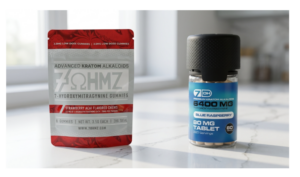
A 7-OH gummy is a chewable edible containing a specific milligram weight of 7-OH extract dissolved into a flavored base similar to cannabis gummies or vitamin gummies. 7OH tablets, by contrast, are compressed pills designed to be swallowed or chewed quickly. Gummies tend to taste better than tablets because the flavor base is built into the product rather than added as a coating. Gummies also absorb slightly differently, since the chewing and dissolving process spreads the alkaloid across a longer absorption window. The basic active ingredient is the same, but the delivery experience differs in ways that matter to users sensitive to taste or texture.Onset Speed Comparison
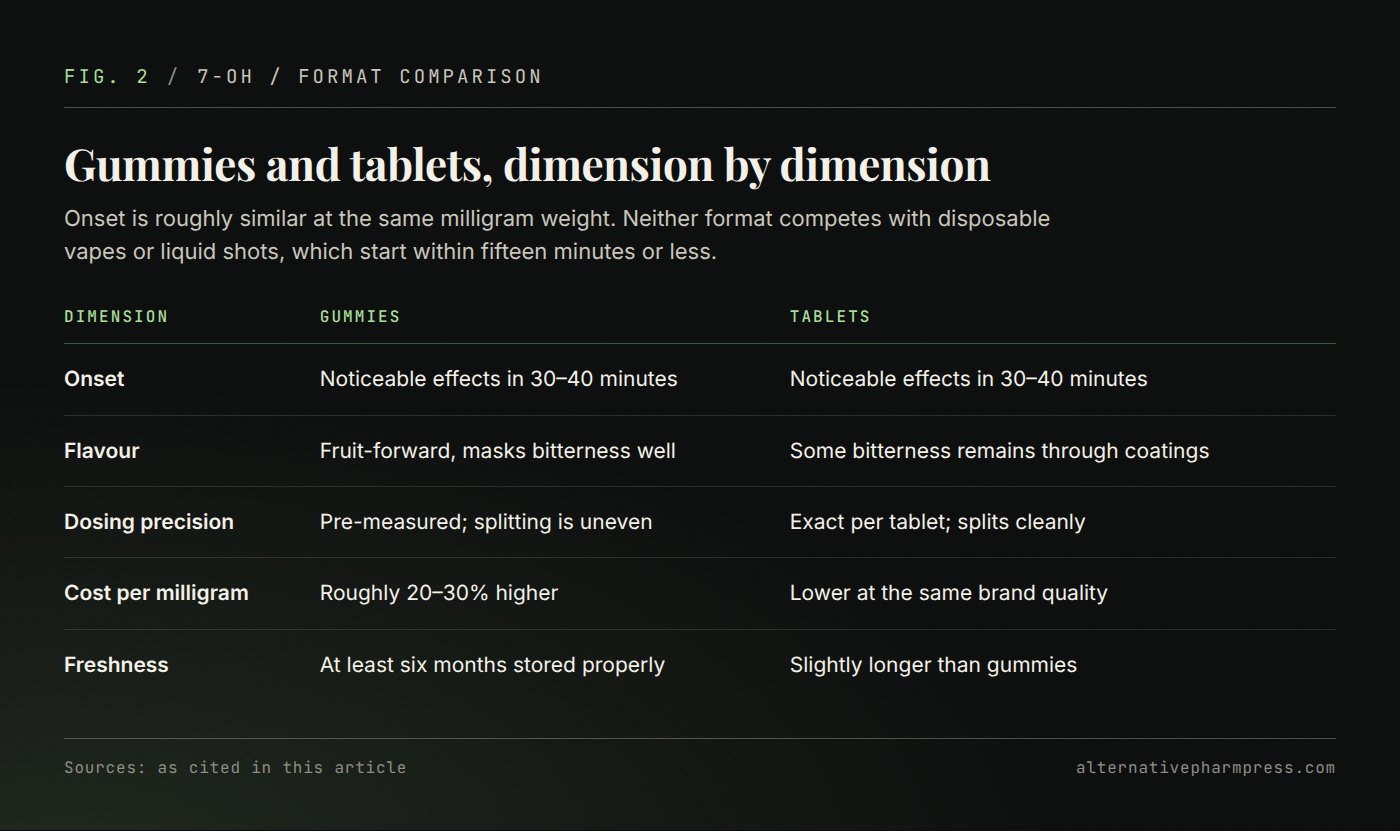
Onset speed between gummies and tablets is roughly similar at the same milligram weight, since both formats absorb through the digestive system after chewing or swallowing. Both typically produce noticeable effects within thirty to forty minutes. Gummies sometimes feel slightly slower because the chewing process spreads the initial absorption over a longer window, while tablets can absorb faster if swallowed quickly with water. The difference is small in practice. For users who want fast-acting effects, neither format competes with disposable vapes or liquid shots, both of which start producing effects within fifteen minutes or less depending on the delivery method used.Flavor and User Experience
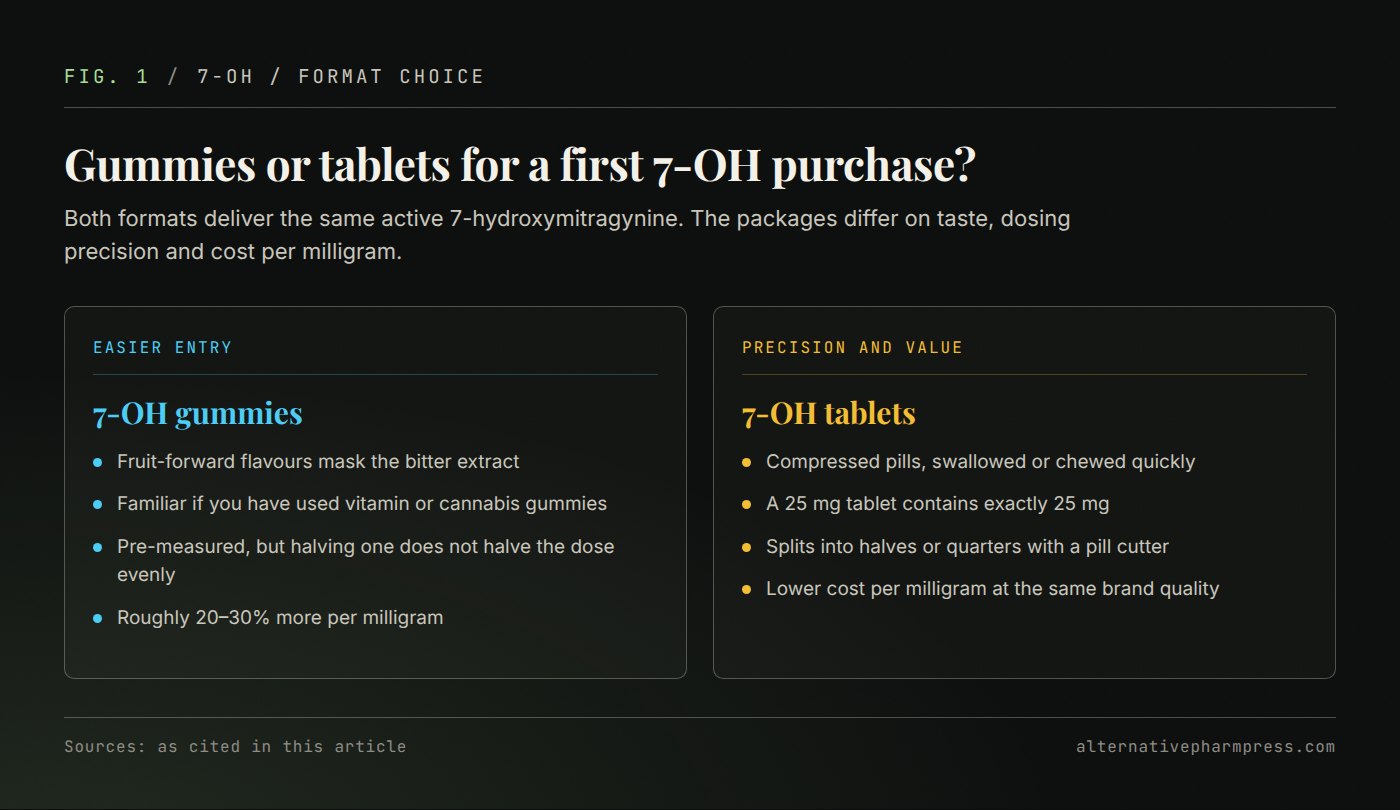
This is the area where gummies shine. The fruit-forward flavor profile masks the natural bitterness of 7-OH extract far more effectively than tablet coatings. Strawberry, blue raspberry, mixed berry, watermelon, and tropical mixes are all common gummy flavors. The format is also familiar to anyone who has used vitamin gummies or cannabis edibles, which removes the psychological barrier some users feel with pill formats. Tablets, even chewable ones, retain some of the bitter alkaloid taste regardless of the coating or flavoring added. If taste is a deal breaker for you, gummies are the easier entry point to the 7-OH category by a significant margin. Browse all available 7-OH gummies.Dosing Precision Compared
Tablets have a slight edge in dosing precision. A 25 mg tablet contains exactly 25 mg of active alkaloid, and you can split it into halves or quarters with a pill cutter if you want a smaller serving. Gummies are also pre-measured, but the alkaloid distribution within a single gummy can be slightly less uniform than within a compressed tablet. Splitting a gummy in half does not guarantee an even split of the active ingredient, since the alkaloid concentrates may settle during manufacturing. For users who want precise dosing flexibility, tablets remain the better choice. For users happy with the labeled per-gummy weight as their target serving, gummies work fine without precision concerns.Pricing and Cost Per Milligram
Gummies typically cost slightly more per milligram than tablets at the same brand quality level. The premium reflects the more complex manufacturing process, the flavor base ingredients, and the smaller market size for edible 7-OH products compared with the mature tablet market. Expect to pay roughly twenty to thirty percent more per milligram on gummies versus equivalent tablets from the same brand. For occasional users where total monthly spending stays modest, the price difference is not significant. For daily users at higher milligram weights, the premium adds up over the course of a year and tips the cost analysis toward tablets for sustained value.