
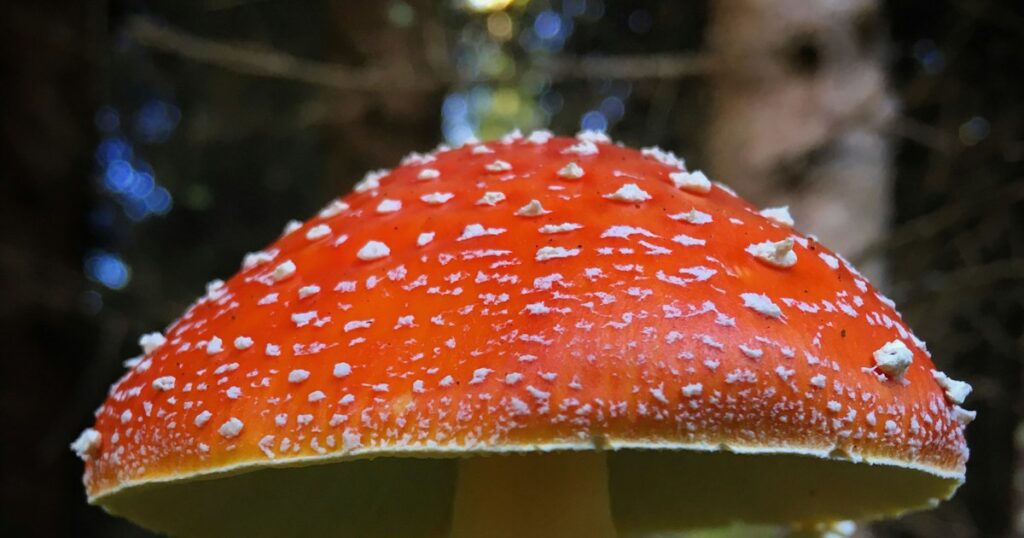
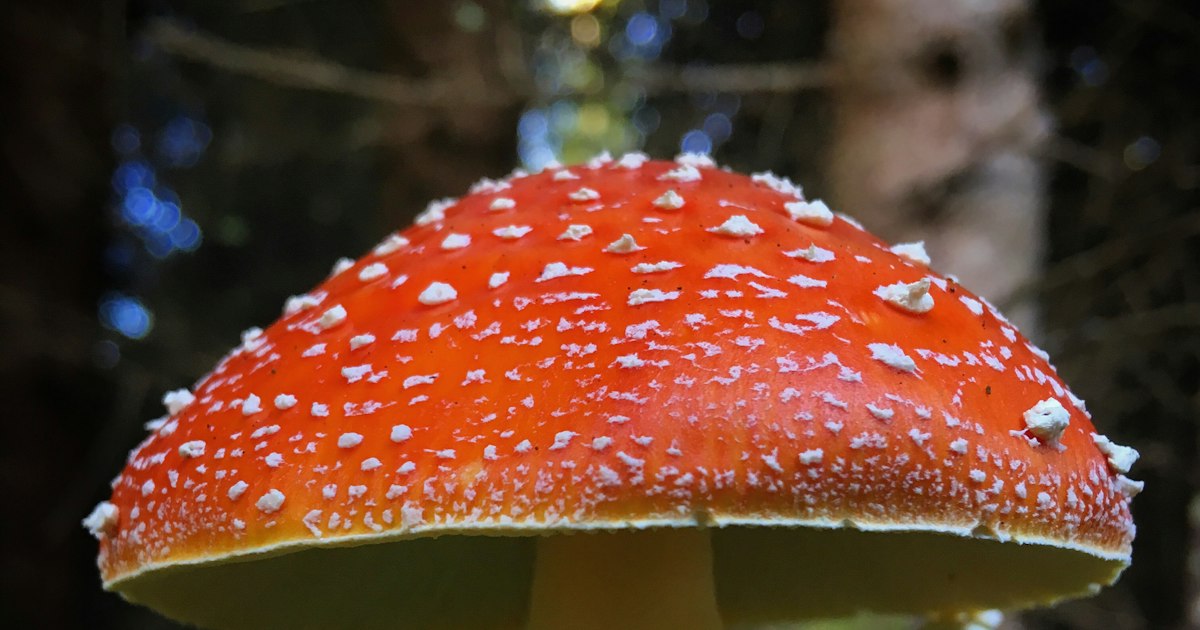
The federal position on Amanita muscaria has not changed since December 2024, and it is not ambiguous. The FDA has concluded that the fly agaric mushroom, its extracts and its known active constituents, muscimol, ibotenic acid and muscarine, are not generally recognized as safe (GRAS) and are unapproved food additives. Any conventional food that contains them, including gummies and chocolates, is adulterated under federal law.1 In a September 2025 warning letter, the agency also treated Amanita muscaria capsules and tinctures sold as dietary supplements as adulterated.3
The mushroom is still not a federally controlled substance, and at the state level Louisiana remains the only state with an explicit prohibition. Louisiana listed Amanita muscaria as a hallucinogenic plant in 2005 and, in 2025, added a separate ban on products containing muscimol or ibotenic acid.45 Bills in Texas and Utah failed in 2025, and we found no other state that had enacted a ban as of September 2026.6
The research picture is thin. Muscimol is a well-characterized GABA-A receptor agonist and a standard laboratory tool, but the human evidence consists mainly of poison center series, outbreak investigations and case reports. The only registered muscimol clinical trials were tiny, early-stage neurosurgical studies. Neither involved eating the mushroom, and neither showed a clear benefit.710
What the FDA has actually said
The central document is a letter to industry that the FDA posted on December 18, 2024, in its list of post-market determinations that a substance use is not GRAS. The agency concluded that Amanita muscaria, its extracts and its currently known pharmacologically active constituents do not meet the GRAS standard for use in food. Because no food additive regulation authorizes them, they are unapproved food additives, and food containing them is adulterated.1
The letter drew on a scientific memorandum dated September 9, 2024. FDA reviewers wrote that they found no basis to conclude that these uses are GRAS. They pointed to reported effects including gastrointestinal upset, delirium, drowsiness, seizures, central nervous system depression and, in the literature, death.2 The FDA also recommended that consumers avoid foods containing these ingredients, noting that they appear in products marketed as “psychedelic edibles.”1
Dietary supplements: the 2025 warning letter
The December 2024 letter covered conventional food and left dietary supplements for separate evaluation. The FDA then addressed supplements in practice. On September 11, 2025, it sent a warning letter to a New York seller of Amanita muscaria capsules, a tincture and a chocolate bar. The agency treated the mushroom as a new dietary ingredient without an adequate safety record. It said there was inadequate information to provide reasonable assurance that the ingredient does not present a significant or unreasonable risk of illness, so the capsules and tincture were adulterated supplements. It classified the chocolate as a conventional food containing an unsafe food additive.3
A warning letter is not a rule, but it shows how the agency reads the law: a “supplement” label is not a safe harbor for these ingredients. Culinary and functional species such as lion’s mane, covered in our overview of functional mushrooms and what the research says, sit in a different regulatory category.
What the FDA has not done
The FDA does not schedule drugs; that is the job of the DEA. Neither Amanita muscaria nor muscimol nor ibotenic acid is on the federal controlled substances schedules.6 Growing or possessing the mushroom is therefore not a federal crime. Selling it as food or as a supplement is a different matter, and the FDA’s position is that such sales violate the Federal Food, Drug, and Cosmetic Act.
State laws: Louisiana and the bills that failed
Louisiana is the only state that has written Amanita muscaria into its criminal code. Revised Statutes 40:989.1, first enacted by Act 159 of 2005, lists about 40 “hallucinogenic plants,” including Amanita muscaria, Psilocybe species and Salvia divinorum. The law makes it unlawful to produce, manufacture or distribute them, or to possess them with intent to distribute. It exempts plants grown or kept strictly for aesthetic, landscaping or decorative purposes, and it carries penalties of two to ten years’ imprisonment and fines of up to $20,000 for distribution offenses.4
In 2025, lawmakers closed a gap for extracted and processed products. House Bill 176, which became Act 154 of the 2025 Regular Session, created R.S. 40:989.5. It prohibits producing, manufacturing, distributing or possessing products containing muscimol, ibotenic acid, beta-phenyl-GABA (phenibut) or their analogues. Its penalties mirror the hallucinogenic plant statute: two to ten years and up to $20,000 for distribution, and up to five years and $5,000 for simple possession.5
Elsewhere, proposals have stalled. A March 2026 fact sheet from the Legislative Analysis and Public Policy Association records that Utah’s H.B. 500 of 2025, which would have placed Amanita muscaria in Schedule III, died when the session adjourned. It also records that three 2025 Texas bills (S.B. 1868, H.B. 291 and H.B. 227) to add muscimol and ibotenic acid to a penalty group all failed.6 Our searches of state legislative sites and news coverage turned up no new state ban enacted in 2026. State law moves quickly in this area, though, so treat any list as a snapshot.
How muscimol and ibotenic acid work
Amanita muscaria is chemically unrelated to psilocybin mushrooms. Psilocybin acts mainly on serotonin 5-HT2A receptors. The fly agaric’s two main isoxazole compounds act on the brain’s primary inhibitory and excitatory amino acid systems instead.
Muscimol: a GABA-A agonist
Muscimol is structurally similar to GABA, the main inhibitory neurotransmitter, and binds GABA-A receptors with high affinity as an agonist. Radiolabeled muscimol has been a standard research tool for mapping GABA receptors for decades. It is not approved for any clinical use.7 Activating GABA-A receptors dampens neuronal firing, which explains the sedation, drowsiness and, at higher exposures, profound central nervous system depression described in poisoning reports.28
Ibotenic acid: an excitatory counterpart
Ibotenic acid acts as an agonist at NMDA glutamate receptors and at metabotropic glutamate receptors, so it excites neurons.29 In the body, and during drying or heating, part of it is decarboxylated into muscimol. This is why drying and preparation methods get so much attention in online discussion, and why product strength is hard to predict.9
The mix of an excitatory and an inhibitory compound helps explain why clinical pictures vary. Poisoned patients may be agitated, confused or hallucinating, then drowsy or unresponsive, sometimes within the same episode.8 Muscarine, the compound the mushroom is named after, is usually present only in small amounts in A. muscaria. The FDA nonetheless listed it among the constituents covered by its determination.1
| Compound | Primary target | Typical effect | FDA food status | Louisiana status |
|---|---|---|---|---|
| Muscimol | GABA-A receptor (agonist) | Sedation, CNS depression | Not GRAS; unapproved food additive | Prohibited in products (R.S. 40:989.5) |
| Ibotenic acid | NMDA and metabotropic glutamate receptors (agonist) | Excitation, agitation; partly converts to muscimol | Not GRAS; unapproved food additive | Prohibited in products (R.S. 40:989.5) |
| Muscarine | Muscarinic acetylcholine receptors | Usually minor in this species | Not GRAS; unapproved food additive | Not named separately |
| Whole mushroom | Mixed | Variable, preparation dependent | Not GRAS; unapproved food additive | Listed hallucinogenic plant (R.S. 40:989.1) |
What poison center and outbreak data show
The clearest recent federal numbers come from the FDA’s 2024 memorandum. It reported that between January 1, 2023 and June 30, 2024, the National Poison Data System logged 695 exposures coded as “Group 2 mushrooms: muscimol and ibotenic acid” and 57 coded as processed Amanita-containing mushroom preparations. The agency’s own CFSAN Adverse Event Reporting System held seven related reports from May 2023 to June 2024.2 Those figures count calls and reports, not confirmed poisonings. They cannot show how often use leads to harm, because nobody knows how many products were eaten.
Older regional data give a sense of the clinical pattern. Moss and Hendrickson reviewed ingestions of muscimol and ibotenic acid containing mushrooms reported to the Oregon Poison Center from 2002 to 2016 and found 34 qualifying cases: 23 involved A. muscaria, 10 A. pantherina and one A. aprica. Twenty-five patients had symptoms, nearly all within six hours. Five were intubated. No deaths, seizures or liver injuries were reported. Panther cap ingestions caused symptoms more often than fly agaric ingestions.8
The Diamond Shruumz outbreak
The most serious product-linked event involved Diamond Shruumz chocolate bars, cones and gummies. In an April 2026 report in MMWR, CDC and FDA investigators counted 180 cases in 34 states from January to October 2024. Of those patients, 73 were hospitalized, 38 needed intensive care, 29 were intubated and two died. Testing found muscimol in some products, along with psilocin, kavalactones and other substances, and the ingredients varied from product to product.11
This outbreak should not be read as a pure Amanita muscaria signal. The products contained several undeclared compounds, and investigators could not attribute harm to any single one. What it does show is the problem regulators keep returning to: labels on edible “mushroom” products often did not match their contents. Our guide to signs a brand is genuinely third-party tested explains what a meaningful lab report includes.
A 2026 narrative review by Ordak reached a similar conclusion. Presentations range from mild neurological symptoms to severe intoxication requiring hospitalization, and online harm reduction advice may normalize use and lead people to underestimate the risks.9
Human research on muscimol
Muscimol’s pharmacology is well understood from animal and laboratory work. Controlled human research is almost nonexistent. A search of ClinicalTrials.gov in September 2026 found only two registered interventional studies that list muscimol, and none that test Amanita muscaria itself.
The first, NCT00005925, was an NIH phase 1 trial of convection-enhanced delivery, a technique that infuses a drug directly into brain tissue through a catheter. Three adults with drug-resistant epilepsy received an artificial cerebrospinal fluid vehicle and then muscimol into the seizure focus before planned surgery. The 2019 report in Neurosurgery found no infusion-related brain injury and no harm to surgical outcomes. Seizure frequency fell in one of three patients during the muscimol infusion, and the authors wrote that the study did not confirm that the infusion effectively suppressed seizures. The registry lists the trial as terminated.10
The second, NCT00921128, planned to use the same delivery method to study Parkinson’s disease physiology. It was withdrawn before enrolling anyone.
Neither study says anything about taking muscimol by mouth, let alone about mushroom products. Reviews mention preclinical interest in neuropathic pain and other areas, but those remain laboratory hypotheses.7 Claims that fly agaric products help with sleep, anxiety or pain rest on anecdote and online testimony, not trials.9
How many people are using it
Use is not trivial. In a nationally representative RAND survey published in January 2026, 1.34 percent of US adults reported using Amanita muscaria in the past year. That works out to roughly 3.5 million people (95 percent confidence interval 2.7 to 4.3 million), placing the fly agaric fourth among the psychedelic substances measured.12
Where regulation stands as of September 2026
| Authority | Position | Key date |
|---|---|---|
| FDA (food) | Mushroom, extracts, muscimol, ibotenic acid and muscarine are not GRAS and are unapproved food additives | December 18, 2024 |
| FDA (supplements) | Warning letter treated Amanita muscaria capsules and tincture as adulterated; no formal rule | September 11, 2025 |
| DEA | Not a controlled substance | No action |
| Louisiana | Hallucinogenic plant ban; separate ban on muscimol and ibotenic acid products | 2005; Act 154 of 2025 |
| Texas | Three 2025 bills to penalize muscimol and ibotenic acid failed | 2025 session |
| Utah | H.B. 500 to schedule the mushroom died at adjournment | 2025 session |
In practice, the fly agaric sits in a gray zone. Federal law does not make it illegal to own, but the FDA’s view is that selling it as food or as a dietary supplement is unlawful. Some sellers now label products “not for human consumption,” a phrase that raises its own problems, as we explain in what “research use only” actually means. State lawmakers who have tried to go further have mostly failed, with Louisiana the exception.
The evidence has clear limits. Poison center counts have no denominator. Case reports favor severe outcomes. Outbreak data mix substances. Commercial product strength is rarely verified. And there are no controlled trials of oral muscimol or Amanita preparations in people. Until that changes, any claimed benefit is speculative, while the documented harms, though uncommon in the records available, are real.
Frequently asked questions
Is Amanita muscaria legal in the United States?
It is not a federally controlled substance, and only Louisiana bans it by statute. However, the FDA considers it and its constituents unapproved food additives, so selling it in food is unlawful under federal law, and the agency has treated supplement versions as adulterated.
Did the FDA ban Amanita muscaria?
Not in the sense of scheduling it. In December 2024 the FDA announced that the mushroom and its constituents are not GRAS and are not authorized for use in conventional food. That determination is the basis for enforcement against edible products.
Is muscimol the same as psilocybin?
No. Muscimol is a GABA-A receptor agonist with mainly sedating effects. Psilocybin, found in different mushroom species, acts mainly through serotonin receptors and is a Schedule I controlled substance.
Are there clinical trials showing muscimol works for sleep or anxiety?
We found none. The only registered muscimol trials involved infusing it directly into the brain: one terminated epilepsy study with three patients and one withdrawn Parkinson’s study. Neither tested oral use.
Can Amanita muscaria products cause serious harm?
Poison center and case report data describe vomiting, confusion, agitation, seizures, deep sedation and, in some cases, intubation. Mislabeled edibles have been linked to hospitalizations and deaths, although those products contained several substances.
Sources
- US Food and Drug Administration. Letter to Industry on Use of Amanita muscaria or Its Constituents in Food. FDA, December 18, 2024. https://www.fda.gov/food/post-market-determinations-use-substance-not-gras/letter-industry-use-amanita-muscaria-or-its-constituents-food
- US Food and Drug Administration. Scientific Memorandum: Amanita muscaria. FDA, September 9, 2024. https://www.fda.gov/media/184512/download
- US Food and Drug Administration. Warning Letter: Blue Forest Farms, LLC (MARCS-CMS 711990). FDA, September 11, 2025. https://www.fda.gov/inspections-compliance-enforcement-and-criminal-investigations/warning-letters/blue-forest-farms-llc-711990-09112025
- Louisiana Revised Statutes 40:989.1. Unlawful production, manufacture, distribution, or possession of hallucinogenic plants; exceptions. Justia, 2025. https://law.justia.com/codes/louisiana/revised-statutes/title-40/rs-40-989-1/
- Louisiana Legislature. House Bill No. 176, Act No. 154, 2025 Regular Session (enrolled). Louisiana State Legislature, 2025. https://www.legis.la.gov/legis/ViewDocument.aspx?d=1425060
- Legislative Analysis and Public Policy Association. Amanita Muscaria (Fly Agaric) Fact Sheet. LAPPA, March 2026. https://legislativeanalysis.org/wp-content/uploads/2026/03/Fly-Agaric-Fact-Sheet.pdf
- Rivera-Illanes D, Recabarren-Gajardo G. Classics in Chemical Neuroscience: Muscimol. ACS Chemical Neuroscience. 2024;15(18):3257-3269. https://pubmed.ncbi.nlm.nih.gov/39254100/
- Moss MJ, Hendrickson RG. Toxicity of muscimol and ibotenic acid containing mushrooms reported to a regional poison control center from 2002-2016. Clinical Toxicology. 2019;57(2):99-103. https://pubmed.ncbi.nlm.nih.gov/30073844/
- Ordak M. Amanita muscaria in the evolving novel psychoactive substances landscape: toxicological risks and clinical implications, a narrative review. Frontiers in Pharmacology. 2026;17:1838212. https://pubmed.ncbi.nlm.nih.gov/42272832/
- Heiss JD, Argersinger DP, Theodore WH, et al. Convection-Enhanced Delivery of Muscimol in Patients with Drug-Resistant Epilepsy. Neurosurgery. 2019;85(1):E4-E15. https://pubmed.ncbi.nlm.nih.gov/30407567/
- Rumph JT, Winquist A, Troeschel AN, et al. Severe Illness Associated with Eating Mushroom-Containing Chocolate Products, United States, January to October 2024. MMWR Morbidity and Mortality Weekly Report. 2026;75(13):179-184. https://pubmed.ncbi.nlm.nih.gov/41955162/
- Priest M, Kilmer B, Senator B, Setodji CM. U.S. Psychedelic Use and Microdosing in 2025: Insights from a Probability-Based and Nationally Representative Survey. RAND Corporation, January 2026. https://www.rand.org/pubs/research_reports/RRA4334-1.html
Editorial note: This article is for general information only and is not medical or legal advice. Amanita muscaria and muscimol have not been evaluated by the FDA to diagnose, treat, cure or prevent any disease. Laws vary by location and change often, so verify the rules that apply where you are. Always talk to a licensed healthcare provider before use, especially if you are under 21, pregnant or nursing, taking medication, or managing a health condition.