
There are hundreds of CBD brands competing for your money, and most of them sound exactly alike on the label. Everyone claims to be premium, clean, and lab-tested. The only way to tell the difference is to read the paperwork, so that’s what we did. This roundup leans on certificates of analysis (COAs), certification programs, and sourcing details rather than marketing copy.
We’ve split the list into two groups. The first two brands are verified in our brand directory, which means we’ve reviewed their lab reports and tracked their transparency over time. The rest are industry picks: well-known full-spectrum names that test through third-party labs but aren’t yet in our directory. We label each one clearly so you know which is which.
How we judge a CBD brand
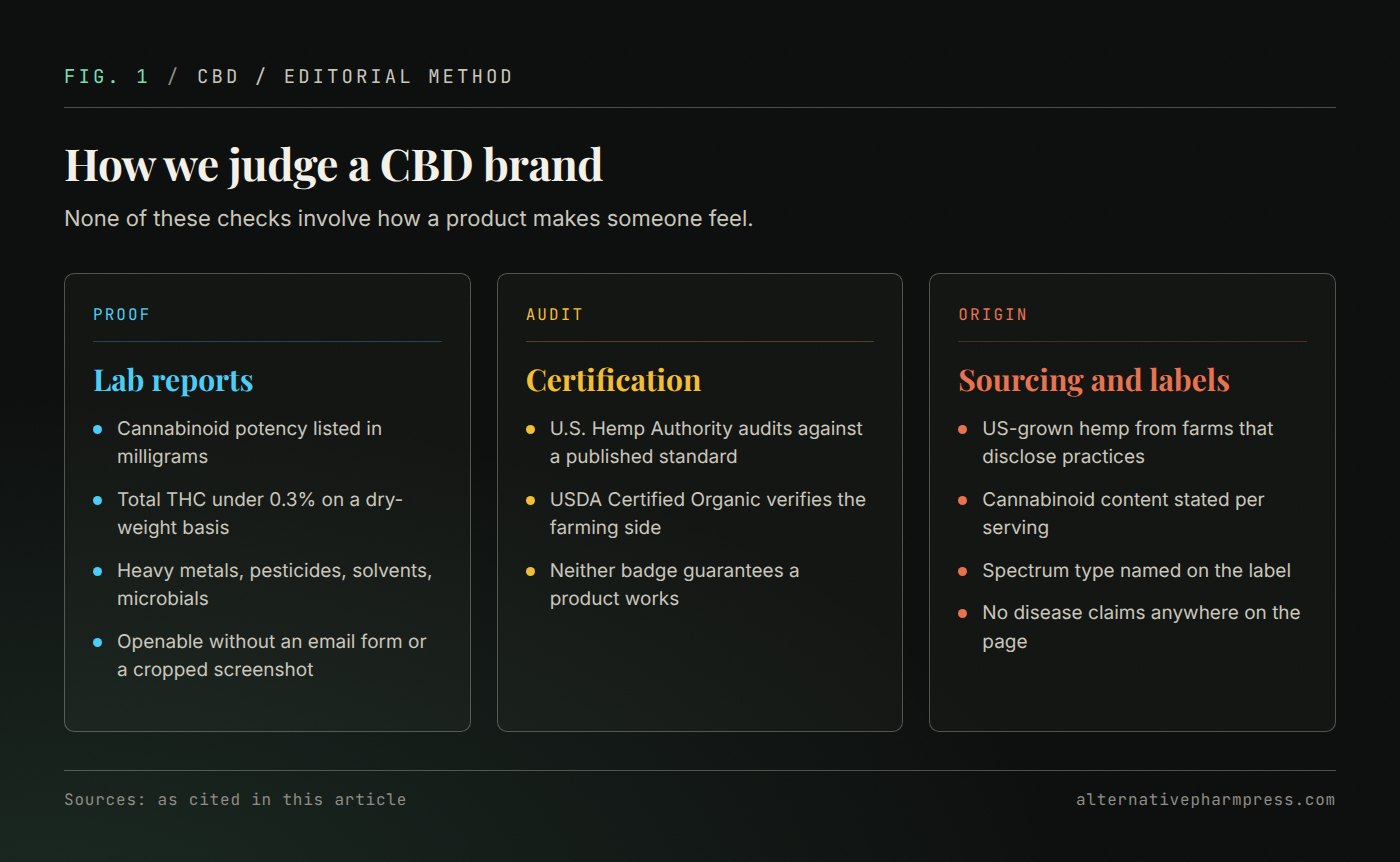
Before any brand earns a spot, it has to clear a few practical checks. None of these involve how a product makes someone feel. They’re about whether the company tells the truth and proves it.
Certificates of analysis you can actually open
A COA is a third-party lab’s report on a specific batch. It should list cannabinoid potency in milligrams, confirm total THC stays under 0.3% on a dry-weight basis, and show contaminant panels for heavy metals, pesticides, residual solvents, and microbials. If a brand hides its COAs behind an email form or only shows a screenshot with the batch number cropped out, that’s a problem. If you’re new to reading these reports, our guide on how to read a COA walks through the same panels that apply to CBD.
Certification that means something
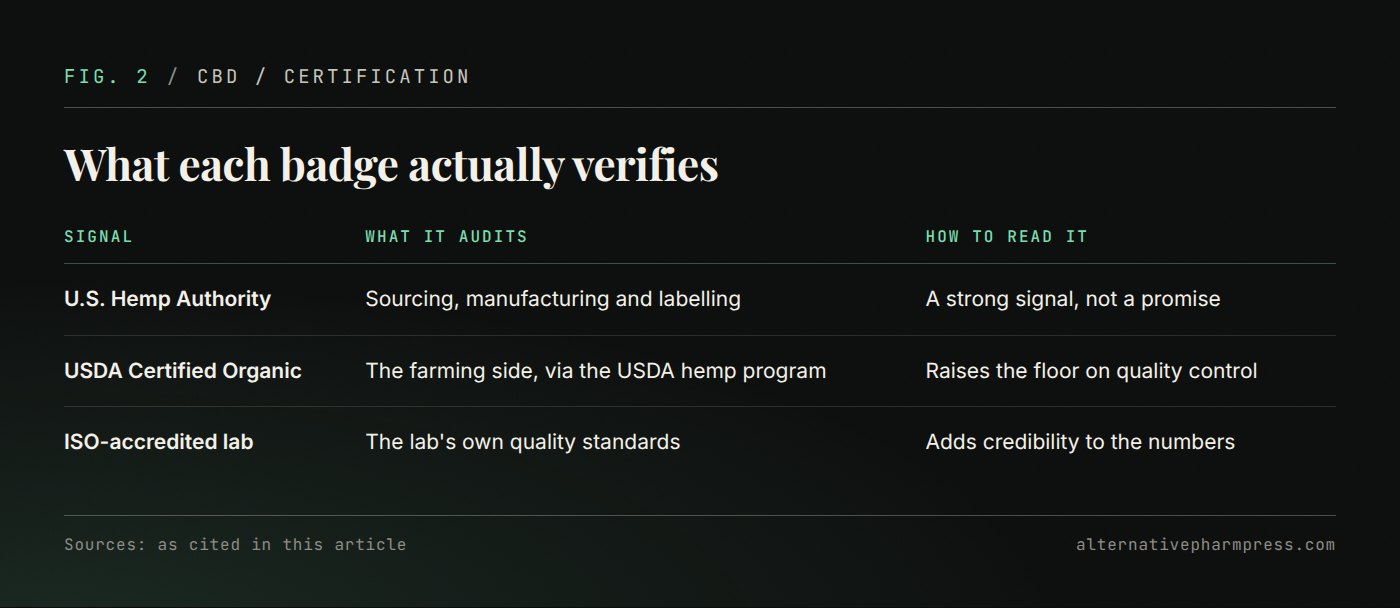
Two programs come up often. U.S. Hemp Authority certification audits a company’s sourcing, manufacturing, and labeling against a published standard. USDA Certified Organic, run through the USDA hemp program, verifies the farming side. Neither badge guarantees a product works, but both raise the floor on quality control.
Organic sourcing and honest labels
We prefer US-grown hemp from farms that disclose their practices, organic where possible. Labels should be specific: cannabinoid content per serving, full-spectrum versus broad-spectrum versus isolate, and no disease claims. If you’re fuzzy on those spectrum terms, our explainer on CBD vs hemp vs THC sorts them out. For the broader testing question, see our piece on the signs a brand is genuinely third-party tested.
Verified in our directory
Green Apex Botanicals: best for organic full-spectrum oil
Green Apex Botanicals sources premium CBD and hemp from certified organic Colorado farms and lab-tests its products, which is why it carries a high trust score in our directory. The organic sourcing is the headline here. Colorado has a long track record with hemp, and pairing certified organic farming with batch-level testing is the combination we like to see for full-spectrum oil, where you want the whole cannabinoid profile but still want trace THC kept in check.
Full-spectrum means the product keeps the plant’s natural range of compounds, including a trace of THC under the legal limit. Some people prefer that over isolate because they want the fuller hemp profile. We won’t promise an effect, but if organic sourcing matters to you, this is a sensible starting point. Read the full write-up on the Green Apex Botanicals page.
Elyxr: best for selection and an easy-to-search COA library
Elyxr is a Los Angeles wellness retailer with a catalog of more than 2,000 products and a filterable lab-reports library. The selection is broad, but the part we care about most is that COA library. Being able to filter to your exact product and batch, then open the report without chasing customer service, is the kind of transparency more brands should copy.
If you like to compare formats (oils, gummies, and more) in one place and verify each one against its own lab report, Elyxr makes that easy. See the Elyxr directory page for details, and check our coupons page before you order.
Industry picks (not in our directory)
These four are recognized full-spectrum brands that test through third-party labs. We haven’t verified them in our directory yet, so treat the labels below as starting points and read the current COA for whatever product you’re considering.
cbdMD: best for certification-backed consistency
cbdMD is U.S. Hemp Authority certified and third-party tested. The certification is the draw: it signals a documented, audited process behind the products, which tends to mean fewer surprises batch to batch. If consistency and a recognized seal matter to you, it’s a reasonable pick. Verify the current COA at cbdmd.com.
Cornbread Hemp: best for USDA organic
Cornbread Hemp is USDA Certified Organic and makes flower-only full-spectrum products that are third-party tested. The flower-only approach means the extract comes from hemp flower rather than stalks and stems, which the brand argues gives a richer cannabinoid profile. Pair that with USDA organic certification and you have a transparent, farming-forward option. Details at cornbreadhemp.com.
Medterra: best for broad product range
Medterra is U.S. Hemp Authority certified and third-party tested, with a wide range of formats and strengths. If you want one certified brand that covers a lot of product types, the breadth is the appeal. As always, open the COA for the specific item you’re buying rather than trusting the range as a whole. More at medterracbd.com.
Palmetto Harmony: best for whole-plant transparency
Palmetto Harmony is USDA Certified Organic and uses third-party ISO-accredited labs for testing. The whole-plant framing and ISO lab work make this a transparency-first choice. ISO accreditation refers to the lab’s own quality standards, which adds a layer of credibility to the numbers on the report. See palmettoharmony.com for current products and reports.
Comparison table
| Brand | Best for | Directory verified | Certifications / testing |
|---|---|---|---|
| Green Apex Botanicals | Organic full-spectrum oil | Yes | Certified organic Colorado farms, lab-tested |
| Elyxr | Selection and searchable COA library | Yes | Third-party tested, filterable lab-reports library |
| cbdMD | Certification-backed consistency | No (industry pick) | U.S. Hemp Authority certified, third-party tested |
| Cornbread Hemp | USDA organic | No (industry pick) | USDA Certified Organic, flower-only, third-party tested |
| Medterra | Broad product range | No (industry pick) | U.S. Hemp Authority certified, third-party tested |
| Palmetto Harmony | Whole-plant transparency | No (industry pick) | USDA Certified Organic, third-party ISO lab tests |
How to use this list
Pick the “best for” that matches what you want, then do one thing before you check out: open the COA for the exact product and batch you’re buying. The directory brands make this straightforward, and the industry picks publish reports too. A roundup like ours points you in a direction; the lab report confirms whether a specific bottle lives up to it.
If you want to keep comparing, our reviews and the full brand directory cover more names. And if you’re still deciding what to look for, the eight things to check before buying CBD online is the practical companion to this piece. You can also browse our CBD category for related guides.
Frequently asked questions
What makes a CBD brand “COA-verified”?
It means an independent lab has tested the product and published a certificate of analysis you can read. A good COA lists cannabinoid potency in milligrams, confirms total THC under 0.3% by dry weight, and includes contaminant panels. Verified means the report exists, matches the batch, and is easy to find.
Is full-spectrum better than broad-spectrum or isolate?
Not better, just different. Full-spectrum keeps the plant’s natural range of compounds including trace THC, broad-spectrum removes most or all THC, and isolate is pure CBD. Some people prefer one over another for personal reasons; the right choice depends on your priorities and any drug-testing concerns.
Does U.S. Hemp Authority certification guarantee quality?
It doesn’t guarantee any outcome, but it does mean the company passed an audit of its sourcing, manufacturing, and labeling against a published standard. Treat it as a strong signal rather than a promise, and still read the COA for your specific product.
Will full-spectrum CBD show up on a drug test?
It can. Full-spectrum products contain trace THC under the legal limit, and that can accumulate or trigger a positive on sensitive tests. If you’re tested for work, broad-spectrum or isolate carries less risk, though no product can be promised to be undetectable.
Why are only two brands in your directory?
Our directory only includes brands we’ve reviewed and tracked for transparency over time. The industry picks are reputable, third-party-tested names we haven’t fully vetted yet. We label the difference so you can weigh how much verification sits behind each recommendation.
Editorial note: This article is for general information only and is not medical or legal advice. These products have not been evaluated by the FDA to diagnose, treat, cure, or prevent any disease. Laws vary by location and change often, so verify the rules that apply to you. Always talk to a licensed healthcare provider before use, especially if you are under 21, pregnant or nursing, taking medication, or managing a health condition.
Wondering whether daily use could turn into dependence? See Is CBD Addictive? before you commit to a routine.