
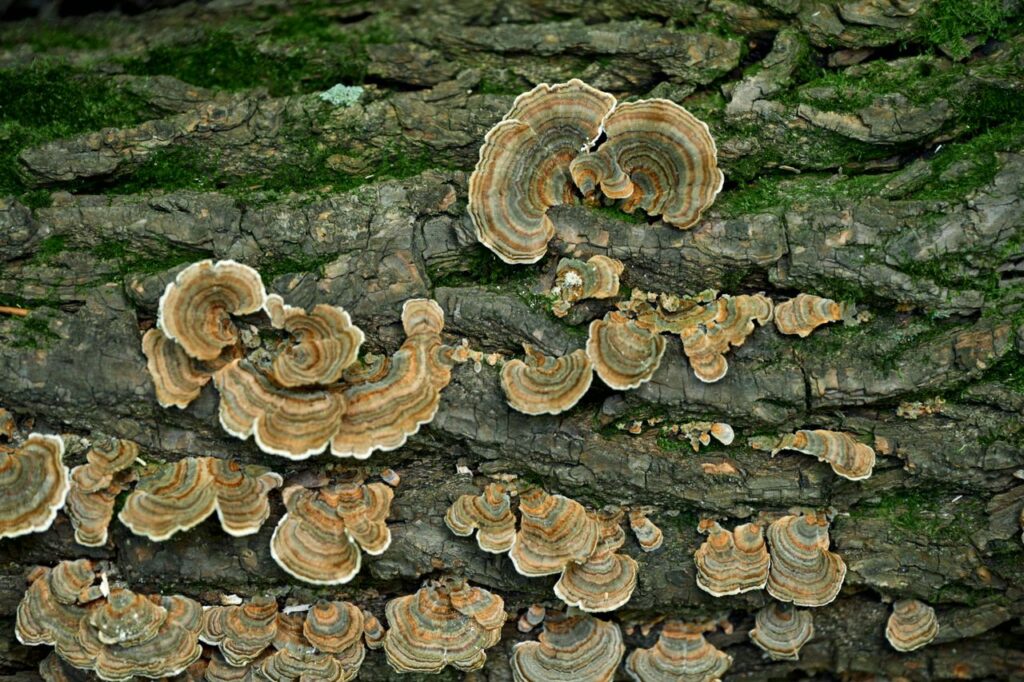
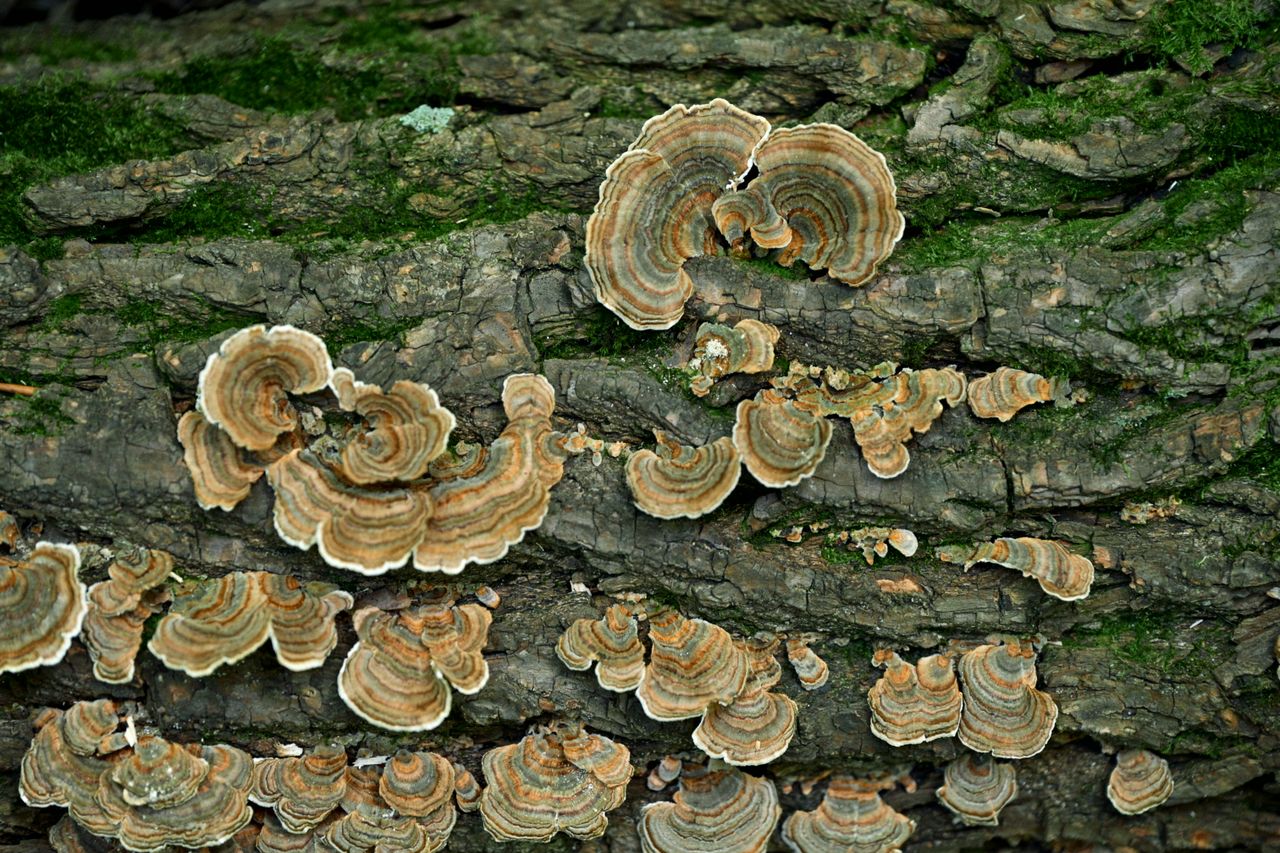
Turkey tail (Trametes versicolor) and reishi (Ganoderma lucidum) are both woody bracket fungi sold for immune support, but their evidence differs. Turkey tail’s best data come from PSK, a standardised extract used alongside chemotherapy in Japan. Reishi’s come from small, low-quality trials. Neither supplement is FDA-approved, and drug-grade extract results do not transfer to capsules.
That distinction is the most important thing on this page. Much of the marketing for turkey tail borrows the credibility of PSK trials in gastric and colorectal cancer, while the product on sale is usually a powder or extract of unknown similarity to PSK. Reishi marketing, meanwhile, often leans on tradition and laboratory findings.
Below we compare the two fungi on chemistry, the quality of the human evidence, safety and interactions, legal status, and what to check on a label.
At a glance
| Property | Turkey tail | Reishi |
|---|---|---|
| Species | Trametes (formerly Coriolus) versicolor | Ganoderma lucidum; many products are G. lingzhi |
| Appearance | Thin, banded, multicoloured bracket | Thick, glossy, reddish bracket |
| Compounds studied | Protein-bound polysaccharides (PSK, PSP), beta-glucans | Triterpenes (ganoderic acids), beta-glucans |
| Drug-grade extract | PSK approved for cancer use in Japan | None |
| Strongest human evidence | PSK trials alongside chemotherapy | Two Cochrane reviews of small trials |
| Taste | Mild, earthy | Very bitter |
| Reported side effects | Dark stools, darkened nails | Nausea, insomnia, dry mouth; rare liver injury |
| Interaction flags | Chemotherapy (discuss with oncologist) | Anticoagulants, immunosuppressants, possible CYP effects |
| US status | Dietary supplement; not FDA-approved for any condition | Dietary supplement; not FDA-approved for any condition |
What turkey tail and reishi are
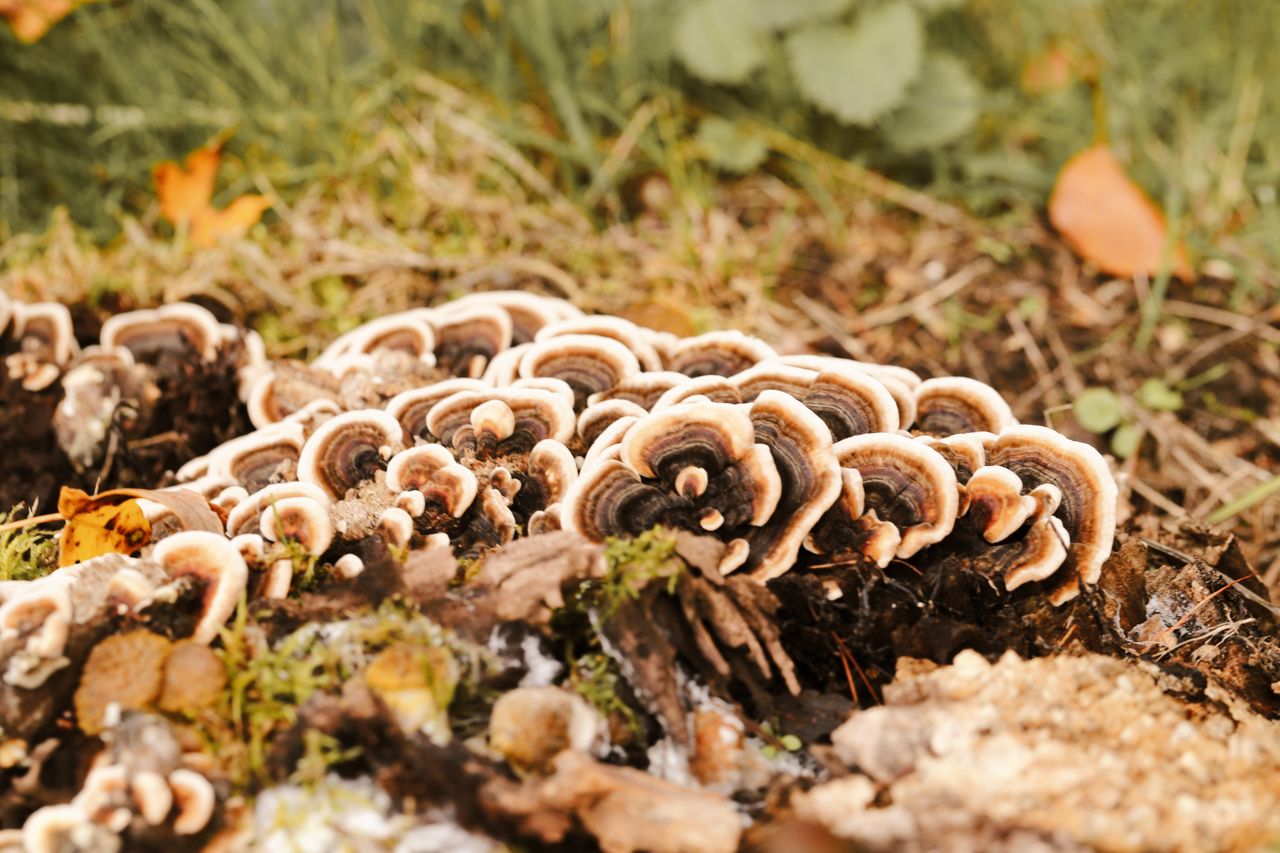
Turkey tail is one of the most common bracket fungi in the world. It forms thin, leathery, fan-shaped layers with concentric bands of brown, grey, blue and cream, much like a turkey’s tail feathers. It is known as kawaratake in Japan and yun zhi in China.
Its best studied compounds are protein-bound polysaccharides. Two extracts matter most: polysaccharide-K (PSK, also called krestin), developed in Japan, and polysaccharopeptide (PSP), produced in China.1 Both are more defined than a typical supplement powder.
Reishi is thicker, glossy and reddish-brown, and far more bitter. Its main compounds are triterpenes, such as ganoderic acids, and polysaccharides including beta-glucans. Reishi products are often “dual extracts” made with both hot water and alcohol to capture both groups.
Both are too tough to eat as food. Both are therefore sold as teas, powders, capsules or liquid extracts, and the processing determines much of what ends up in the product.
PSK: why turkey tail’s evidence looks stronger than it is for supplements
According to the US National Cancer Institute, PSK is an approved mushroom product used for cancer treatment in Japan and has been used as an add-on cancer treatment since the mid-1970s.1 A 2007 meta-analysis pooled eight randomised trials with 8,009 people who had surgery for gastric cancer. Adding PSK to chemotherapy was associated with longer overall survival, with a hazard ratio of 0.88.2
A 2022 Cochrane review of colorectal cancer included seven trials with 1,569 participants, six of them in Japan, all using an extract. It found very low-certainty evidence on side effects of chemotherapy and low-certainty evidence of a small improvement in five-year survival. The reviewers noted that the chemotherapy regimens used do not reflect current practice.3
Three cautions follow. These are trials of a specific, standardised extract given alongside chemotherapy, not of turkey tail supplements on their own. Most were run in Japan decades ago. And the benefit, where present, was modest. None of this supports using turkey tail in place of cancer treatment.
A small US phase 1 trial gave a turkey tail preparation to nine women with breast cancer after radiotherapy and reported it was well tolerated, with some changes in immune cell counts.4 Phase 1 trials test safety, not benefit.
PSP, the Chinese extract, has a smaller literature. Memorial Sloan Kettering summarises studies in which PSP was combined with chemotherapy in advanced non-small cell lung cancer and reported slower progression, but these were small trials of a specific extract rather than of retail turkey tail.5
What reishi research has shown
A 2016 Cochrane review found five randomised trials of reishi in people with cancer, of generally poor quality. Reishi given with chemotherapy or radiotherapy was associated with better tumour response and small rises in some immune cell counts, but no trial measured long-term survival. The reviewers found insufficient evidence to justify reishi as a first-line treatment.6
A 2015 Cochrane review of cardiovascular risk factors, covering five trials and 398 participants, found no significant effect on HbA1c, cholesterol or blood pressure in people with type 2 diabetes.7 Memorial Sloan Kettering’s summary adds small studies on urinary symptoms in men and limited data on fatigue and anxiety.8
So both fungi have cancer-adjunct data, but turkey tail’s rest on a drug-grade extract with larger trials, while reishi’s rest on smaller, weaker trials. It is worth being precise about what the immune findings mean. A rise of a few percentage points in a type of white blood cell is a laboratory measure. It does not show fewer infections, slower cancer growth or longer life, which are the outcomes that matter to patients. For a parallel story about a mushroom extract used in Japanese oncology, see our review of shiitake, lentinan and AHCC.
How they are used in practice
Turkey tail is mild and earthy, so it is often sold as a tea or plain powder. Reishi’s bitterness pushes it into capsules, tinctures or heavily flavoured drinks, and it is usually marketed for calm and evening use rather than immunity alone.
Many buyers of turkey tail are people living with cancer. That creates a specific responsibility: anything taken during chemotherapy, radiotherapy or immunotherapy should be discussed with the oncology team, because interactions with treatment are poorly studied, and trial results for a drug-grade extract say little about what a retail product will do alongside a modern regimen. Some oncology services have specific policies on supplements during treatment, and following them is part of staying safe.
Neither fungus produces a noticeable acute effect. Any benefit that exists would not be something a user could feel from day to day.
Safety, side effects and interactions
Memorial Sloan Kettering lists mostly minor effects for turkey tail extracts: dark stools, darkened fingernails, and low-grade blood and digestive side effects when combined with chemotherapy. It advises that pregnant or breastfeeding women avoid it until safety data exist.5 In the phase 1 breast cancer trial, nine adverse events were reported, one of them severe.4
Reishi has a more distinctive signal. A 2004 Hong Kong report linked a reishi formulation to hepatotoxicity,9 and a 2007 Thai report described fatal fulminant hepatitis after a patient switched from boiled reishi to a powder.10 Case reports cannot prove that reishi caused the injury, since other medicines or contaminants may have contributed, but they justify stopping and seeking advice if symptoms such as dark urine or yellowing skin appear. Memorial Sloan Kettering lists these interactions:8
- Anticoagulants and antiplatelets: possible added bleeding risk.
- Immunosuppressants: reishi may enhance immune responses and work against them.
- Liver enzymes: in vitro inhibition of several CYP enzymes; clinical relevance unknown.
- Autoimmune skin disease: may be triggered or worsened.
Both are marketed as immune-active, so anyone on immunosuppressants after a transplant or for autoimmune disease should ask their specialist first. Neither is a target of standard drug tests.
Legal status in September 2026
United States: turkey tail and reishi are sold as dietary supplements. Neither is scheduled, and the FDA has not approved turkey tail extracts or reishi as cancer treatments or for any other condition.5,1
Japan: PSK has approved status for cancer use, which is why it appears in so many Japanese trials.
United Kingdom: both are sold as food supplements and cannot carry medicinal claims.
Canada: products with health claims are regulated as natural health products; licensed products carry an eight-digit Natural Product Number (NPN).
What to check before buying
A supplement labelled turkey tail is not PSK, and nothing on a typical label shows how close it comes. The same problem affects reishi. Of 19 reishi supplements bought online in the US, only 5 matched their labels, and starch-like polysaccharides were found in 13.11
Starch often comes from mycelium grown on grain and sold with the grain. The beta-glucan method published by McCleary and Draga, used in the Megazyme kit, measures total glucan and alpha-glucan separately and reports beta-glucan as the difference.12 A “polysaccharides” figure on its own can include starch.
- Latin name and the part used: fruiting body, mycelium, or mycelium with grain.
- Beta-glucan by a named method, with alpha-glucan or starch reported.
- For reishi dual extracts, a triterpene figure.
- Wording that implies a product is PSK or PSP when it is not.
- A batch-matched certificate of analysis covering heavy metals and microbes.
Our guides to signs a brand is third-party tested, functional mushroom label problems in 2026 and the functional mushroom research overview go further.
Frequently asked questions
Can you take turkey tail and reishi together?
Many immune blends contain both, and there is no known direct interaction between them. There is also no research on the combination. The practical concerns are reishi’s interaction flags with blood thinners and immunosuppressants, and the need for anyone in cancer treatment to clear any supplement with their oncology team first.
Is turkey tail approved to treat cancer?
Not in the US, the UK or Canada. In Japan, a specific turkey tail extract called PSK has approved status and has been used alongside chemotherapy since the 1970s.1 Turkey tail supplements sold in shops are not PSK, and the FDA has not approved turkey tail extracts as cancer treatments.
What is PSK?
PSK, or polysaccharide-K (krestin), is a protein-bound polysaccharide extract of turkey tail developed in Japan. In a meta-analysis of eight trials in 8,009 people after gastric cancer surgery, adding PSK to chemotherapy was linked to modestly longer survival.2 Those results apply to PSK in that setting, not to general turkey tail supplements.
Does turkey tail have side effects?
Reported side effects are mostly minor, including dark stools and darkened fingernails, with low-grade blood and digestive effects when combined with chemotherapy. Memorial Sloan Kettering advises avoiding it during pregnancy and breastfeeding because safety data are lacking.5 Anyone in cancer treatment should mention it to their care team.
Should turkey tail be taken during chemotherapy?
That is a decision for the oncology team, not a supplement label. The positive trials used a specific extract, PSK, with chemotherapy regimens that are now largely outdated, and the Cochrane reviewers could not say whether side effects came from the chemotherapy or the extract. Full disclosure of every supplement lets clinicians weigh any risk against the specific treatment being given.
Is turkey tail or reishi better for immunity?
Neither has been shown to strengthen immunity in healthy people. Both have been studied mainly as add-ons to cancer treatment, with turkey tail’s PSK extract having the larger trials and reishi’s trials being small and of low quality. Changes in immune cell counts in a trial are not the same as fewer infections or better health.
Sources
- PDQ Integrative, Alternative, and Complementary Therapies Editorial Board. Medicinal Mushrooms (PDQ®), Health Professional Version. National Cancer Institute. Updated 2024. cancer.gov
- Oba K, Teramukai S, Kobayashi M, Matsui T, Kodera Y, Sakamoto J. Efficacy of adjuvant immunochemotherapy with polysaccharide K for patients with curative resections of gastric cancer. Cancer Immunol Immunother. 2007;56(6):905-911. DOI: 10.1007/s00262-006-0248-1. PMID: 17106715. pubmed.ncbi.nlm.nih.gov
- Pilkington K, Wieland LS, Teng L, Jin XY, Storey D, Liu JP. Coriolus (Trametes) versicolor mushroom to reduce adverse effects from chemotherapy or radiotherapy in people with colorectal cancer. Cochrane Database Syst Rev. 2022;11(11):CD012053. DOI: 10.1002/14651858.CD012053.pub2. PMID: 36445793. pubmed.ncbi.nlm.nih.gov
- Torkelson CJ, Sweet E, Martzen MR, Sasagawa M, Wenner CA, Gay J, et al. Phase 1 Clinical Trial of Trametes versicolor in Women with Breast Cancer. ISRN Oncol. 2012;2012:251632. DOI: 10.5402/2012/251632. PMID: 22701186. pubmed.ncbi.nlm.nih.gov
- Memorial Sloan Kettering Cancer Center. About Herbs: Coriolus versicolor. Updated 22 April 2026. mskcc.org
- Jin X, Ruiz Beguerie J, Sze DM, Chan GC. Ganoderma lucidum (Reishi mushroom) for cancer treatment. Cochrane Database Syst Rev. 2016;4(4):CD007731. DOI: 10.1002/14651858.CD007731.pub3. PMID: 27045603. pubmed.ncbi.nlm.nih.gov
- Klupp NL, Chang D, Hawke F, Kiat H, Cao H, Grant SJ, Bensoussan A. Ganoderma lucidum mushroom for the treatment of cardiovascular risk factors. Cochrane Database Syst Rev. 2015;2015(2):CD007259. DOI: 10.1002/14651858.CD007259.pub2. PMID: 25686270. pubmed.ncbi.nlm.nih.gov
- Memorial Sloan Kettering Cancer Center. About Herbs: Reishi Mushroom. Updated 5 May 2026. mskcc.org
- Yuen MF, Ip P, Ng WK, Lai CL. Hepatotoxicity due to a formulation of Ganoderma lucidum (lingzhi). J Hepatol. 2004;41(4):686-687. DOI: 10.1016/j.jhep.2004.06.016. PMID: 15464254. pubmed.ncbi.nlm.nih.gov
- Wanmuang H, Leopairut J, Kositchaiwat C, Wananukul W, Bunyaratvej S. Fatal fulminant hepatitis associated with Ganoderma lucidum (Lingzhi) mushroom powder. J Med Assoc Thai. 2007;90(1):179-181. PMID: 17621752. pubmed.ncbi.nlm.nih.gov
- Wu DT, Deng Y, Chen LX, Zhao J, Bzhelyansky A, Li SP. Evaluation on quality consistency of Ganoderma lucidum dietary supplements collected in the United States. Sci Rep. 2017;7(1):7792. DOI: 10.1038/s41598-017-06336-3. PMID: 28798349. pubmed.ncbi.nlm.nih.gov
- McCleary BV, Draga A. Measurement of β-Glucan in Mushrooms and Mycelial Products. J AOAC Int. 2016;99(2):364-373. DOI: 10.5740/jaoacint.15-0289. PMID: 26957216. pubmed.ncbi.nlm.nih.gov
Editorial note: This article is for general information only and is not medical or legal advice. Turkey tail and reishi have not been evaluated by the FDA to diagnose, treat, cure or prevent any disease. Laws vary by location and change often, so verify the rules that apply where you are. Always talk to a licensed healthcare provider before use, especially if you are under 21, pregnant or nursing, taking medication, or managing a health condition.
More comparisons