


This article is for educational purposes only and does not constitute medical advice.
Introduction
Kratom occupies a complicated legal gray area in the United States — not federally controlled, but regulated or restricted differently across states. The Kratom Consumer Protection Act (KCPA) represents an alternative regulatory approach: rather than banning kratom outright, it establishes safety, labeling, and testing standards for kratom products sold to consumers. For a full picture of where kratom currently stands legally, see our Kratom Legal Status by State guide.
What Is the KCPA?
The Kratom Consumer Protection Act is a model legislative framework governing the sale and distribution of kratom products. Its primary objective is consumer protection — ensuring products meet quality and safety standards through labeling requirements, age restrictions, and third-party lab testing. The FDA has raised concerns about kratom’s safety and the absence of regulatory oversight — the KCPA is a direct response to those concerns at the state level. The American Kratom Association has been a prominent advocacy organization behind its development.
Which States Have Adopted It?
Several U.S. states have enacted versions of the KCPA, though the extent of adoption varies. Some have adopted the act in full; others have enacted modified versions. Legal frameworks are also subject to change. Always verify current legal status in your jurisdiction — our state-by-state legal guide is updated regularly with current status information.
Key Provisions
Labeling Requirements
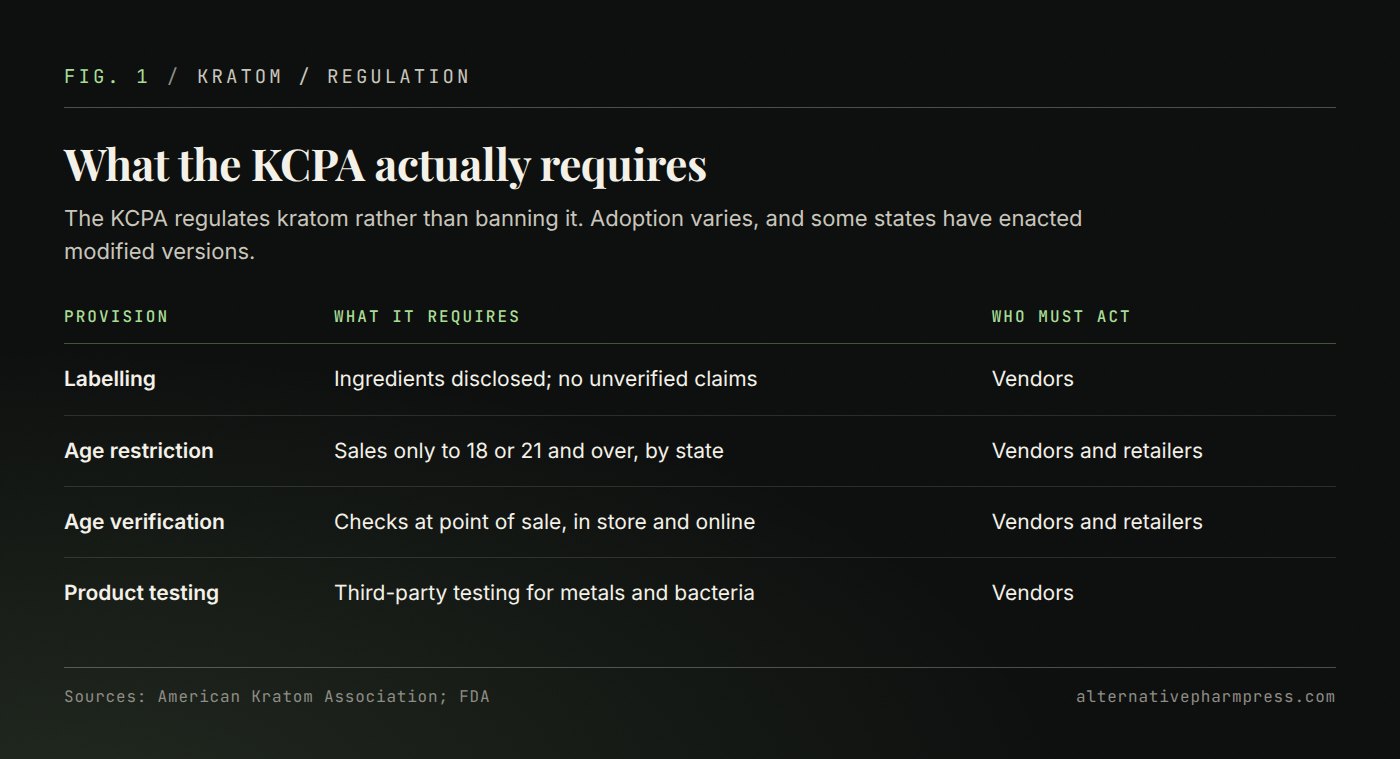
The KCPA requires vendors to clearly disclose product ingredients and prohibits unverified or overstated claims. Accurate labeling is also important for buyers who review Certificates of Analysis — see our COA reading guide for how to evaluate testing documentation.
Age Restrictions
Under most KCPA versions, kratom products may only be sold to individuals 18 or 21 and older, depending on the state. Age verification is typically required at the point of sale, both in physical stores and online.
Product Testing & Quality Control
Vendors operating under KCPA are required to ensure products are free of harmful contaminants including heavy metals and bacteria. Third-party lab testing is central to this requirement. Research published on PubMed has examined quality and contamination issues in kratom products.
What the KCPA Means for Buyers
For consumers, KCPA adoption means products in regulated states are more likely to meet minimum quality standards, carry accurate labels, and be backed by third-party testing. Understanding product labels and COA documentation is a useful skill — our COA guide walks through how to evaluate lab reports.
What the KCPA Means for Vendors
Vendors must comply with labeling standards, ensure products meet purity and safety requirements through third-party testing, and implement age verification processes — particularly for online sales. These requirements increase operational standards and compliance costs, but can also build consumer trust.
Advocacy Organizations
Organizations such as the American Kratom Association (AKA) have played a significant role in developing and promoting the KCPA, advocating for a regulatory approach that maintains consumer access while prioritizing safety and transparency.
Current Status
KCPA adoption continues to evolve. Some states have enacted it fully; others are considering similar frameworks. Staying informed about changes in your area is important — our legal status guide is the best resource for current state-by-state information.
Key Takeaways
- The KCPA regulates kratom rather than banning it — focusing on labeling, age restrictions, and product testing.
- Multiple states have adopted versions, with variation across jurisdictions.
- Buyers benefit from increased transparency and product quality standards in regulated states.
- Vendors must meet labeling, testing, and age verification requirements.
- The KCPA legal landscape continues to change — check current state laws before purchasing or selling.
Educational and informational content only. Not legal or medical advice. Kratom laws vary by state and are subject to change. Always verify the legal status of kratom in your jurisdiction before purchasing. These statements have not been evaluated by the FDA.