
This article is for educational purposes only and does not constitute medical advice.
Introduction
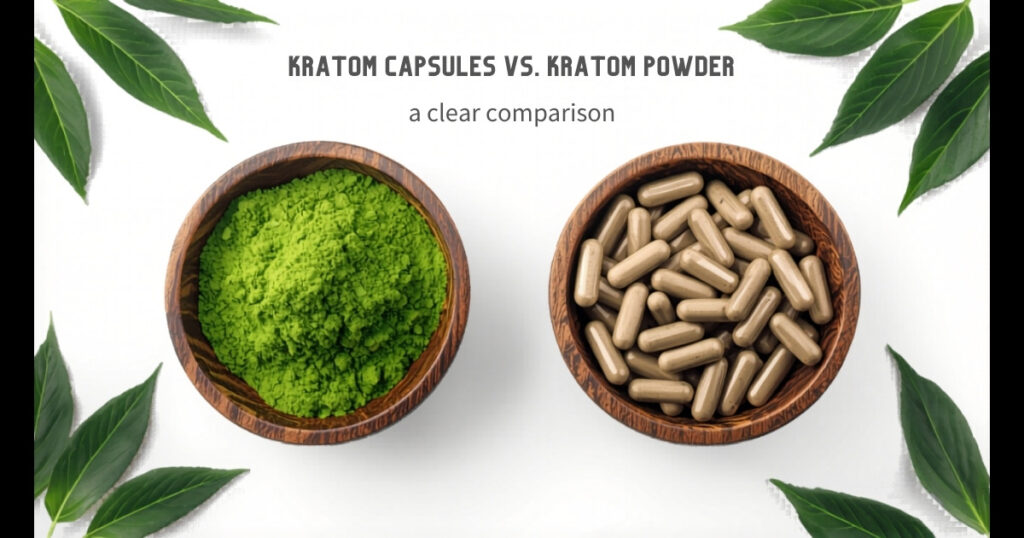
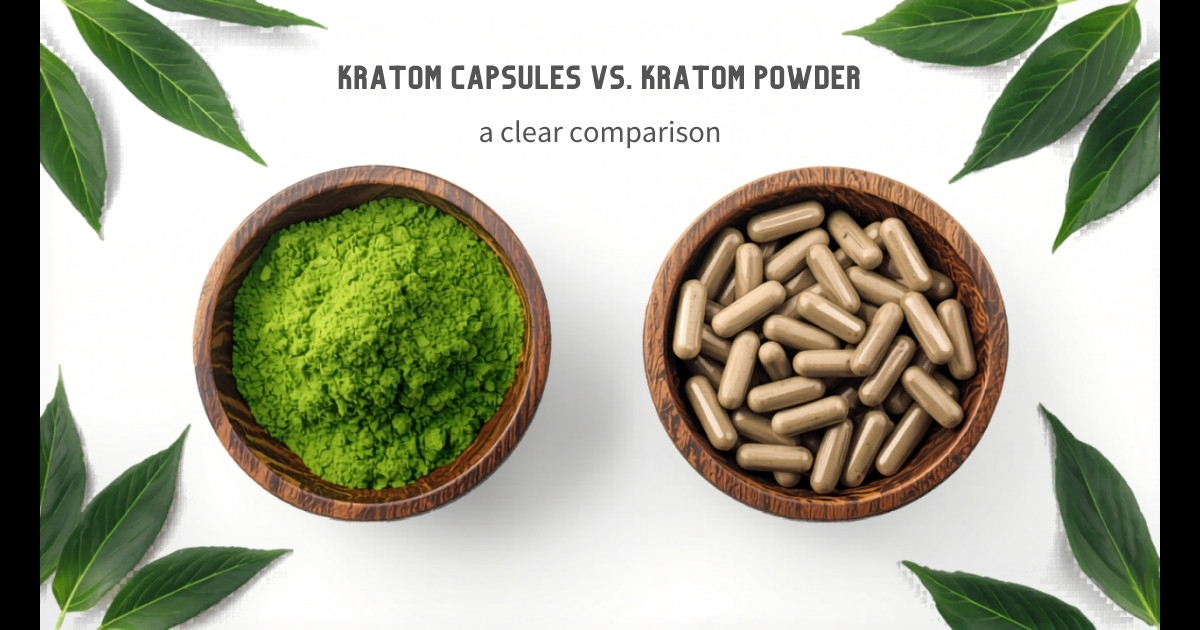
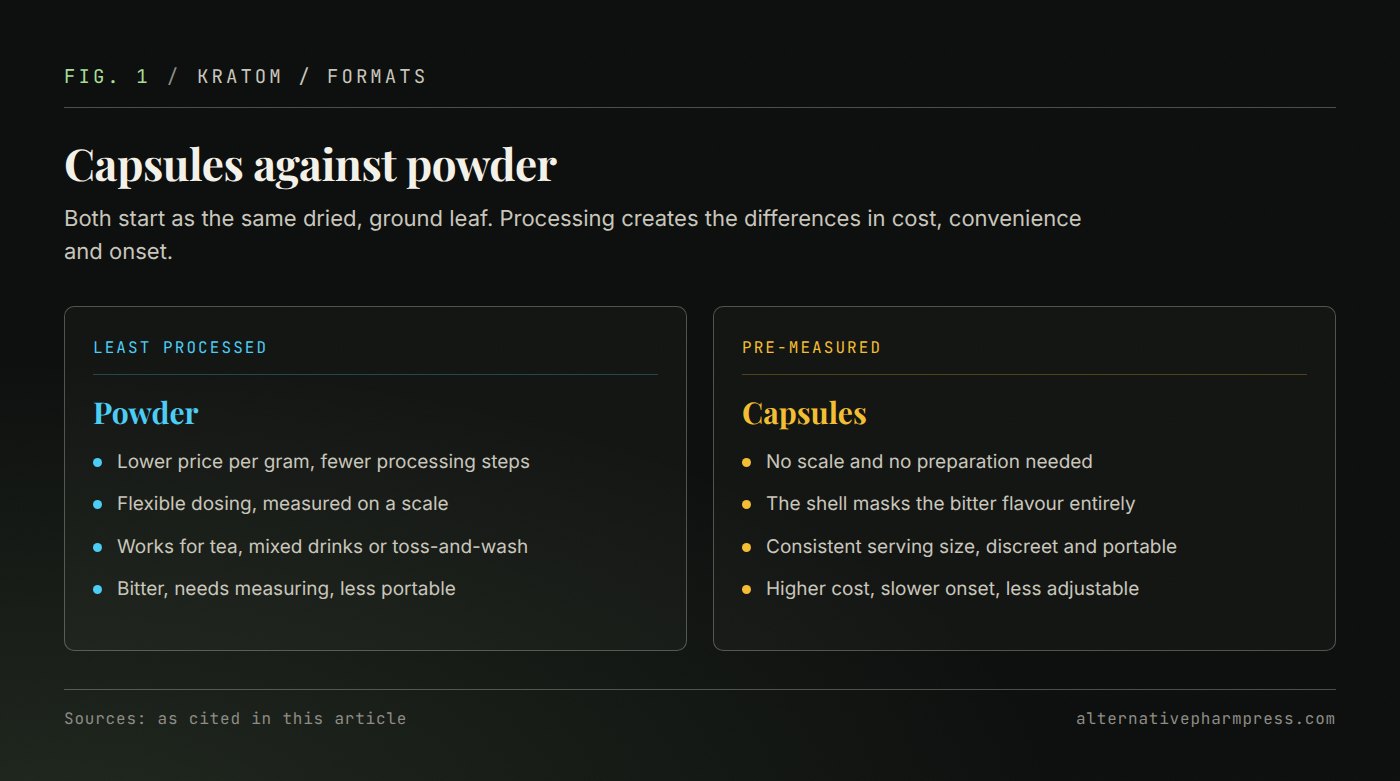
Capsules and powder are the two most popular kratom formats. Both originate from the same dried and ground kratom leaf, but how they are processed and consumed creates real differences in cost, convenience, and onset. If you are new to kratom, start with our Kratom Guide for Beginners before comparing formats.
Kratom Powder: Overview
Kratom powder is the most traditional and least processed form — dried leaves ground to a fine consistency. It can be mixed with liquids, brewed into tea, or measured into capsules at home. For a deeper look at how raw leaf becomes powder, see our guide on how kratom is processed. Scientific literature on PubMed has examined how alkaloid composition and absorption can vary across kratom forms.
Powder: Pros
- Cost-effective — fewer processing steps typically mean a lower price per gram.
- Flexible dosing — users can measure specific amounts with a scale, allowing fine adjustments.
- Versatile — works for teas, mixed drinks, or toss-and-wash methods.
- Faster potential onset — no capsule shell to dissolve first.
Powder: Cons
- Bitter taste — kratom powder has a strong, earthy flavor many find unpleasant.
- Requires measuring equipment — a scale or measuring spoon is needed for consistency.
- Less portable — loose powder is not as travel-friendly as pre-filled capsules.
Kratom Capsules: Overview
Capsules contain a pre-measured amount of kratom powder (or extract) sealed inside a gelatin or plant-based shell. They eliminate the taste and the measuring step. For the difference between standard-powder capsules and extract capsules, see our kratom extract vs powder guide.
Capsules: Pros
- Convenient and portable — no scale or preparation needed.
- Tasteless — the shell masks kratom’s bitter flavor entirely.
- Consistent serving size — each capsule contains the same amount, removing guesswork.
- Discreet — capsules look like any standard supplement.
Capsules: Cons
- Higher cost — extra processing and packaging increase price per gram.
- Slower onset — the capsule shell must dissolve before contents are absorbed.
- Less adjustable — changing the amount means adding or removing full capsules rather than fine-tuning grams.
Extract Capsules
Extract capsules use a more concentrated form of kratom. They are generally more expensive, and potency can vary across products. See our kratom extract vs powder guide.
Cost Per Serving Comparison
Powder is generally less expensive per gram. Our best kratom powder buying guide covers what to look for when evaluating value.
Which Format Suits Which Lifestyle?
Capsules suit people who prioritize convenience and want a tasteless, no-prep option. Powder suits people who want flexibility, cost savings, or prefer traditional methods like tea. The right choice is personal.
Key Takeaways
- Capsules offer convenience, consistent serving size, and no taste — at a higher price.
- Powder offers flexibility, lower cost, and faster potential onset — with more preparation required.
- Extract capsules are more concentrated and distinct from standard capsules or plain powder.
- The best format depends on lifestyle, priorities, and comfort with preparation.
Educational and informational content only. Not medical advice. These statements have not been evaluated by the FDA. For adult use only. Verify legal status in your state before purchasing.