
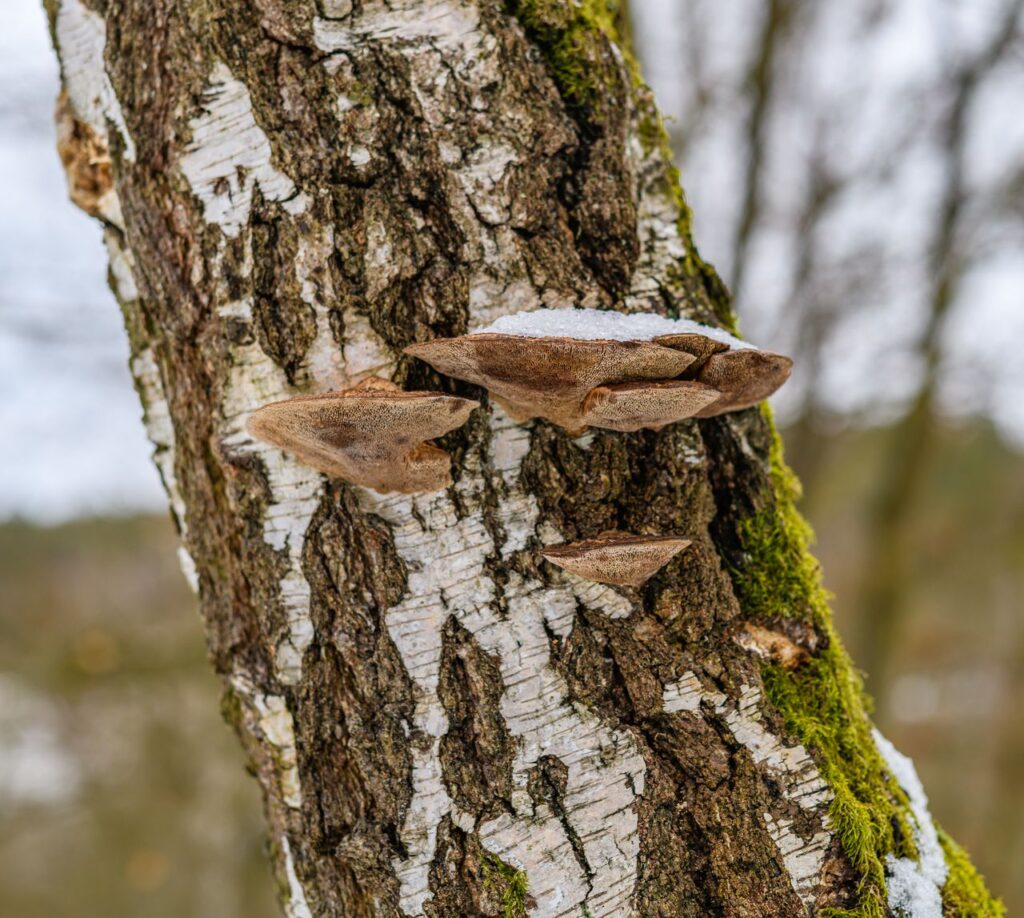
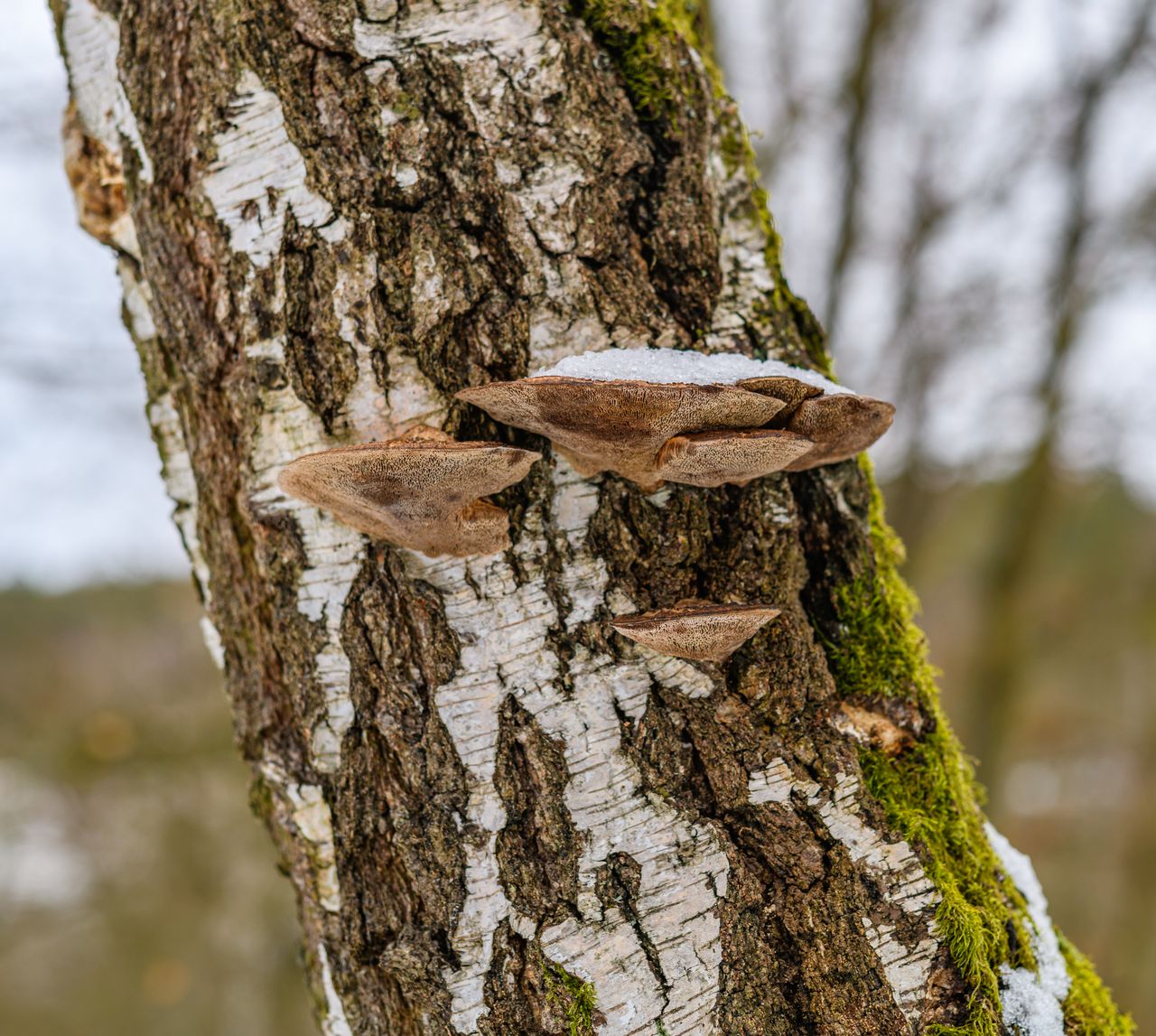
Chaga (Inonotus obliquus) is not a mushroom cap but a black, charcoal-like canker that grows on birch trees. Reishi (Ganoderma lucidum) is a shiny bracket fungus. Chaga has no published human clinical trials and a serious kidney warning linked to its high oxalate content. Reishi has small trials, two Cochrane reviews and rare liver-injury reports.
Both are sold as tea, powder and capsules, and both are marketed with words like “antioxidant” and “immune support”. Those labels hide large differences in what the fungi contain, how they are harvested, how much human research exists and what can go wrong.
This page compares the two on chemistry, research, safety, legal status and product quality, including a 2025 analysis showing that many products sold as chaga are largely fermented grain.
At a glance
| Property | Chaga | Reishi |
|---|---|---|
| Species | Inonotus obliquus | Ganoderma lucidum; many products are G. lingzhi |
| Part used | Sterile canker (sclerotium) on birch | Fruiting body; also spores and mycelium |
| Source | Mostly wild-harvested | Mostly cultivated |
| Compounds studied | Melanin, triterpenoids (inotodiol), phenolics | Triterpenes (ganoderic acids), beta-glucans |
| Human clinical trials | None published | Small trials; two Cochrane reviews |
| Main safety signal | Oxalate kidney injury case reports | Liver injury case reports |
| Interaction flags | Anticoagulants, diabetes medicines (preclinical) | Anticoagulants, immunosuppressants, possible CYP effects |
| Common label problem | Mycelium on grain sold as chaga | Starch filler; label mismatch |
| US status | Dietary supplement; not FDA-approved for any condition | Dietary supplement; not FDA-approved for any condition |
What chaga and reishi actually are
Chaga grows mainly on birch in cold northern forests. The part harvested is a hard, cracked, black mass with a rusty orange interior. It is a sterile growth of the fungus rather than a fruiting body, which is why it is often called a canker or conk. Its dark colour comes from melanin, and it contains triterpenoids such as inotodiol and trametenolic acid, plus phenolic compounds.2
Genuine chaga canker is essentially a wild product. Material grown in a lab is mycelium, usually fermented on grain, and it is chemically different, as covered below.
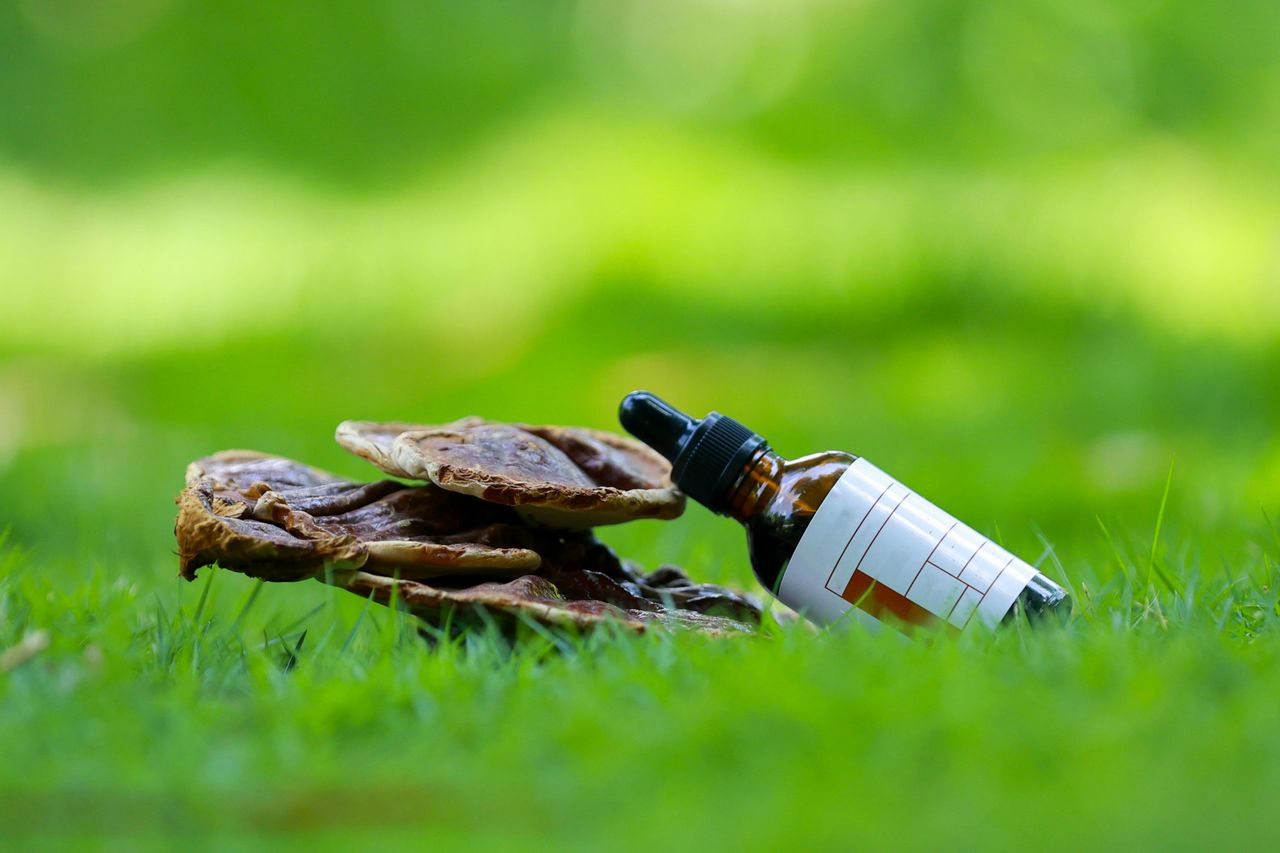
Reishi is a glossy, reddish-brown bracket fungus that is widely cultivated on logs and substrates. It is too woody to eat and very bitter. Its main compound groups are triterpenes, such as ganoderic acids, and polysaccharides including beta-glucans. The two fungi overlap only in that both are hard, both are usually brewed or extracted, and both are sold as “immune” products.
That shared marketing language is the main reason people compare them. Chemically, they share little: chaga’s profile is dominated by melanin, phenolics and triterpenoids such as inotodiol, while reishi’s is dominated by its own bitter triterpenes and beta-glucans.
What research has examined
Chaga: laboratory and animal work only
Memorial Sloan Kettering’s clinical summary is blunt: the safety and efficacy of chaga have yet to be evaluated in clinical studies.1 The research base consists of cell and animal studies on antioxidant activity, blood sugar and immune signalling. Those studies can suggest mechanisms, but they cannot show that chaga tea or capsules do anything measurable in people.
The gap between the lab and the body is large. Cell studies often apply purified extracts directly to cells at concentrations that may never be reached after drinking a tea, and they skip digestion, absorption and metabolism entirely. Antioxidant scores measured in a test tube say little about what happens after a compound is swallowed.
Reishi: small human trials of mixed quality
A 2016 Cochrane review found five randomised trials in people with cancer, all of generally poor methodological quality. Reishi used alongside chemotherapy or radiotherapy was associated with better tumour response and small rises in some immune cell counts, but no trial measured long-term survival, and the evidence did not justify reishi as a first-line treatment.7
A 2015 Cochrane review of cardiovascular risk factors, with five trials and 398 participants, found no significant effect on HbA1c, cholesterol or blood pressure in people with type 2 diabetes.8 For context on how other mushroom compounds have fared in trials, see our review of shiitake, lentinan and AHCC.
How they are used and what users report
Chaga has a long folk history in Russia, Finland and other northern regions as a tea and coffee substitute. It brews dark with an earthy, slightly vanilla taste, and it contains no caffeine. Modern marketing leans on antioxidant scores and immune claims that have not been tested in human trials.
Reishi is usually sold for calm and evening use, in capsules or strongly flavoured drinks to mask its bitterness. Users describe mild relaxation, though controlled human data on sleep and mood are sparse.
The practical difference that matters most is how people use them. Chaga is often drunk daily as a tea over long periods, sometimes in large amounts. That pattern, rather than any single cup, is what appears in the kidney case reports.

Evidence quality side by side
| Question | Chaga | Reishi |
|---|---|---|
| Randomised human trials? | None published1 | Yes, small and low quality7,8 |
| Systematic reviews? | No clinical reviews possible | Two Cochrane reviews |
| Main evidence type | Cell and animal studies | Small trials, often in East Asia |
| Serious harm reports | Kidney (oxalate) | Liver |
Reishi’s evidence is weak; chaga’s is essentially absent in humans. When a product page lists “benefits” of chaga, it is extrapolating from laboratory work. When it lists reishi benefits, it is usually citing trials whose own authors called for better studies.
Our functional mushroom research overview puts both in context with other popular species.
Safety: chaga’s oxalate problem, reishi’s liver reports and interactions
Chaga and the kidneys
Chaga is very high in oxalate, the compound that forms calcium oxalate crystals in kidney stones. Three published cases show what that can mean. A 72-year-old woman in Japan who took chaga powder daily for six months developed oxalate nephropathy and needed haemodialysis.3 A 49-year-old Korean man who used chaga long term for atopic dermatitis reached end-stage kidney disease; the leftover chaga tested extremely high in oxalate.4 A 69-year-old man taking chaga powder and vitamin C for three months developed acute kidney injury that recovered with dialysis and steroids.5
Three cases do not establish how common this is, but the mechanism is plausible and the outcomes were severe. People with kidney disease, a history of oxalate kidney stones, or high vitamin C intake have the strongest reason for caution. Vitamin C matters here because the body converts part of it to oxalate, and one of the three patients was taking both. Kidney damage can progress without obvious symptoms, and in all three cases the diagnosis rested on blood tests and a kidney biopsy. Memorial Sloan Kettering also notes that chaga inhibited platelet aggregation in mice and lowered blood sugar in vitro, so anticoagulants and diabetes medicines are theoretical concerns.1
Reishi and the liver
A 2004 Hong Kong report linked a reishi formulation to hepatotoxicity.9 A 2007 Thai report described fatal fulminant hepatitis after a patient switched from boiled reishi to a powder.10 Memorial Sloan Kettering lists interactions with anticoagulants and immunosuppressants and in vitro inhibition of several CYP liver enzymes.6
Neither fungus is a target of standard drug tests.
Legal status in September 2026
United States: both are sold as dietary supplements. Neither is scheduled or FDA-approved to treat any condition, and labels are limited to structure or function statements.
United Kingdom: both are sold as food supplements or teas and cannot carry medicinal claims.
Canada: products with health claims are regulated as natural health products; licensed products carry an eight-digit Natural Product Number (NPN).
Because genuine chaga is wild-harvested, its supply depends on foraging rather than farming, which makes provenance and species identity worth checking.
Spotting grain filler and checking a label
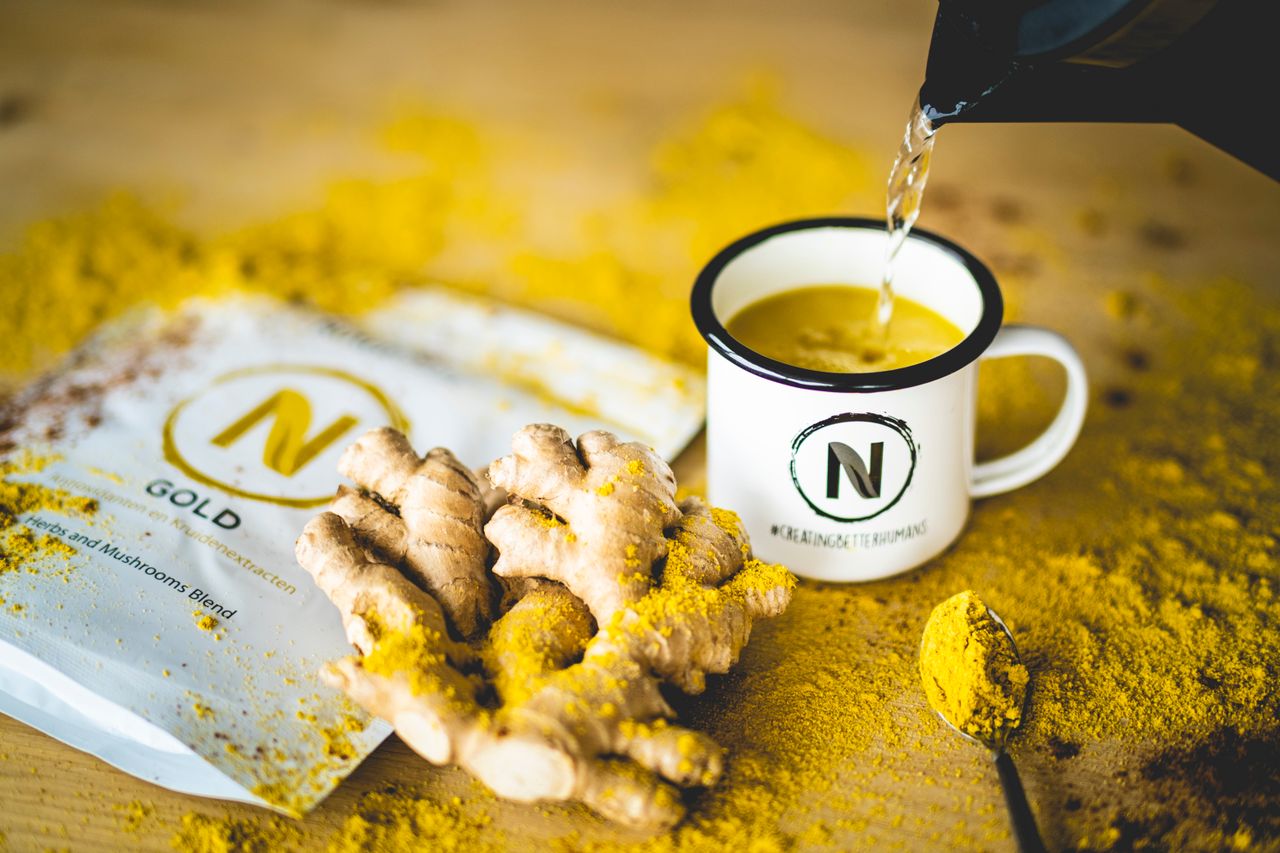
A 2025 study compared wild chaga canker with North American chaga supplements, including mycelium fermented on grain. Genuine canker contained triterpenoids, phenolics and melanin; the grain products were starch-rich, lacked key triterpenoids and chemically resembled their grain substrate.2 The authors work for an extract supplier that sells canker-based chaga, so the study has a commercial interest, although its starch finding matches independent testing of other mushroom supplements.
Reishi has a similar problem. Of 19 reishi supplements bought online in the US, only 5 matched their labels, and starch-like polysaccharides were found in 13.11 The beta-glucan method from McCleary and Draga, used in the Megazyme kit, measures total glucan and alpha-glucan separately, so starch cannot be passed off as beta-glucan.12
- Chaga: canker (sclerotium) or mycelium? If mycelium, is the grain included?
- Reishi: fruiting body, spores or mycelium, and which Ganoderma species.
- Beta-glucan by a named method, with alpha-glucan or starch reported.
- For chaga, an oxalate figure is rarely given; its absence is worth noting.
- A batch-matched certificate of analysis covering heavy metals and microbes.
Our guides to signs a brand is third-party tested and functional mushroom label problems in 2026 cover the wider market.
Frequently asked questions
Can you take chaga and reishi together?
Some blends combine them, and there is no known direct interaction between the two. There is also no research on the combination. The relevant risks are each fungus’s own: chaga’s oxalate load for the kidneys and reishi’s interaction flags with blood thinners and immunosuppressants. Anyone on prescription medicines or with kidney or liver problems should speak to a clinician first.
Is chaga bad for your kidneys?
Chaga is very high in oxalate, and published case reports describe serious kidney injury in people who took chaga daily for months, including one who reached end-stage kidney disease.4 How often this happens is unknown. People with kidney disease or a history of kidney stones have the strongest reason to avoid long-term or concentrated use.
Is it safe to drink chaga tea every day?
There are no human trials establishing a safe long-term intake. The kidney cases involved daily use over months, often of concentrated powders. Occasional tea is a different exposure from daily powder, but no study has defined a threshold. Anyone who drinks it regularly and has kidney concerns should discuss it with a doctor.
Does chaga contain caffeine?
No. Chaga is caffeine-free, which is one reason it is sold as a coffee substitute. Blended chaga coffees and drinks may add coffee, cacao or tea, so the ingredient list is the only reliable guide to what a product contains.
Does chaga boost the immune system?
No human trial has shown that chaga changes immune function in people. Immune claims come from cell and animal studies, which cannot show an effect in a person drinking tea or taking capsules. Because such products are marketed as immune-active, people on immunosuppressants after a transplant or for autoimmune disease should check with their specialist before using them.
Which has more research, chaga or reishi?
Reishi, by a clear margin. It has randomised human trials and two Cochrane reviews, although the trials are small and the reviews found weak or null results.7,8 Chaga has no published clinical trials; its supposed benefits come from cell and animal studies.
Sources
- Memorial Sloan Kettering Cancer Center. About Herbs: Chaga Mushroom. Updated 20 February 2023. mskcc.org
- Windsor C, Kreynes AE, Chilton JS, Chioffi WA, Krishnamurthy A, Ishii M. Comparative Study of Chaga (Inonotus obliquus) Dietary Supplements Using Complementary Analytical Techniques. Int J Mol Sci. 2025;26(7):2970. DOI: 10.3390/ijms26072970. PMID: 40243601. pubmed.ncbi.nlm.nih.gov
- Kikuchi Y, Seta K, Ogawa Y, Takayama T, Nagata M, Taguchi T, Yahata K. Chaga mushroom-induced oxalate nephropathy. Clin Nephrol. 2014;81(6):440-444. DOI: 10.5414/CN107655. PMID: 23149251. pubmed.ncbi.nlm.nih.gov
- Lee S, Lee HY, Park Y, Ko EJ, Ban TH, Chung BH, et al. Development of End Stage Renal Disease after Long-Term Ingestion of Chaga Mushroom: Case Report and Review of Literature. J Korean Med Sci. 2020;35(19):e122. DOI: 10.3346/jkms.2020.35.e122. PMID: 32419395. pubmed.ncbi.nlm.nih.gov
- Kwon O, Kim Y, Paek JH, Park WY, Han S, Sin H, Jin K. Chaga mushroom-induced oxalate nephropathy that clinically manifested as nephrotic syndrome: A case report. Medicine (Baltimore). 2022;101(10):e28997. DOI: 10.1097/MD.0000000000028997. PMID: 35451393. pubmed.ncbi.nlm.nih.gov
- Memorial Sloan Kettering Cancer Center. About Herbs: Reishi Mushroom. Updated 5 May 2026. mskcc.org
- Jin X, Ruiz Beguerie J, Sze DM, Chan GC. Ganoderma lucidum (Reishi mushroom) for cancer treatment. Cochrane Database Syst Rev. 2016;4(4):CD007731. DOI: 10.1002/14651858.CD007731.pub3. PMID: 27045603. pubmed.ncbi.nlm.nih.gov
- Klupp NL, Chang D, Hawke F, Kiat H, Cao H, Grant SJ, Bensoussan A. Ganoderma lucidum mushroom for the treatment of cardiovascular risk factors. Cochrane Database Syst Rev. 2015;2015(2):CD007259. DOI: 10.1002/14651858.CD007259.pub2. PMID: 25686270. pubmed.ncbi.nlm.nih.gov
- Yuen MF, Ip P, Ng WK, Lai CL. Hepatotoxicity due to a formulation of Ganoderma lucidum (lingzhi). J Hepatol. 2004;41(4):686-687. DOI: 10.1016/j.jhep.2004.06.016. PMID: 15464254. pubmed.ncbi.nlm.nih.gov
- Wanmuang H, Leopairut J, Kositchaiwat C, Wananukul W, Bunyaratvej S. Fatal fulminant hepatitis associated with Ganoderma lucidum (Lingzhi) mushroom powder. J Med Assoc Thai. 2007;90(1):179-181. PMID: 17621752. pubmed.ncbi.nlm.nih.gov
- Wu DT, Deng Y, Chen LX, Zhao J, Bzhelyansky A, Li SP. Evaluation on quality consistency of Ganoderma lucidum dietary supplements collected in the United States. Sci Rep. 2017;7(1):7792. DOI: 10.1038/s41598-017-06336-3. PMID: 28798349. pubmed.ncbi.nlm.nih.gov
- McCleary BV, Draga A. Measurement of β-Glucan in Mushrooms and Mycelial Products. J AOAC Int. 2016;99(2):364-373. DOI: 10.5740/jaoacint.15-0289. PMID: 26957216. pubmed.ncbi.nlm.nih.gov
Editorial note: This article is for general information only and is not medical or legal advice. Chaga and reishi have not been evaluated by the FDA to diagnose, treat, cure or prevent any disease. Laws vary by location and change often, so verify the rules that apply where you are. Always talk to a licensed healthcare provider before use, especially if you are under 21, pregnant or nursing, taking medication, or managing a health condition.
More comparisons