
Lion’s mane is the functional mushroom most people try first, usually because they read that it might support focus. Fair enough. But the gap between a good lion’s mane product and a bad one is wider than almost any other supplement we cover, and the difference rarely shows up in the price. It shows up in two things: whether the brand tests its product through an independent lab, and whether it’s honest about beta-glucan content instead of hiding behind a vague “polysaccharide” number.
None of the brands below are in our directory, so we’re labeling every one an industry pick. We’re not vouching for them as verified partners. We’re ranking them on the only criteria that matter for this category: testing and beta-glucan transparency, plus the format that fits how you’d actually use it. Each gets a single “best for” so you can jump to the right one. As always, people take lion’s mane for focus and general wellness interest, and we make no health claims.
A quick refresher before the list
Two ideas decide whether a lion’s mane product is worth your money, and they apply to every brand here.
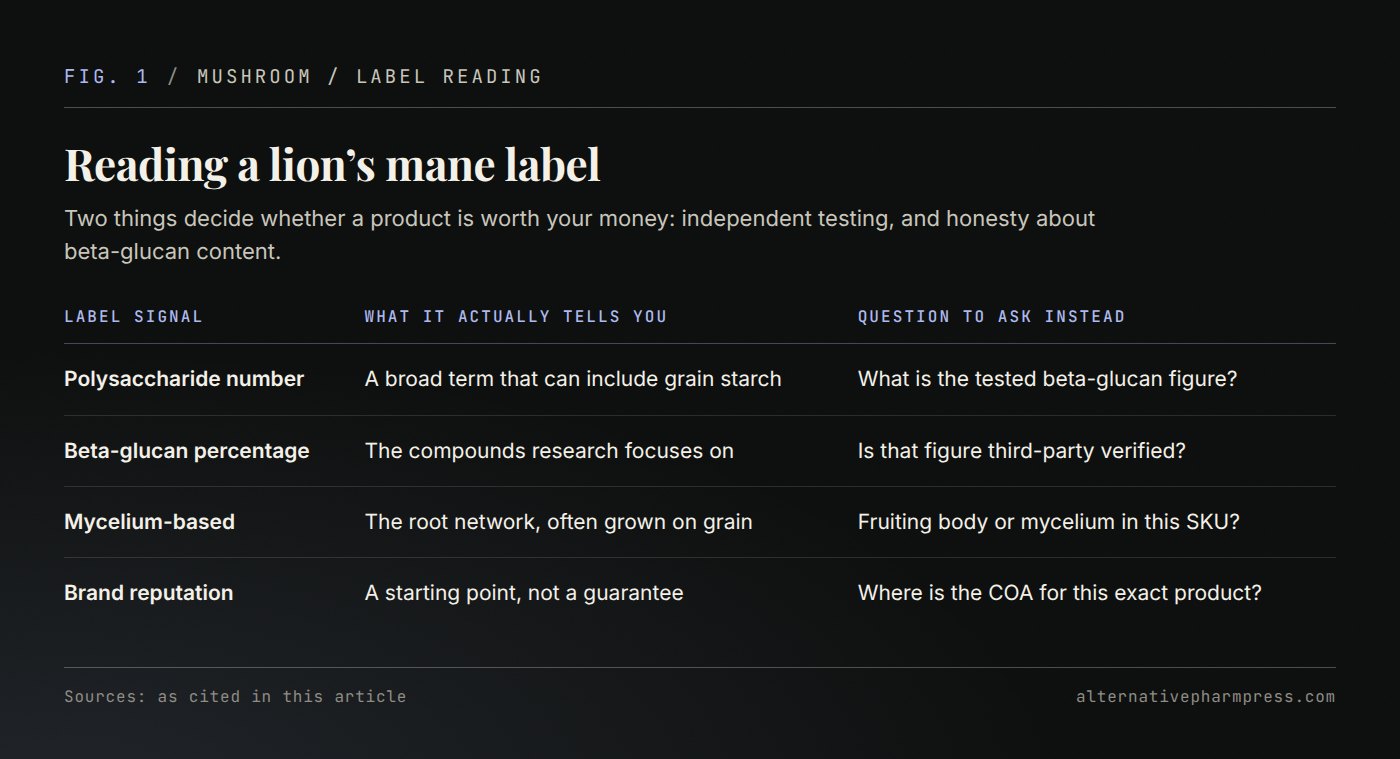
Fruiting body vs mycelium. The fruiting body is the actual mushroom. Mycelium is the root-like network, and in cheaper products it’s often grown on grain and ground up with that grain still in it, which can leave you with mostly starch. Fruiting-body extracts generally concentrate more of the studied compounds.
Beta-glucans vs “polysaccharides.” Beta-glucans are the specific fungal compounds research focuses on. “Polysaccharides” is a broad term that includes starch from grain, so a big polysaccharide number can be misleading. A stated, tested beta-glucan percentage is the honest measure. We walk through this in more detail in our functional mushrooms research roundup, and the signs a brand is third-party tested guide covers how to confirm the lab work.
One more habit worth building: read the label for the product you’re holding, not the brand in general. A company can sell an excellent fruiting-body extract and, on a different shelf, a cheaper blend that leans on mycelium or fillers. Brand reputation is a starting point, but the certificate of analysis for the exact SKU is what tells the truth. We’ve seen good brands with uneven lines, so check each product on its own.
Real Mushrooms (industry pick)
Best for verified beta-glucans.
Real Mushrooms is the brand we point to first when someone wants the transparency story done right. It’s fruiting-body only, hot-water extracted, and it publishes third-party verified beta-glucan content along with low starch figures, which is exactly the combination the previous section described. It has also been recognized by ConsumerLab, an independent tester, which is a meaningful outside check. If you only care about getting a verified, high-beta-glucan extract and don’t need a fancy format, this is the straightforward answer. The reason we rate it first isn’t loyalty, it’s that the brand publishes the numbers most companies leave vague, and an outside lab has weighed in. When a seller is willing to show low starch alongside a real beta-glucan figure, it usually means they have nothing to hide about how the product was grown and extracted.
Host Defense (industry pick)
Best for a mycology-led brand.
Host Defense was founded by mycologist Paul Stamets, and the brand’s whole identity is built around fungal science and organic cultivation. It’s worth understanding that Host Defense is mycelium-based rather than fruiting-body-focused, which is a deliberate philosophical choice on their part, not an oversight. If you trust the mycology-led approach and want a brand with deep expertise behind it, this is the recognizable name. Just go in knowing it’s a mycelium product, and weigh that against the fruiting-body preference we described above.
FreshCap (industry pick)
Best for everyday powders.
FreshCap uses whole fruiting body, is organic, and is third-party tested, which puts it squarely in the “no drama” tier. It’s the pick for someone who wants a reliable, fruiting-body powder to stir into coffee or a smoothie without thinking too hard about it. Nothing exotic, just the fundamentals done properly. For daily, low-fuss use, that’s often exactly what you want.
Four Sigmatic (industry pick)
Best for coffee and drink formats.
Four Sigmatic built its reputation on mushroom coffees and ready-to-drink blends, and it’s third-party tested. If you’d rather get your lion’s mane through a morning coffee than a capsule, this is the convenient route, and the taste is built to be pleasant rather than earthy. Because these are blends, check the label for how much lion’s mane each serving actually contains, since drink mixes can carry smaller amounts than a dedicated extract. For people who want habit and flavor over maximum potency, it’s a sensible fit.
Om Mushrooms (industry pick)
Best for US-grown sourcing.
Om Mushrooms grows its mushrooms in the United States and is organic, which appeals to buyers who want sourcing closer to home and more visibility into where the product comes from. If supply-chain transparency and domestic cultivation rank high for you, Om is the option that leans into that. As with any brand, confirm the current testing and the beta-glucan figure for the specific product you’re buying rather than assuming it across the whole catalog. Domestic growing can make sourcing easier to verify, but it doesn’t automatically guarantee a high extract concentration, so the COA still does the deciding work. For buyers who value knowing where their mushrooms were cultivated, Om gives a clearer answer than most.
Quick comparison
| Brand | Best for | Form | What to check |
|---|---|---|---|
| Real Mushrooms | Verified beta-glucans | Fruiting-body extract | Beta-glucan %, low starch, COA |
| Host Defense | Mycology-led brand | Mycelium-based | That it’s mycelium, organic certs |
| FreshCap | Everyday powders | Whole fruiting body | Third-party test, organic |
| Four Sigmatic | Coffee and drink formats | Blends, drinks | Lion’s mane amount per serving |
| Om Mushrooms | US-grown sourcing | Powder, capsules | Current testing, beta-glucan % |
How to actually choose
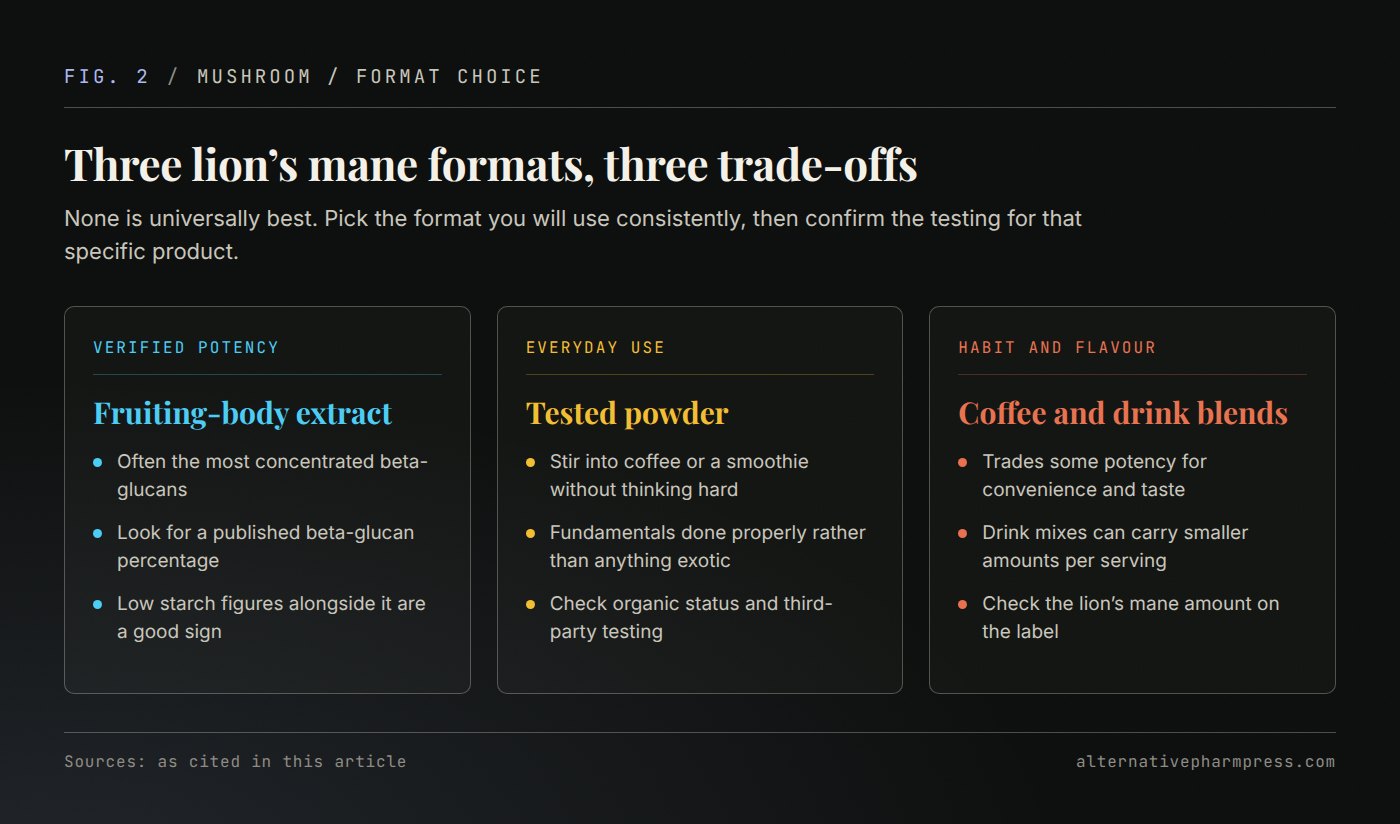
Start with format, because the best product is the one you’ll keep using. If you want maximum verified potency, lean toward a fruiting-body extract with a published beta-glucan percentage, like Real Mushrooms. If you want a daily habit, a tested powder or a mushroom coffee may serve you better even at a slightly lower concentration. Whichever you pick, find the current certificate of analysis and confirm two numbers: the beta-glucan percentage and the absence of heavy-metal and contaminant flags. Our COA reading guide walks through that logic, and the NIH Office of Dietary Supplements offers neutral background on mushroom ingredients.
If you’re shopping the broader category, our best nootropic brands of 2026 roundup covers focus formulas that sometimes include lion’s mane, the nootropics glossary explains the terminology, and the nootropics category collects related pieces. You can also browse vetted sellers in the directory, read deeper write-ups in our reviews section, or check the coupons page before you commit.
Frequently asked questions
Which lion’s mane form is best, powder, capsule, or coffee?
None is universally best. Extracts and powders often carry more concentrated beta-glucans, while coffees and drinks trade some potency for convenience and taste. Pick the format you’ll use consistently, then confirm the lion’s mane amount and testing for that specific product.
Is mycelium lion’s mane worse than fruiting body?
Fruiting-body extracts generally concentrate more of the studied compounds, and mycelium grown on grain can be largely starch. That doesn’t make every mycelium product worthless, and some brands like Host Defense choose it deliberately. Just know which one you’re buying and check the beta-glucan figure.
What beta-glucan percentage should I look for?
There’s no single official threshold, but a clearly stated, third-party-verified beta-glucan percentage is far better than a vague “polysaccharide” number that can include starch. The presence of a verified figure matters more than chasing one exact percentage.
Does lion’s mane improve memory or focus?
We don’t make that claim. Some people take it for focus and general wellness interest, and the human research is still early and limited. Talk to a licensed healthcare provider before starting it, especially if you take medication.
How do I verify a brand’s testing claims?
Ask for or find the current certificate of analysis showing identity, beta-glucan content, and contaminant screening from an outside lab. Recognition by independent testers like ConsumerLab adds confidence. A brand that won’t share lab results is a reason to be cautious.
Editorial note: This article is for general information only and is not medical or legal advice. These products have not been evaluated by the FDA to diagnose, treat, cure, or prevent any disease. Laws vary by location and change often, so verify the rules that apply to you. Always talk to a licensed healthcare provider before use, especially if you are under 21, pregnant or nursing, taking medication, or managing a health condition.