
Read this before you read anything else here: according to industry and news reporting, in late 2025 the US Congress passed a measure that redefines hemp to exclude intoxicating hemp-derived cannabinoids, including delta-8 THC, delta-10, THC-P, and THCA, and sets a limit of 0.4 mg total THC per container. That change is reported to take full effect on November 12, 2026, and it would apply nationwide regardless of state law. We’re presenting that as reported, not as a statute you can cite by number, so treat the date as a hard deadline to verify yourself. If you’re going to buy delta-8 at all, do it with that deadline in mind, confirm the current federal and state rules before you spend money, and don’t build a habit around a category whose legal footing may change. You can track the federal side through the USDA hemp program and general guidance from the FDA.
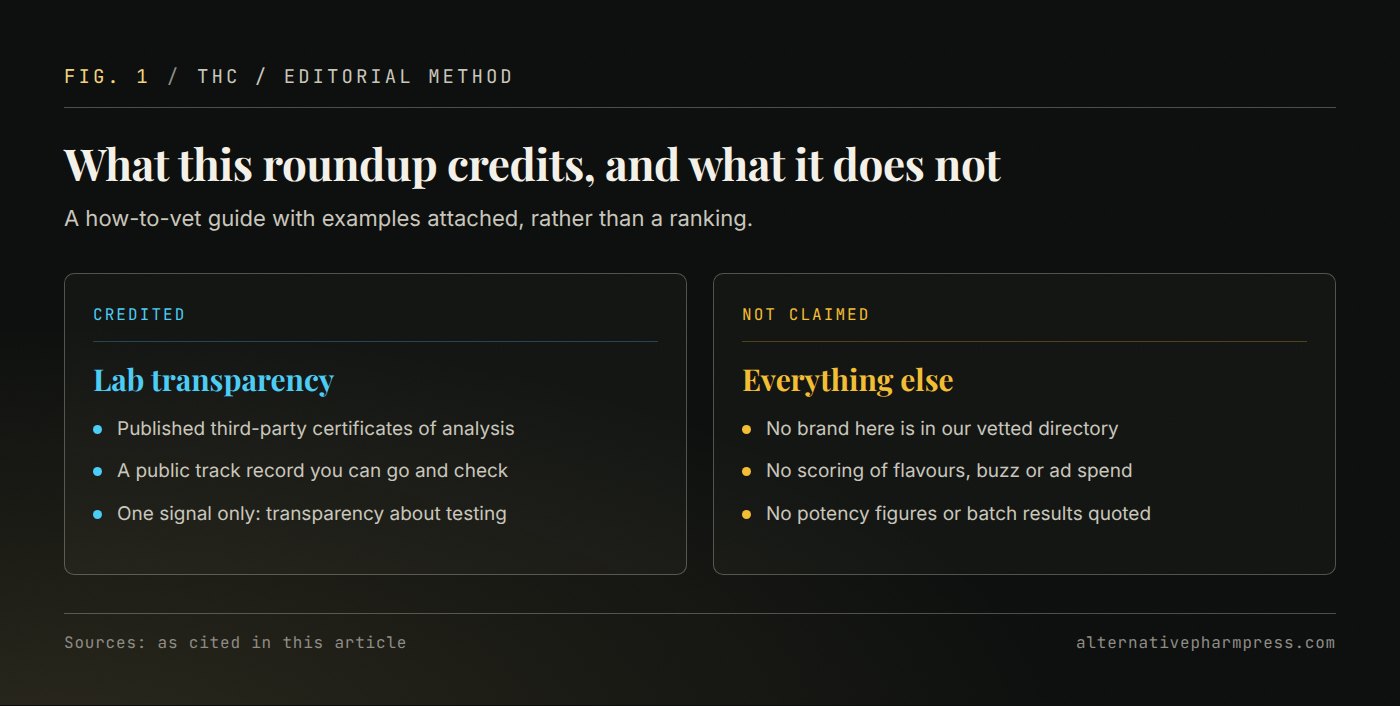
With that out of the way, let’s talk about what a “best delta-8 brand” roundup should actually be. Most of them are affiliate-stuffed lists that rank brands by how much they pay. Ours isn’t that. We’re not scoring flavors or buzz. We’re judging one thing: whether a brand is transparent about lab testing. That’s the only signal that survives a category built on lab-converted cannabinoids, where the front of the package tells you almost nothing about what’s inside.
An important disclosure
None of the brands below are in our vetted brand directory. We’re labeling all of them as industry picks, included because they’re widely known and frequently cited for publishing third-party Certificates of Analysis (COAs), not because we’ve certified them ourselves. We’re sticking to general, widely-reported facts about each one, and we’re not quoting any specific lab numbers, potency figures, or batch results, because those change and because inventing them would defeat the entire point of a transparency-first roundup.
If you want our actual certified picks, that’s the directory. This page is a how-to-vet guide with examples attached.
Brands frequently cited for lab transparency
3Chi. One of the original delta-8 makers, 3Chi helped build the category and publishes batch COAs for its products. Being early doesn’t make a brand good on its own, but a company that has published lab work for years has a track record you can check rather than take on faith. You can find its products at 3chi.com.
Hometown Hero. A Texas-based, veteran-owned company that uses third-party testing and has been vocal in industry and legal fights over hemp rules. The relevant point for shoppers is the third-party testing posture, which is the bar we care about. See hometownhero.com.
Binoid. Binoid publishes COAs for its products and is frequently mentioned in the same breath as lab transparency. As always, the value of published COAs depends on whether they’re current and match the batch you actually receive. Their site is binoidcbd.com.
Botany Farms. A craft, small-batch maker that discloses full COAs. Small-batch can be a plus for consistency claims, but again, the disclosure is what we’re crediting here, not the marketing around it. You can look at botanyfarms.com.
| Brand | Known for | COAs published | In our directory |
|---|---|---|---|
| 3Chi | One of the original delta-8 makers | Yes, batch COAs | No, industry pick |
| Hometown Hero | Texas-based, veteran-owned, third-party tested | Yes, third-party | No, industry pick |
| Binoid | Frequently cited for lab transparency | Yes | No, industry pick |
| Botany Farms | Craft, small-batch, full COA disclosure | Yes, full disclosure | No, industry pick |
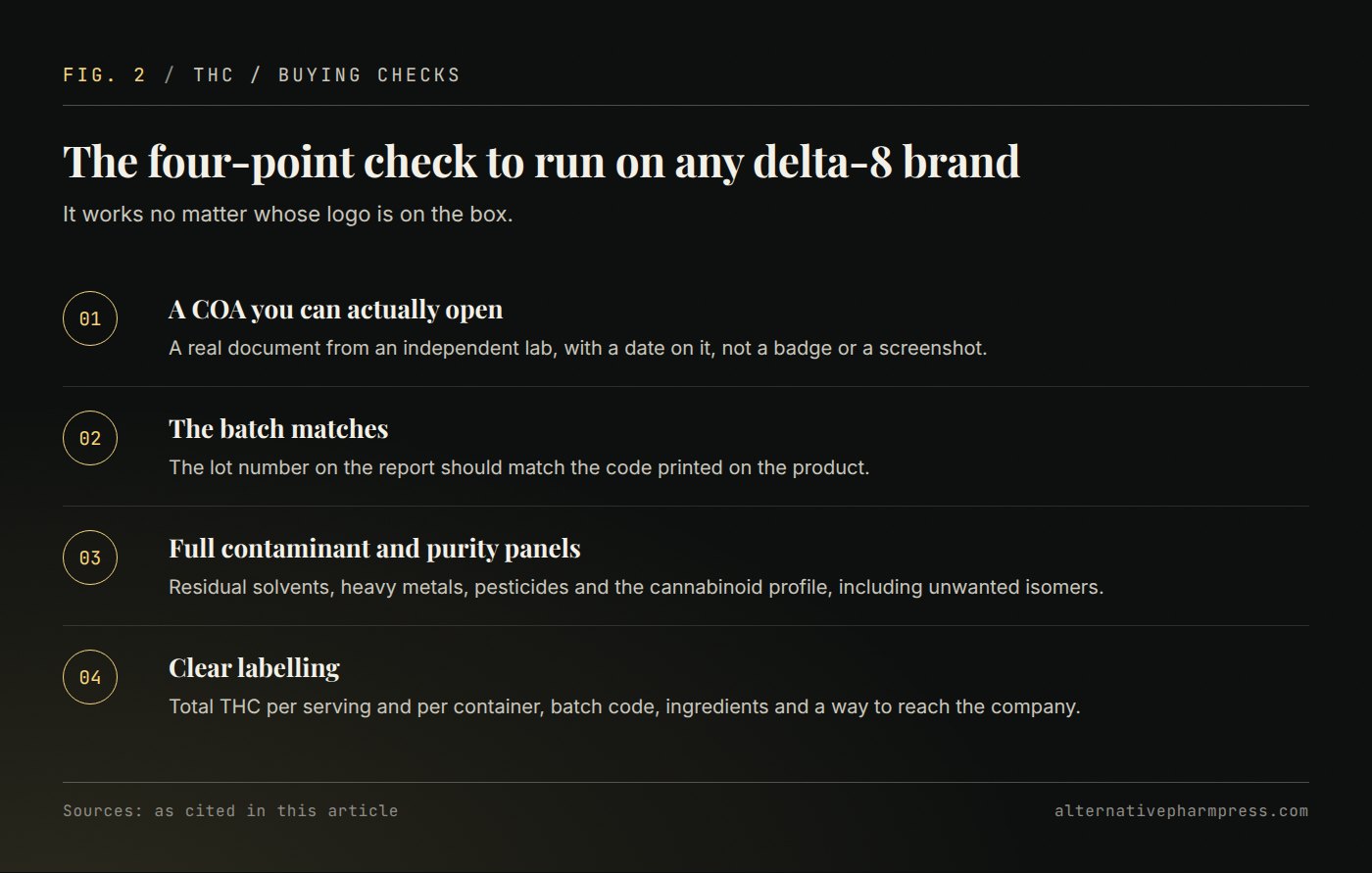
If you buy before the deadline, here’s how to vet a delta-8 brand
This is the real content of this page. A brand name is a starting point, not a guarantee. Here’s the checklist we’d run before handing over money, and it works no matter whose logo is on the box.
1. A COA you can actually open
Not a badge that says “lab tested.” Not a screenshot. An actual document you can open, from an independent lab, with a date on it. If the COA is missing, hidden behind a contact form, or just a stamp, stop there. Our COA reading guide walks through what a real one looks like, and the principles carry straight over to delta-8.
2. The batch matches
The COA should name a specific batch or lot number, and that number should match the code printed on the product you’re holding. One generic “representative” report covering every product the brand sells is a red flag, not a convenience. Delta-8 is converted batch by batch, so a report for a different batch tells you very little about yours.
3. Full contaminant and conversion-purity panels
Because delta-8 is made by chemically converting hemp CBD, the COA needs to cover more than just “how much delta-8.” Look for residual solvents, heavy metals, pesticides, and the cannabinoid profile, including whether unwanted isomers or leftover reagents showed up. A potency-only report skips the part that matters most for a converted cannabinoid. We explain the broader tells in the signs a brand is genuinely third-party tested.
4. Clear labeling
Total THC per serving and per container, batch code, ingredients, and a way to reach the company. Clear labeling is also exactly where the reported 2026 change bites, with its 0.4 mg total THC per container limit, so a brand that’s already precise about per-container content is one that’s at least paying attention to where the rules are heading. For the legal background, see where delta-8 is legal or banned in 2026 and our breakdown of delta-8 vs delta-9 vs THC-O.
Putting it together
The brands above earn a mention because they publish lab work and have public track records, not because we’re vouching for any specific product. A name you recognize can make a product feel safe before you’ve checked anything, and that feeling is exactly what trips people up in a category this loosely policed. Run the four-point checklist yourself on whatever you’re considering, including products from these companies, and apply the same scrutiny to a well-known brand that you would to one you’ve never heard of. If a brand fails any of the four, the name on the label doesn’t save it. If you want the deeper background on the compounds and the law, the hemp glossary and THC topic hub are good next reads, and our coupon page is there once you’ve settled on something that clears the bar.
And we’ll say it one more time, because it’s the thing most roundups bury: the reported November 12, 2026 federal change could reshape this entire category nationwide. Buy with that deadline in front of you, verify the current rules, and don’t treat today’s availability as a promise about tomorrow.
Frequently asked questions
Are these your officially recommended brands?
No. They’re industry picks, included because they’re widely known and frequently cited for publishing third-party COAs. None of them are in our vetted brand directory, and we’re crediting lab transparency only, not endorsing specific products or making any health claims.
Does the November 12, 2026 deadline affect all of these brands?
It could affect the whole category. According to industry and news reporting, the federal change redefines hemp to exclude intoxicating hemp cannabinoids and sets a 0.4 mg total THC per container limit, applying nationwide. Verify the current federal and state rules before buying, since the situation can change.
What single thing matters most when vetting a delta-8 brand?
A current, batch-matched third-party COA you can actually open and read. Because delta-8 is converted from hemp CBD in a lab, that document is the only reliable window into what’s really in the product. No COA, or a mismatched one, is a dealbreaker.
Why no potency numbers or lab results in this article?
Because those figures vary by batch and change over time, and publishing invented or outdated numbers would undercut the whole point of a transparency-first guide. The right place to check potency and purity is the brand’s own current COA for the specific batch you’re buying.
Should I buy delta-8 at all right now?
That’s your call, and it depends on your state’s rules, the federal status, and your own health situation. If you do, vet the brand with the four-point checklist and keep the federal deadline in view. Talk to a licensed healthcare provider before use, especially if you’re under 21, pregnant or nursing, taking medication, or managing a health condition.
Editorial note: This article is for general information only and is not medical or legal advice. These products have not been evaluated by the FDA to diagnose, treat, cure, or prevent any disease. Laws vary by location and change often, so verify the rules that apply to you. Always talk to a licensed healthcare provider before use, especially if you are under 21, pregnant or nursing, taking medication, or managing a health condition.